


Highlights
3 Drawer File Cabinet Buying Guide for Businesses

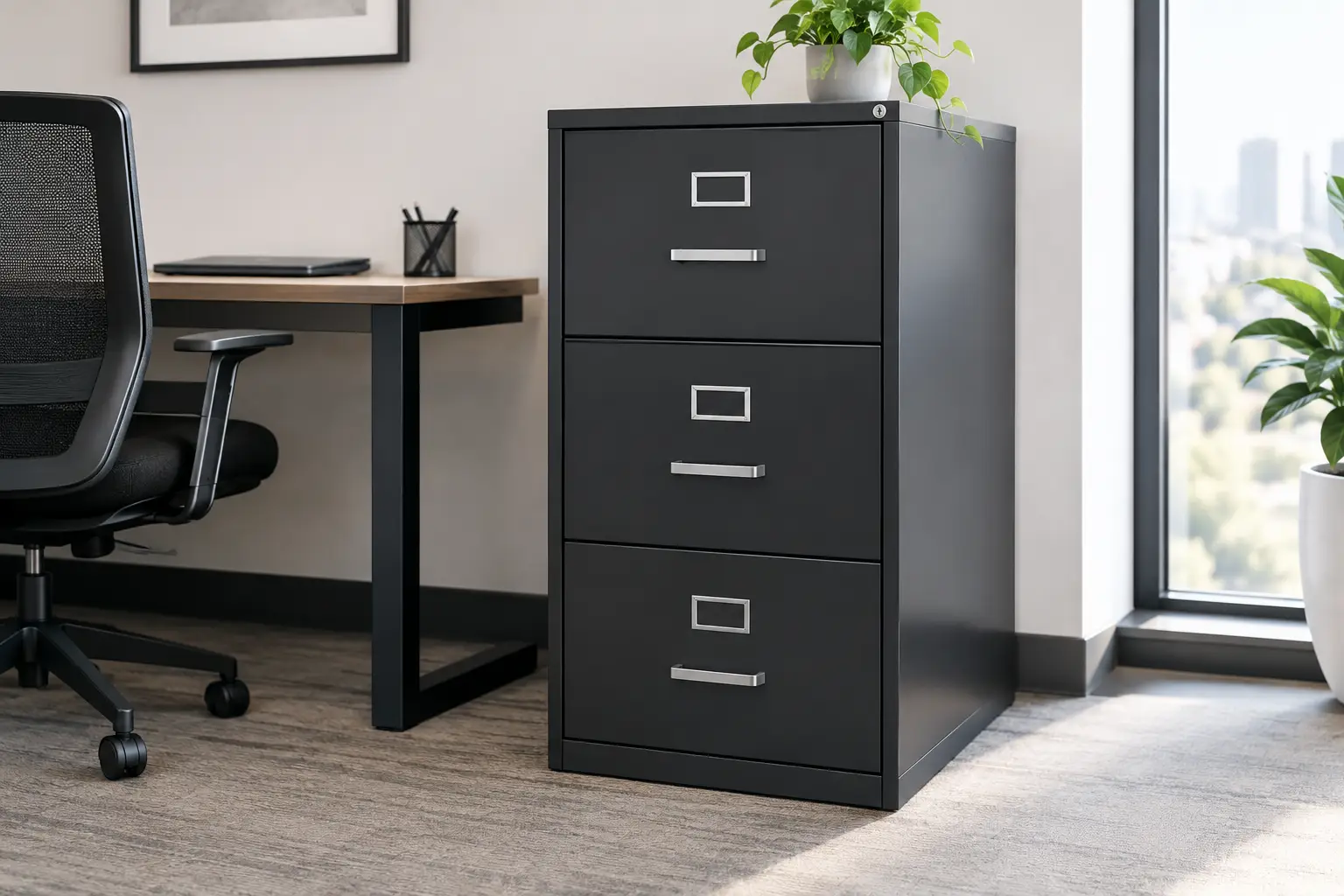
A 3 drawer file cabinet is often the right answer when a workplace needs secure paper storage without giving up valuable floor space. It provides more capacity than a two-drawer unit while staying compact enough for private offices, reception areas, shared workstations, clinics, schools, and administrative departments. For commercial buyers, the decision is less about appearance alone and more about drawer performance, security, material strength, and fit within a larger storage plan.
A filing cabinet may hold records for years. That makes its construction, locking system, and load capability procurement considerations rather than minor product details.
Why Three Drawers Work in Commercial Spaces
Three-drawer configurations sit between small personal filing units and taller high-capacity cabinets. They give each department or user a practical amount of storage while keeping documents accessible at desk height. In offices where records are still used daily, that accessibility can improve workflow. Staff can retrieve client files, invoices, personnel documents, medical records, or project folders without moving to a centralized archive room.
This format also suits facilities that need several filing points rather than one oversized cabinet. A school administration office, for example, may require separate units for enrollment, finance, and faculty records. A service business may place cabinets in dispatch, accounting, and management offices. Smaller units can be assigned by function, moved during workspace changes, and specified consistently across a multi-room project.
The trade-off is total capacity. A three-drawer cabinet will not replace a dedicated records archive for a large organization. It is most effective for active files, departmental records, or documents that require controlled access close to the user.
What to Check Before Specifying a 3 Drawer File Cabinet
The cabinet should be selected around the files, the environment, and the people using it. A standard-looking unit can vary significantly in material thickness, drawer support, locking design, and internal dimensions.
File Format and Internal Drawer Size
Start with the records themselves. Letter-size and legal-size folders need different internal drawer widths and depths. Some workplaces use hanging file folders, while others store boxed files, binders, forms, or mixed paperwork. Internal dimensions matter more than external cabinet dimensions because they determine usable capacity.
Ask whether files will run front to back or side to side. This affects how staff organize folders and how efficiently each drawer is filled. If the cabinet will support a long-term records process, allow space for file expansion rather than specifying only for current volumes.
Steel Construction and Finish
For commercial use, steel is the practical choice. A metal file cabinet resists the daily knocks, drawer impacts, and relocation demands that can quickly affect lighter-duty furniture. Look for formed steel construction, reinforced drawer fronts, and a durable powder-coated finish that supports regular cleaning and maintains a professional appearance.
Finish selection should reflect the site. Neutral colors work well in office projects, while darker finishes can be suitable for industrial administration areas where marks and dust are more visible. For larger orders, custom colors may help align filing storage with an existing furniture standard or facility identity.
Drawer Slides and Load Performance
A drawer should remain stable and easy to operate when it is fully loaded. Files are heavier than they appear, especially when cabinets are used for binders or dense archived documentation. Weak slides can create sticking, uneven movement, and premature wear.
Specify drawer runners designed for the expected load and frequency of use. Full-extension drawers can be useful where staff need clear access to folders stored at the rear. In high-use offices, smooth and consistent drawer movement supports faster filing and reduces frustration over the cabinet’s service life.
Locking and Access Control
Not every document needs the same level of protection. General administrative records may require a simple central lock, while personnel, financial, healthcare, legal, or client information may need tighter access procedures. A central locking system that secures all drawers with one key is a common and efficient solution for individual users.
For a larger facility, key management should be considered at the purchasing stage. Decide who holds master access, whether cabinets need keyed alike or keyed differently, and how replacement keys will be handled. The right setup depends on the organization’s security policy and the sensitivity of the documents being stored.
Safety Features and Placement
A loaded filing cabinet is a heavy piece of equipment. Anti-tip measures are particularly relevant where users may open drawers quickly or where cabinets are installed in public-facing and high-traffic areas. Interlock systems that limit multiple drawers opening at once can improve stability, while wall or floor anchoring may be appropriate for certain applications.
Placement matters as well. Leave sufficient clearance for drawers to open fully without blocking walkways, doors, or emergency routes. In compact offices, a cabinet that fits under a work surface may be more useful than a taller unit that creates circulation problems.
Choosing Vertical or Lateral Filing Storage
A 3 drawer file cabinet is commonly designed in a vertical format, with drawers stacked one above another. Vertical cabinets use a smaller footprint and are a dependable choice where floor area is limited. They work particularly well beside desks, along office walls, or in individual work areas.
Lateral filing cabinets are wider and generally provide broader drawer access. They can be a better option for high-volume filing teams, shared records areas, or offices that need a substantial work surface on top of the cabinet. However, lateral units consume more wall width and may not fit efficiently in narrow rooms.
The correct choice comes down to the space plan. If the main constraint is floor area, vertical filing is usually more efficient. If the priority is rapid access to a high number of files across a team, a lateral cabinet may provide a better operating layout.
Match the Cabinet to the Work Environment
Office filing needs vary by sector. A financial department may prioritize drawer capacity, lock control, and a clean uniform finish. A healthcare administration area may require secure storage that is easy to sanitize and durable enough for frequent use. Industrial offices may need a more hard-wearing cabinet that performs reliably in a demanding environment.
For education buyers, a three-drawer cabinet can support controlled storage of student records, forms, and departmental paperwork. In reception and customer service environments, it can keep active documents close to staff while reducing visual clutter. For distributors and commercial fit-out companies, a standardized cabinet range makes it easier to build repeatable specifications for multiple client projects.
Where standard dimensions do not fit the available space or filing system, custom manufacturing becomes valuable. Adjustments to size, color, locking configuration, drawer layout, and internal fittings can help a cabinet perform as part of the facility rather than becoming a compromise item.
Procurement Questions That Prevent Problems Later
Before placing an order, confirm the cabinet’s external dimensions, internal drawer dimensions, steel specification, finish, lock type, and expected lead time. For project orders, also confirm packaging, delivery requirements, assembly needs, and whether the product can be supplied consistently for future phases.
It is also worth defining the warranty and after-sales expectations. Filing cabinets are long-life assets, so commercial buyers should look beyond purchase price. A cabinet that maintains drawer alignment, protects documents, and remains presentable through years of use provides better operational value than a lower-cost option that needs replacement early.
For larger installations, ordering a sample or approving detailed technical specifications can reduce surprises. This is especially useful when cabinets must align with existing desks, storage walls, security procedures, or accessibility requirements.
A well-specified filing cabinet should disappear into the working routine: drawers open when needed, documents remain protected, and the storage system continues to perform without drawing attention. That is the standard worth buying for.