


Highlights
How to Specify a 5 Drawer File Cabinet for Workplaces

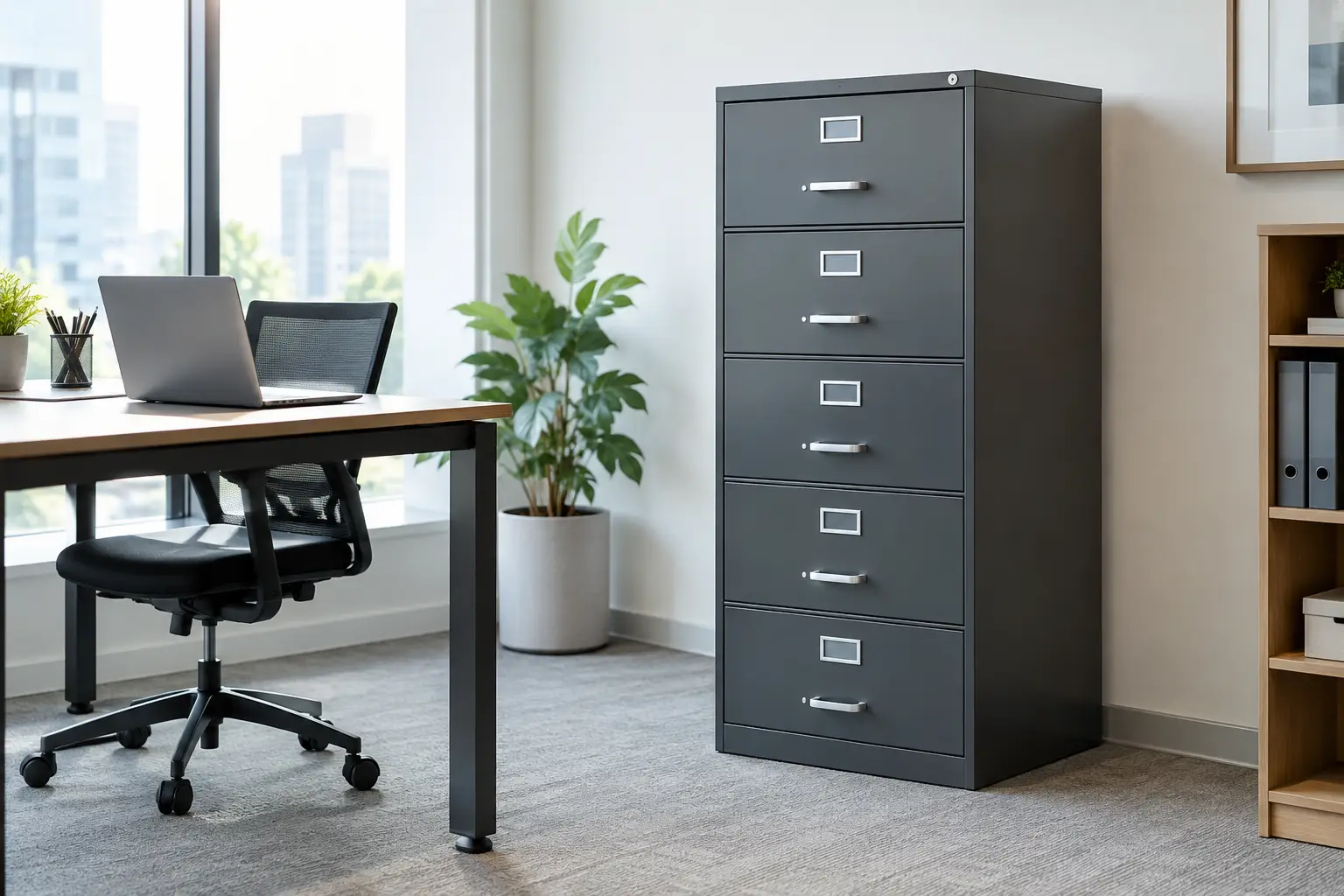
A crowded records room can become an operational risk quickly. When documents are stored in mixed boxes, lightweight furniture, or open shelving, teams lose time finding files and may expose confidential information. A 5 drawer file cabinet gives businesses a structured, high-density way to store active records, archives, personnel files, contracts, and compliance documentation in one secure footprint.
For commercial buyers, the right cabinet is not simply a matter of drawer count. It must support the filing format, load requirement, security policy, available floor space, and expected service life. A well-specified metal filing cabinet can remain in daily use for years. A poorly specified one can create drawer failures, tipping concerns, restricted access, and inefficient use of valuable workspace.
What a 5 Drawer File Cabinet Solves
A five-drawer configuration is designed for workplaces that need more capacity than a standard two- or three-drawer pedestal but do not require a full archive room. It is a practical option for offices, schools, medical facilities, government departments, legal practices, industrial administration areas, and shared service centers.
The main advantage is vertical storage density. Instead of spreading records across several smaller cabinets, a five-drawer unit consolidates a larger volume of documents within a controlled area. This can reduce clutter while making file categories easier to assign by drawer, department, date range, or record type.
The best configuration depends on the documents being stored. Vertical filing cabinets use deeper drawers and a narrower cabinet body, making them useful where wall space is limited. Lateral cabinets use wider drawers and can support side-to-side filing, which may be better for high-volume folders, larger paper formats, or teams that need faster access to a broad file range.
Capacity should never be estimated from external dimensions alone. Drawer depth, usable internal width, suspension rail design, and the space occupied by file supports all affect the number of files a cabinet can hold.
Start With the Filing Requirement
Before requesting pricing or approving a specification, define exactly what will go into the cabinet. Letter-size files, legal-size files, folders, binders, plans, and medical records all require different internal arrangements. If files are likely to grow over time, leave capacity beyond the current volume rather than filling every drawer from day one.
File orientation and drawer layout
Ask whether documents will be filed front-to-back or side-to-side. A cabinet can appear large enough externally yet be unsuitable for the intended folder orientation. Adjustable file bars or follower blocks can be valuable where drawer contents change regularly, as they keep partially filled files upright and easier to retrieve.
For mixed record types, drawer dividers may be more useful than maximum open volume. One drawer may hold personnel folders, another invoices, and another controlled forms. Defined sections help prevent files from shifting and reduce reorganization work later.
Space, access, and workflow
Measure more than the cabinet location. The layout must also allow clearance for fully opened drawers, access for users, and safe movement through the room. In busy offices, an open drawer should not block a main path or emergency route.
Cabinet height matters as well. A tall five-drawer cabinet creates excellent storage density, but the upper drawer must remain comfortable for the intended users to access. In shared workspaces, lower lateral cabinets can also provide a useful surface for printers, scanners, or document preparation, provided the top load is approved for that purpose.
Specify Construction for Daily Commercial Use
Document storage creates significant weight. A drawer filled with paper files can become heavy quickly, particularly when folders, binders, or retained records are densely packed. The cabinet body, drawer fronts, runners, and locking system must be designed to carry that repeated load without distortion.
Steel construction is the preferred choice for long-term commercial filing because it provides strength, impact resistance, and consistent drawer alignment. However, steel thickness alone does not define quality. Buyers should assess the complete construction, including folded edges, reinforced drawer bases, welded or mechanically secured joints, runner performance, and powder-coated finish quality.
A powder-coated metal surface is practical for offices and facilities because it resists routine scuffs and is easy to clean. For industrial administration areas, warehouses, schools, and high-traffic sites, finish durability can be as relevant as appearance. Color selection may also support department identification, zoning, or facility standards.
Drawer slides and load performance
Drawer movement is one of the clearest indicators of cabinet quality. Full drawers should open smoothly without dropping, binding, or flexing. Telescopic ball-bearing runners generally provide reliable extension and support easier access to files at the back of the drawer.
Confirm the stated load capacity per drawer, not just the total cabinet weight. If drawers will hold dense paper archives, select a system rated for the expected load with an appropriate safety margin. A cabinet used for occasional reference files has different requirements from one opened continuously by administrative staff.
Safety Features Are Part of the Specification
Tall filing cabinets need protection against forward tipping. The primary control is an anti-tip interlock mechanism that allows only one drawer to open at a time. This reduces the risk created when several loaded drawers are extended simultaneously.
For added stability, cabinets can be fixed to a wall or floor where the application and building conditions allow it. This is especially relevant in public-facing facilities, schools, healthcare settings, and locations where cabinets may be accessed by multiple users throughout the day.
Locking should match the sensitivity of the records. A central locking system is suitable for many office applications because it secures all drawers with one key. Organizations that require controlled access may need master-key arrangements, different lock codes by department, or upgraded locking solutions. The right option depends on internal records policy, not just the cabinet price.
A lock protects access, but it does not replace process control. Sensitive records should be assigned to authorized users, and key management should be documented. For highly confidential material, consider where the cabinet is installed as carefully as how it is locked.
Configure the Cabinet for the Project
Standard products support faster purchasing and predictable lead times. Custom production becomes valuable when a facility has fixed dimensions, specific filing formats, branding requirements, or a need to match other metal furniture across the site.
Common project variables include cabinet width and depth, drawer size, color, lock type, file rails, labeling holders, handles, and anchoring points. A distributor or procurement team may also require consistent product specifications across multiple sites to simplify replacement orders and maintenance.
Customization should have a clear operational purpose. A nonstandard size can improve a tight office layout, but it may increase lead time or limit future interchangeability. Similarly, a specialized lock may strengthen access control, but only if the organization can manage keys or credentials effectively. The right balance is usually a durable standard platform with targeted modifications where they produce measurable value.
Questions to Confirm Before Ordering
A clear purchase specification prevents costly assumptions between the buyer, designer, and manufacturer. Confirm these points before placing an order:
- Required file format, filing direction, and usable internal drawer dimensions.
- Load capacity for each drawer and the expected weight of stored records.
- Anti-tip interlock system, anchoring requirements, and site safety expectations.
- Locking method, keying arrangement, and authorized access requirements.
- Cabinet finish, color, delivery conditions, installation needs, and quantity by location.
For multi-site projects, request consistency in dimensions, finish, and replacement components. Standardization makes it easier to expand the storage system later without creating mismatched furniture or incompatible locking arrangements.
Choose a Manufacturer That Supports the Full Requirement
The lowest initial price is rarely the only cost consideration. A cabinet that needs early replacement, develops drawer alignment issues, or fails to meet security expectations creates disruption that is more expensive than the purchase difference. Commercial buyers should look for documented product specifications, dependable production capacity, clear warranty terms, and the ability to support repeat orders.
Loxmet manufactures heavy-duty metal storage solutions for projects that require durable construction, practical customization, and consistent supply. For buyers sourcing filing cabinets alongside lockers, office cabinets, shelving, or workplace storage systems, using one capable manufacturer can also simplify coordination across the project.
The most effective filing cabinet is the one that fits the records, the room, and the people who use it every day. Specify those conditions first, and the cabinet becomes a dependable part of the workplace rather than another piece of furniture to manage.