


Highlights
Phone Lockers: Secure Device Storage for Workplaces, Schools and Events

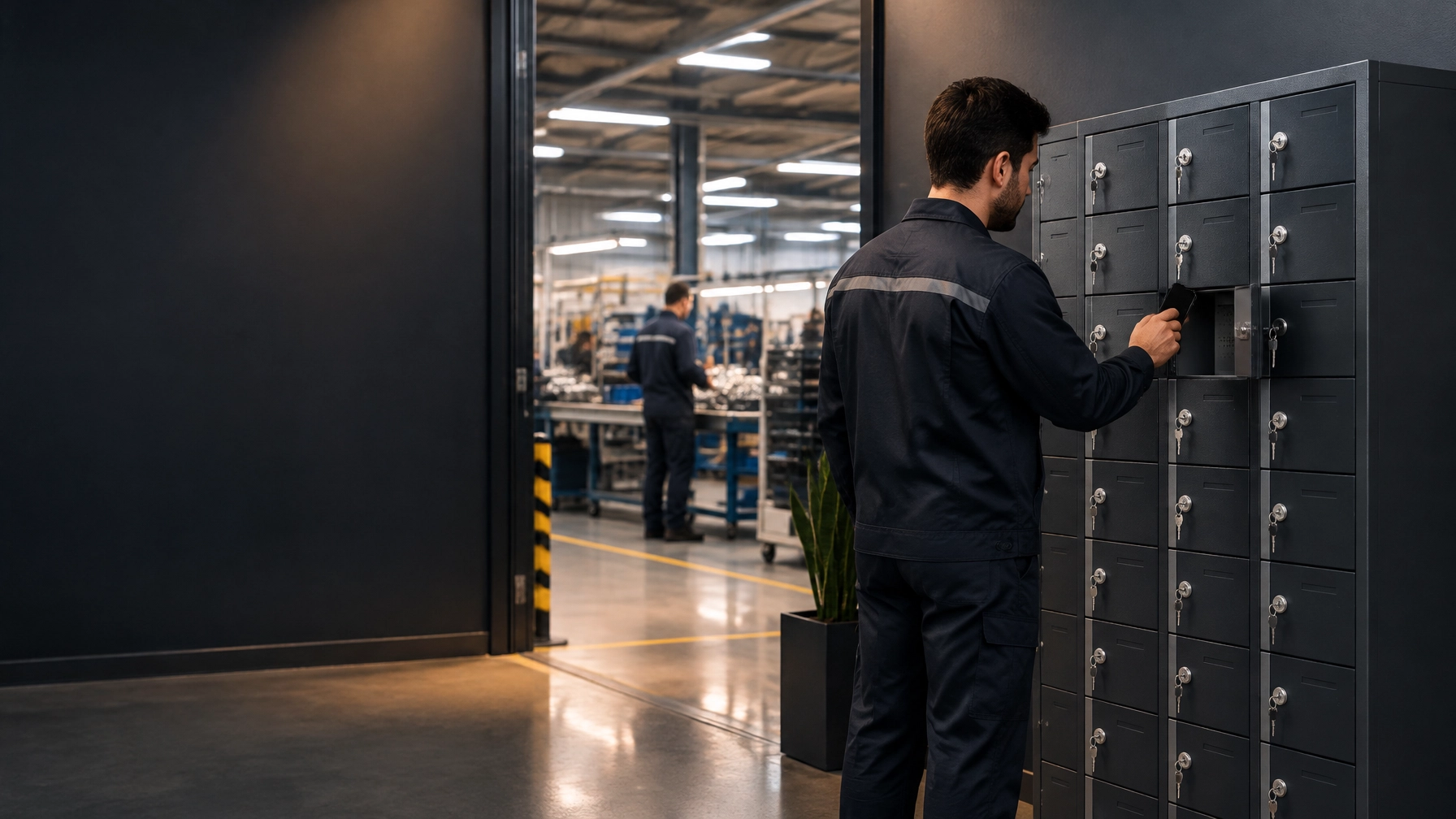
Phone lockers give staff, students and visitors a secure place to leave personal devices when phones are restricted, access is controlled or belongings need protection. For buyers, the key decisions are capacity, location, locking method and whether devices also need charging. This guide compares practical configurations and explains how to specify a suitable unit for your facility.
| Configuration | Published overall dimensions | Practical use |
|---|---|---|
| 10-door unit | 420 × 200 × 920 mm | Smaller teams, reception areas or low-volume hand-in |
| 20-door unit | 810 × 200 × 920 mm | Mid-size groups and shared staff or student storage |
| 30-door unit | 1200 × 200 × 920 mm | Higher user counts and busier collection points |
Dimensions are width × depth × height. Confirm compartment suitability for your devices and installation requirements before ordering. Charging capability is not specified for these standard phone-locker models.
Phone Lockers: Security First, Charging Optional
A phone locker is a cabinet divided into individual, lockable compartments. Each user stores a device behind a separate door, rather than leaving phones together on a counter or in an open tray. A phone storage locker can support staff phone policies, student hand-in routines, visitor procedures and secure storage during events.
You may also see the terms mobile phone lockers, cell phone locker or telephone locker used for similar storage. The exact product configuration matters more than the label: check how many users it serves, how access is managed and whether each compartment fits the intended device.
Common facility uses
- Workplaces and factories: Keep personal phones outside restricted production or work zones.
- Schools and training facilities: Provide secure storage under the school’s own device policy.
- Gyms and sports centres: Give members a place to secure phones while changing or exercising.
- Events and reception areas: Manage visitor hand-ins without using an open collection box.
- Offices: Store devices during meetings, focused work or restricted-access activities.
A clear procedure supports the locker. Tell users where to store devices, who manages access and how phones are returned. In schools, allow for relevant safeguarding, accessibility and medical requirements when setting policy.
Choose Capacity for Peak Use
Size the unit for the number of devices that need storage at the same time, not simply the total number of employees or visitors who pass through the site. For shift-based workplaces, consider whether teams use the same compartments at different times. For events, estimate peak arrivals and hand-in demand.
A useful starting point is one compartment per user expected to store a phone at once. Add spare capacity where visitor numbers vary, users arrive in groups or the process needs to continue during shift changes. Avoid selecting a door count based only on the average day if the unit must handle busier periods.
LOXMET’s 20-door mobile phone locker measures 810 × 200 × 920 mm and is wall-mountable. It has individual key-lockable doors and label holders. The range also includes 10-door and 30-door options. Review the phone and laptop locker range to compare available models.

Place Units Where the Hand-In Happens
Place lockers at a practical transition point: near an entrance, reception desk, changing room or staff check-in area. Users should be able to store and retrieve devices without entering a phone-restricted zone or blocking normal movement.
For a factory or production floor, locate the phone storage outside the restricted area. For schools, consider the entry route students already use and ensure staff can manage the hand-in process. For events, position visitor storage where people can access it before proceeding to the controlled area.
Check the proposed location before ordering. Leave clear access for users and staff, and do not obstruct exits or escape routes. For wall-mounted units, confirm the wall and installation method are suitable; follow the product and site requirements.

Match the Lock to Your Access Routine
A key lock is straightforward for assigned users and simple daily hand-in. A padlock option allows users or site staff to supply compatible padlocks, subject to the selected configuration. Combination locks avoid key distribution but require a clear process for forgotten codes. Electronic or RFID locks can suit facilities that already manage access digitally.
LOXMET’s 20-door product lists key locking and compatible options including padlock holders, mechanical combination locks, electronic combination locks and RFID electronic locks. Compare the available locker accessories and lock options with your user routine. For high turnover or shared access, decide in advance who handles lost keys, code resets and exceptional access.
Storage or Charging?
A phone charging locker combines secure storage with device charging. It suits sites where users need phones returned with charge, or where the facility needs controlled charging for its own devices. A standard storage unit keeps phones secured but does not, by itself, provide charging.
Do not assume a phone locker includes power. The published 20-door model is described as a phone storage locker; its product details do not specify integrated charging. If charging is required, ask for a purpose-designed option and confirm the electrical configuration for your devices and site. See LOXMET’s information on phone charging lockers and charging station selection.
Charging changes the specification. Confirm device compatibility, electrical installation, maintenance responsibilities and the site’s fire-safety requirements before purchase. HSE advises employers and building owners or occupiers to complete and keep current a fire risk assessment. Its guidance covers ignition sources, people at risk and keeping escape routes clear. Review the HSE introduction to fire safety and consult a competent professional for site-specific decisions. The OSHA lithium-powered device bulletin provides additional U.S. guidance; it is not a product certification or a locker design standard.

For schools in England, the Department for Education’s current mobile phone guidance describes lockers as one method some schools use to store phones. It is statutory guidance for England; schools should follow the requirements and policies that apply to their own setting.
LOXMET Product and Supply Options
LOXMET manufactures in Istanbul, Turkey, with more than 100 standard products and custom metal fabrication options. Buyers can request changes to dimensions, color or lock type for a project. See custom-made solutions or compare with standard-size lockers where general personal storage is also required.
Standard catalogue products: Typically ready within 10 working days in catalogue colors.
Custom colors or made-to-order products: Typically require approximately 10 additional working days.
Minimum order: Single-piece orders are accepted.
Warranty: 10 years for production faults.
Bulk orders: Special pricing is available for orders exceeding two container or truck loads.
LOXMET’s stated credentials include CE and ISO 9001:2015. Confirm the documentation relevant to your selected product and project. Delivery timing can vary by configuration and order; request confirmation with your quotation.
Frequently Asked Questions
How many phone compartments do we need?
Plan for the number of users who need to store phones simultaneously at peak use. Add spare compartments if visitor numbers vary or shifts overlap.
Can a phone locker be wall-mounted?
The LOXMET 20-door model is listed as wall-mountable. Confirm mounting suitability and installation requirements for the chosen model and wall.
Does the 20-door model charge phones?
Its published product details specify individual phone storage and key locks, but do not specify integrated charging. Request a charging-designed option if you need power inside compartments.
Which locks can I choose?
The 20-door product lists key locks and compatible padlock, mechanical combination, electronic combination and RFID options. Confirm availability for your selected configuration.
Are there options for smaller or larger user groups?
Yes. LOXMET lists 10-, 20- and 30-door phone locker models. Compare their published dimensions and discuss a custom configuration if your space or capacity needs differ.
What is the lead time?
Standard catalogue products in catalogue colors typically require 10 working days. Custom colors and made-to-order products typically require approximately 10 additional working days. Confirm timing for your order.
Can I order one unit?
Yes. Single-piece orders are accepted. Special pricing is available for orders exceeding two container or truck loads.
Request a Phone Locker Specification
Choose capacity, location and access method first. Then confirm whether you need passive storage or a charging configuration. LOXMET offers standard phone lockers, custom fabrication, a 10-year warranty for production faults and support from its Istanbul manufacturing facility. Contact the team to compare models and request a quotation for your workplace, school, gym or event.