

Highlights
Pre-Shipment Inspection: A Factory Audit Checklist for Locker Importers

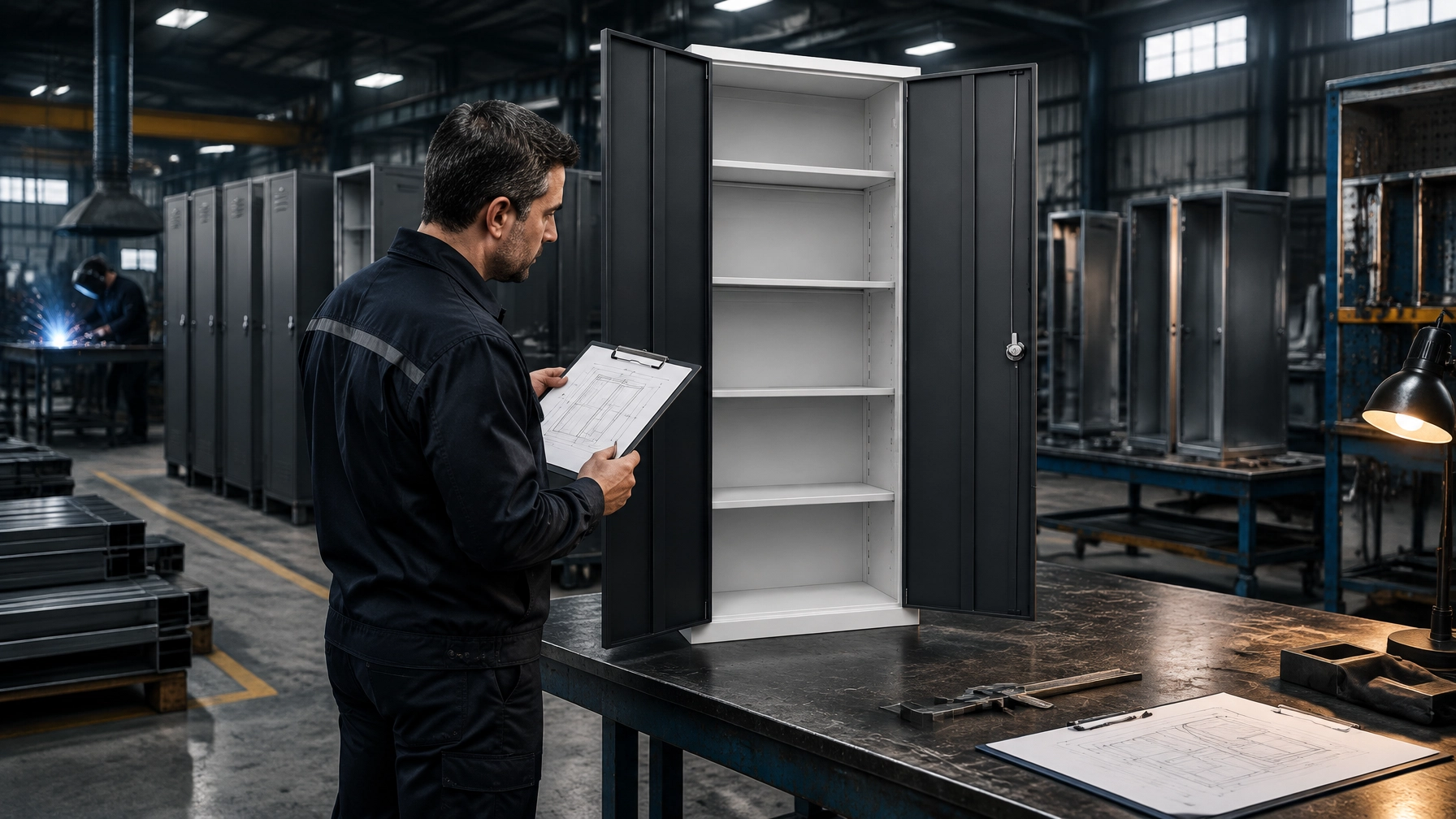
Pre-shipment inspection helps you verify that the lockers being prepared for dispatch match the approved sample, specification, and order. The process works best when it starts before production: record the requirements, agree how checks will be made, and keep the findings tied to the shipment.
| Inspection stage | What is checked | What the buyer records | The question it settles |
|---|---|---|---|
| Before production | Approved sample, drawing, materials, finish, locks, packaging | Signed specification and revision | What must the factory make? |
| During production | Steel processing, welding, assembly, coating | Measurements, photos, and defect log | Is production following the approved requirements? |
| Before dispatch | Quantity, function, finish, packing, loading plan | Inspection report and release decision | Is this shipment ready to load? |
Pre-Shipment Inspection Starts With the Approved Specification
Set the baseline before production
An inspector can only verify requirements that are clear and recorded. Approve a sample and sign off a specification sheet before work begins. Include:
- Overall dimensions and tolerances
- Steel thickness for each component, such as body, doors, shelves, and reinforcements
- Door and hinge construction
- Finish process and colour reference
- Lock type, keying arrangement, and fittings
- Accessories, labels, and numbering
- Packaging and loading requirements
Record the approved sample’s identifying details and any agreed deviations. If a change is needed, document it and approve it before the factory applies it to the order. The metal locker importer guide and guide to sourcing metal lockers directly from a Turkish factory offer further preparation for supplier discussions.
Choose who will inspect
You can use your own quality-control staff, hire a third-party inspector, or ask the factory’s in-house QC team to work from your checklist.
- Your own QC: Direct control over priorities and decisions, but travel, availability, and technical experience can be limiting.
- Third-party inspection: An independent presence at the factory can be useful when your team cannot attend. A third-party inspection is only as useful as the checklist, specification, and acceptance rules you provide.
- Factory in-house QC: Practical for checks throughout production. Agree in advance what evidence the factory will share and how non-conformities will be reported.
For any option, identify the inspector, inspection date, production stage, and records required. Ask your supplier to confirm its own inspection arrangements rather than assuming a process that has not been agreed.

Follow the product through production
A useful factory audit follows the order through its main manufacturing steps, and the same walk-through works whether you book a full third-party visit or join the line yourself. Check the points that affect your specification and intended use.
- Incoming steel and components: Match material descriptions and available mill or supplier certificates to the purchase requirements. Check that received materials are identifiable and suitable for the specified parts.
- Cutting and bending: Compare formed parts with the drawing. Record dimensions and note burrs, distortion, or damage that could affect assembly or safe handling.
- Welding and frame squareness: Inspect weld appearance and consistency against agreed workmanship requirements. Check frame dimensions and squareness before later processes conceal access to joints. For general workplace context, see the HSE’s welding guidance.
- Doors and hinges: Check door fit, alignment, clearance, hinge fixing, and smooth operation. Confirm the construction matches the approved sample and drawing.
- Coating and finish: Confirm the specified pre-treatment and coating process. Record film-thickness readings only where a requirement and suitable measurement method have been agreed. Compare colour with the approved reference, and check adhesion if specified, coverage, and visible defects such as chips, runs, or bare areas.
- Assembly and locks: Operate the doors and locks in the sampled units. Check keys, lock function, fittings, and accessories against the order. For keyed systems, confirm that keying and any master-key records match the agreed arrangement.
- Packing: Check product protection, edge protection, labels, hardware packs, and carton condition before release.

Agree the sampling plan
AQL sampling is a method for making an accept-or-reject decision based on inspection of a defined sample from a production lot. It does not mean every unit is checked, and it does not replace a clear product specification.
Agree the lot definition, inspection method, sampling level, and acceptance rules with the supplier before production. The specific AQL level and sample size are agreed between buyer and supplier; there is no single universal number that fits every order. Refer to the ISO 2859-1 standard for sampling procedures by attributes, and confirm the edition and plan applicable to your agreement. Do not copy sample sizes or acceptance numbers from an unrelated example.
For safety-critical or legally required features, set direct verification requirements in the specification rather than relying on a general sampling decision.
Record findings and close non-conformities
A clear quality inspection checklist helps the inspector apply the same criteria across the order. The finished inspection report then stands as the record of what was seen and decided. Keep records that can be traced to the lot and product:
- Measurements compared with the approved drawing
- Photos from each relevant stage
- A defect log classifying findings as critical, major, or minor
- Non-conformance details and agreed corrective action
- Rework records and results of re-inspection
- A signed release decision before loading
Define what each defect class means for your product and contract. Record a finding clearly enough that the factory can locate it, understand the requirement, and confirm the corrective action. A completed inspection report should state what was checked, the sample or units examined, results, outstanding issues, and whether shipment is released.
A quality system reference such as ISO 9001 can help buyers understand supplier quality-management requirements. Certification alone does not verify that a particular locker shipment matches your specification.
Link payment milestones to verified progress
Payment terms are negotiated commercial conditions, not a one-size-fits-all formula. Buyers and suppliers commonly discuss a deposit, approval of a pre-production sample, a mid-production or pre-shipment inspection, and payment of the balance before dispatch.
Tie each milestone to a clear deliverable, approval, or document. State what happens if inspection identifies issues, including who arranges rework, how re-inspection is handled, and what evidence is needed before release. Confirm the agreed terms in the sales contract or purchase order.
Check packing and loading
Before loading, confirm the finished quantity against the packing list and the approved loading plan. Check carton protection, edge protection, moisture protection, and whether pallets are required. Loxmet’s standard packaging uses bubble nylon stretch with carton edging; a pallet option is available on request.
For assembled welded mono-block lockers, upright loading is the standard guidance. Laid-down loading can maximise volume, but requires careful handling so the load does not bear on door edges or frames. Confirm the orientation and handling plan with the sales team for your specific order. The container loading guide can help you plan the shipment.
Keep the same baseline for reorders
Save the signed specification, approved sample records, inspection report, and any approved deviations. Use them as the comparison baseline on the next order. Reconfirm that dimensions, steel thickness per component, finish, locks, fittings, and packaging have not changed. This makes repeat orders easier to verify and supports consistent supply.
If your order includes made-to-order sizes or internal layouts, review the custom metal fabrication options so the drawing you approve is the drawing the factory builds from.
Frequently Asked Questions
When should pre-shipment inspection take place?
Agree the timing with the supplier before production. Final inspection is most useful when the specified goods are complete and available for checking, with enough time to address findings before loading.
Does an AQL pass prove every locker is defect-free?
No. AQL sampling assesses a defined sample from a lot under agreed rules. It does not inspect every unit or replace direct checks for safety-critical and contract-specific requirements.
Can the factory’s own QC team inspect for the buyer?
Yes, if both sides agree the checklist, evidence, reporting, and release process in advance. The buyer should confirm how findings will be documented and how unresolved issues affect dispatch.
What should the inspection report include?
It should identify the order and lot, inspection date and stage, requirements checked, sample or units examined, measurements, photos, defects, corrective actions, re-inspection results, and the release decision.
Should payment be made before the inspection report?
Payment milestones are negotiated between buyer and supplier. Buyers can agree which documents or verified progress points apply before a balance payment or dispatch, and record the terms in writing.
What if the inspection finds a problem?
Record the issue against the specification, agree corrective action with the supplier, and arrange re-inspection where required. Do not treat the shipment as released until the agreed acceptance conditions are met.
Confirm Before You Release
A reliable inspection plan begins with an approved specification and ends with a recorded release decision. Define what the factory must make, who will check it, how findings will be resolved, and what must be verified before loading.
For a project-specific checklist, confirm the product specification, inspection arrangements, and loading plan with the Loxmet sales team in Istanbul. Contact us to discuss your order and the checks you want in place before dispatch.