


Highlights
Locker Materials Explained: Steel vs Laminate Lockers, Mesh and Plastic

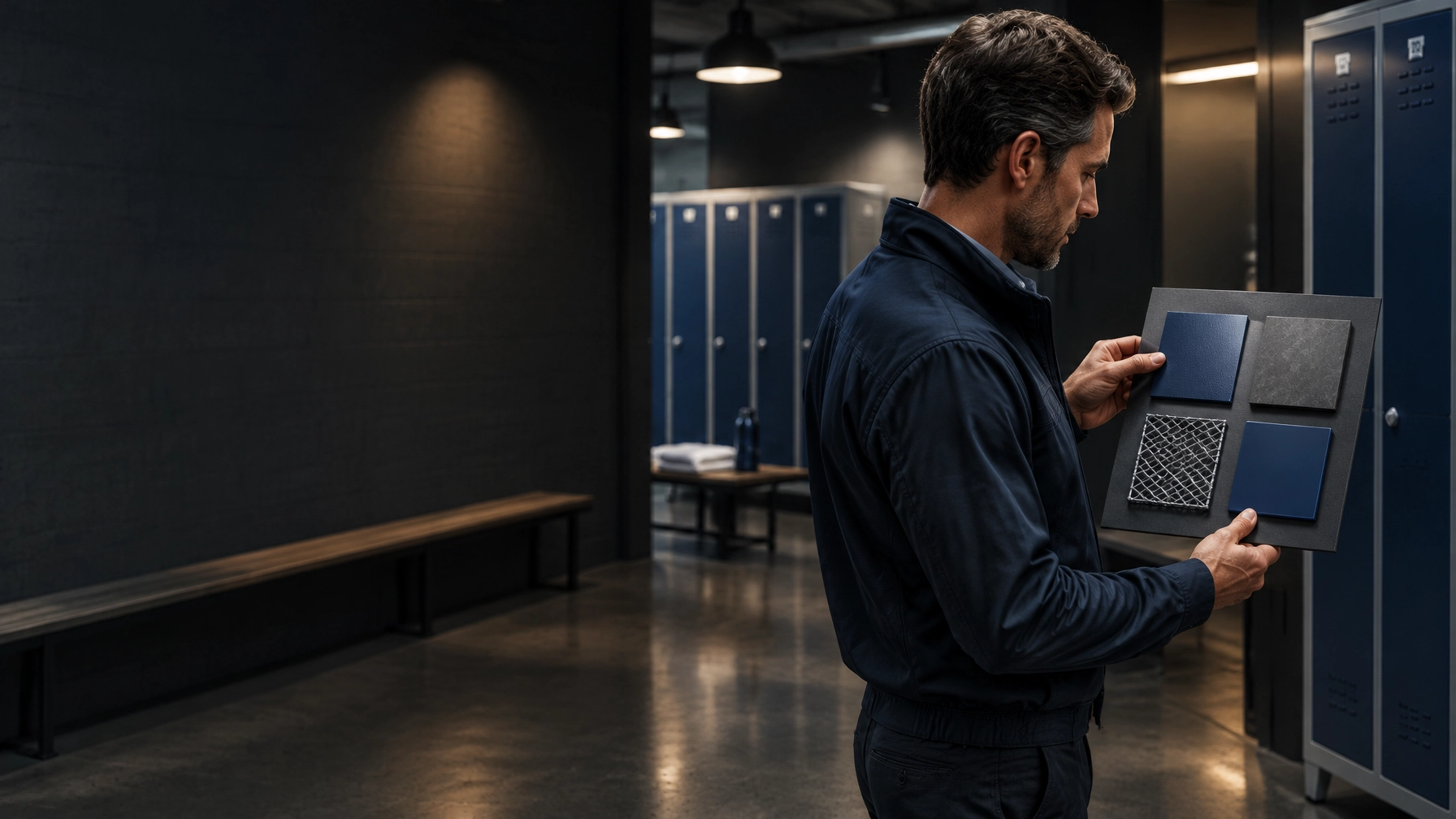
Choosing steel vs laminate lockers is only part of the decision. Your room conditions, cleaning routine, privacy needs and storage use also matter. Use this comparison to identify the material that fits your facility, then check construction details before you request a quote.
| Material | Security | Durability | Wet-area fit | Ventilation | Appearance | Weight |
|---|---|---|---|---|---|---|
| Powder-coated steel | Strong, with secure lock options | Robust for regular indoor use; protect coating from damage | Suitable for dry and moderately humid interiors when maintained | Vents can be specified | Clean, practical, RAL colour options | Medium |
| Compact phenolic laminate | Strong, depending on panel and lock specification | Good for demanding interiors; inspect edges and hardware | Very good when the system is designed for wet areas | Usually limited unless designed into the doors | Architectural finish and broad colour choice | Heavy |
| Wire mesh | Depends on mesh, frame and lock design; contents remain visible | Durable for industrial use; finish affects corrosion resistance | Airy, but not a sealed wet-area solution | Excellent | Functional, open appearance | Medium |
| HDPE plastic | Suitable for personal storage; verify door and lock design | Corrosion-resistant and colour-through | Excellent for washdown and persistently wet conditions | Depends on design | Solid, colourful, easy-care finish | Medium to heavy |
Steel vs Laminate Lockers: Match Construction to Use
Powder-coated steel
Steel suits general-purpose storage in offices, schools, factories, gyms and staff changing rooms. Loxmet manufactures steel lockers using DKP cold-rolled sheet, with a stated sheet thickness of 0.6 mm before painting. The locker body is monoblock welded, then finished with electrostatic powder coating. RAL colour options support practical colour matching across a facility.
A steel body offers strong everyday security, a rigid structure and straightforward maintenance. Doors, hinges and locks can typically be serviced or replaced, depending on the model and spare-part availability. The coating protects the surface, so inspect it during installation and routine maintenance. Scratches or damaged edges in damp areas should be addressed before corrosion develops.
Steel itself is non-combustible. That does not make every locker or complete installation fire-rated: confirm any project-specific fire requirements and request the relevant product documentation.
Loxmet makes metal lockers in Istanbul, Turkey, offering standard catalogue designs and custom fabrication. Browse the locker range to compare configurations.

Laminate and compact phenolic
“Laminate” can describe different constructions, so confirm exactly what is in the quotation. Compact phenolic panels are solid-core panels designed for demanding interior use. They provide a finished architectural appearance and are commonly considered for changing rooms and other areas exposed to moisture.
Check the full panel and locker system, not just the visible face. Ask about edges, joints, feet or plinths, fasteners, hinges and locks. These details affect how the unit performs in a wet room and how it can be cleaned. A decorative laminate over a wood-based core is not the same specification as compact phenolic; confirm the core and suitability for the intended exposure.
Laminate lockers can be a good fit when appearance and wet-area performance both matter. They are generally heavier than basic steel units, so consider delivery access, installation and floor layout. Review locker room dimensions and standard locker sizes when planning a room.
Mesh and wire
Choose mesh where visibility and airflow are more important than privacy or containment. Open construction helps air move through stored workwear and equipment. It also supports quick visual checks in retail back rooms, warehouses, workshops and industrial facilities.
Mesh lockers do not conceal contents, and small items may need separate trays or containers. The metal frame and mesh still require a suitable finish for the environment; open construction does not prevent corrosion if the material or coating is exposed to harsh conditions.

Plastic and HDPE
HDPE is a practical choice for pools, washdown areas and spaces exposed to persistent moisture. It does not rust, and colour runs through the material rather than relying only on a surface coating. Those characteristics make plastic lockers well suited to wet environments where corrosion resistance and easy cleaning are priorities.
Compare the complete design: door stiffness, hardware, ventilation, fixing method and cleaning instructions. Plastic is not automatically fire-rated, so ask for product-specific documentation if fire performance is part of your specification. Its appearance and feel also differ from steel or phenolic, which may matter in a customer-facing space.

Let the Environment Drive the Choice
Dry office or staff room: Steel is a dependable, practical option for everyday personal storage. It offers a familiar finish, secure lock choices and straightforward servicing.
Humid changing room: Compare the actual moisture exposure, cleaning method and ventilation. Compact phenolic and HDPE are designed for demanding wet-area applications; coated steel can suit less exposed interiors when its finish is kept in good condition. The UK Health and Safety Executive explains workplace welfare facilities, including clothing storage, in its workplace facilities guidance.
Pool, shower or regular washdown: Plastic lockers are often a strong fit where water exposure is frequent. Compact phenolic is another option when the full system is specified for wet use. Check hardware materials, drainage and cleaning compatibility. For cleaning substances, consult the HSE’s COSHH basics.
Warehouse, retail or industrial floor: Mesh supports airflow and visibility. Where staff need privacy or stored items must be protected from view, select a closed-door design instead.
Construction site or changing area: Prioritize secure clothing storage and a practical separation between everyday clothing and work equipment. The HSE’s construction welfare guidance covers changing areas and secure storage. For specific requirements, assess the workwear and PPE process as well as the room conditions.
Material choice should also reflect what goes inside. Workwear lockers, dirty lockers, uniform lockers and PPE lockers can require different ventilation, separation and compartment layouts.
What to Check in a Locker Quote
A material name is not a complete specification. Before comparing quotes, ask each supplier for the same information:
- Body and door material, thickness and construction.
- Surface finish, colour reference and suitability for the planned cleaning routine.
- Panel core and edge construction for laminate products.
- Mesh opening and frame details where visibility is needed.
- HDPE specification and hardware details for plastic units.
- Lock type, hinge construction, shelves, hooks and ventilation.
- Base, plinth, fixing and drainage details for wet or uneven areas.
- Product-specific fire documentation if the project requires it.
- Warranty coverage, replacement parts and maintenance guidance.
Loxmet offers more than 100 standard products as well as custom metal fabrication. Catalogue products in catalogue colours are generally delivered within 10 working days; custom colours and made-to-order products typically require approximately 10 additional working days. Single-unit orders are accepted. The company provides a 10-year warranty against production faults. Ask the team to confirm the schedule for your specification and order.
Loxmet also states CE and ISO 9001:2015, ISO 10002:2018, ISO 14001:2015 and ISO 45001:2018 credentials. Confirm which documentation is relevant to your product and project. If your layout, dimensions or colour requirements need adjustment, explore custom locker options.
Common Questions
Are laminate lockers suitable for wet changing rooms?
Compact phenolic panels are commonly selected for wet-area interiors, but check the full construction, including edges, hardware and fixing details. Confirm suitability with the manufacturer for your cleaning routine and exposure.
Are mesh lockers secure?
They can be fitted with locks, but their contents remain visible and the open design does not contain small items. Choose mesh when ventilation and visibility are priorities, and confirm the door, frame and lock design meet your security needs.
Do plastic lockers rust?
HDPE does not rust. Check the specification for hinges, locks, fasteners and other components, since these may use different materials and affect performance in wet environments.
Is steel a good choice for changing rooms?
Steel lockers work well in many indoor changing rooms, especially where the area is dry or moderately humid and the coating is maintained. For frequent water exposure, compare steel with wet-area materials and check the complete locker specification.
Can Loxmet make custom locker dimensions or colours?
Yes. Loxmet offers custom fabrication alongside its standard catalogue. Send your dimensions, layout, intended use and colour reference for a quote. Review the FAQs or contact the team with your requirements.
Choose the material around your actual room conditions, cleaning process and storage needs, not the material name alone. Compare specifications, confirm the details that matter for your site, and contact Loxmet for support with a standard or custom locker requirement.