


Highlights
Office Storage Sliding Door Cupboards for Compact Offices

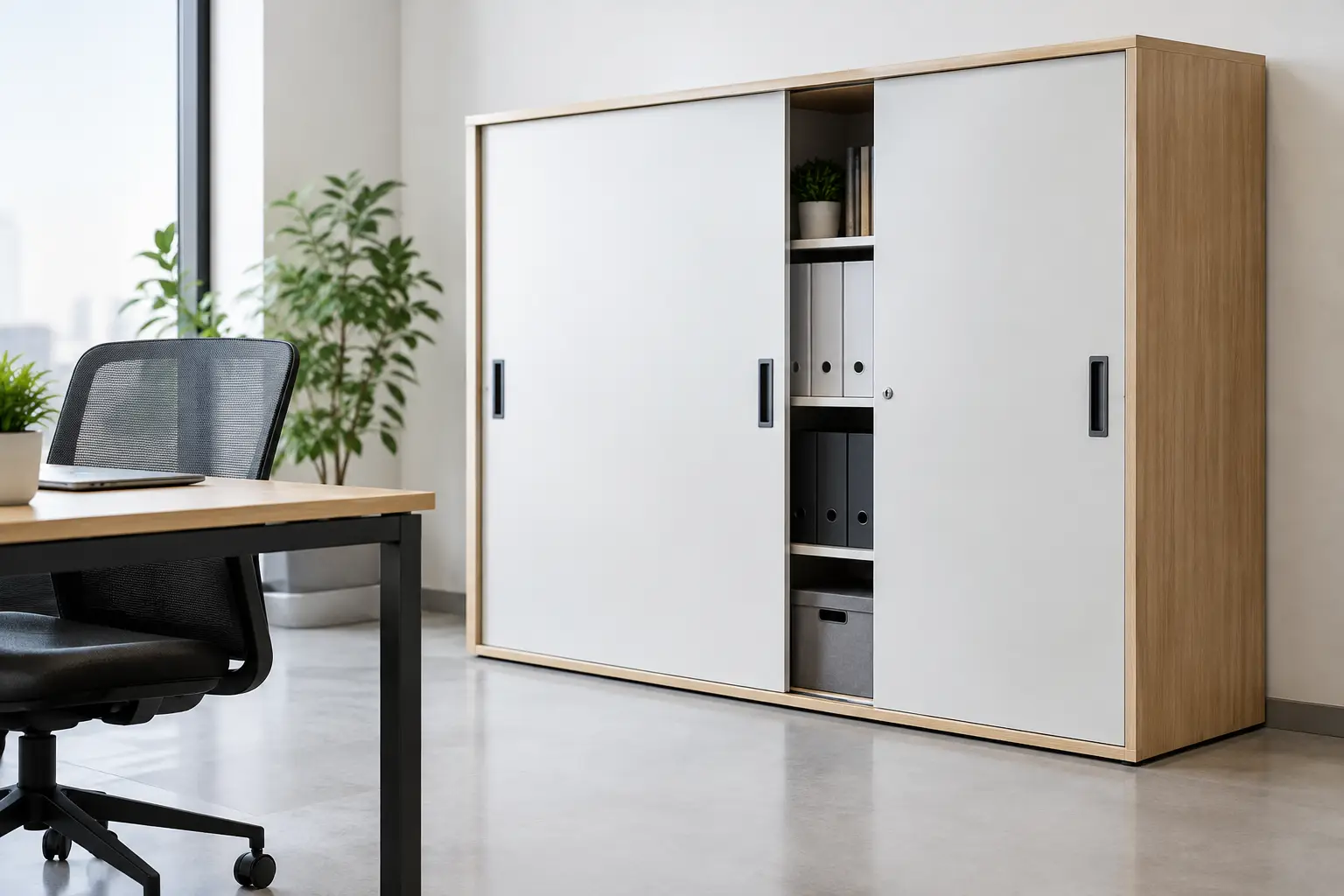
A cupboard door that swings into a busy aisle can create a problem every time someone needs a file, supply box, or shared device. Office storage sliding door cupboards remove that conflict by keeping access within the cabinet footprint. For procurement and facility teams working with limited floor area, they are a practical way to increase organized storage without compromising circulation.
The right unit is not simply a cabinet with different doors. It must match the materials being stored, the number of users, the available wall length, and the daily demands placed on the workplace. Steel construction, internal layout, locking options, and installation conditions all affect long-term value.
Why Sliding Door Cupboards Work in Commercial Offices
Traditional hinged doors require clear space in front of the cabinet. That may be acceptable in a private office, but it becomes inefficient along corridors, beside workstations, behind reception areas, or in compact records rooms. Sliding doors move laterally, allowing staff to access stored items without blocking walkways or neighboring furniture.
This design is especially useful where cabinets must sit close to desks, printers, meeting tables, or filing stations. It supports a tighter layout while retaining full-height storage capacity. In busy environments, fewer doors projecting into shared space can also reduce minor impacts and day-to-day disruption.
Metal office storage sliding door cupboards are also suited to long service cycles. Commercial storage is opened repeatedly, loaded unevenly, moved during office changes, and expected to remain presentable. A well-made steel cabinet handles these conditions better than lightweight furniture designed for occasional domestic use.
Start With the Storage Requirement
The first specification question is simple: what will the cupboard hold? The answer determines cabinet dimensions, shelf configuration, load requirements, and security level.
For paper records, binders, and archived documents, adjustable shelves are usually the most efficient option. They allow the cabinet interior to be set around file heights rather than wasting vertical space. Teams storing boxed records should check both shelf load capacity and the clear internal width, since archive cartons can be heavier and deeper than expected.
For stationery, print supplies, employee materials, and general consumables, a combination of adjustable shelves and compartment accessories may be more useful. Departments with controlled stock often benefit from lockable storage, particularly where items are high value or must be issued by an administrator.
IT equipment creates a different requirement. Laptops, tablets, peripherals, and cables need protected storage, but they may also need charging access, ventilation, or cable management. A standard cupboard can work for inactive equipment, while devices being charged should be stored in a purpose-designed charging cabinet. Selecting the correct product category protects both the equipment and the operating environment.
Measure the Space That Matters
A cabinet can fit on a floor plan and still be difficult to use. Measure wall width, ceiling restrictions, skirting, power outlets, radiators, and nearby doors before selecting dimensions. Then assess how the area functions when employees are moving through it.
Sliding doors offer a major advantage where front clearance is tight, but users still need room to stand in front of the cabinet and remove stored items safely. In narrow rooms, consider whether a wider, lower cupboard provides better access than a tall unit with concentrated storage. The right choice depends on the volume stored and how frequently it is retrieved.
Height is another operational decision. Tall cupboards maximize vertical capacity, but lower cupboards can serve a second purpose as a printer stand, work surface, or partition between zones. In customer-facing areas, a lower cabinet may help preserve sightlines and create a more open appearance.
For multi-cabinet installations, allow a consistent layout rather than filling every spare gap with a different size. Matched cabinet heights and finishes make the space easier to manage, simplify future additions, and provide a more professional result for staff and visitors.
Specify Construction for the Expected Workload
Commercial buyers should look beyond the external appearance of a cupboard. Door alignment, steel thickness, shelf support, reinforced corners, and powder-coated finishes determine how a cabinet performs after years of use.
Steel is a reliable choice for offices that need durable storage with low maintenance requirements. It resists the dents, loose fittings, and surface wear that can develop in high-use shared areas. A quality powder-coated finish provides a clean appearance while helping protect the cabinet surface from scratches and corrosion in normal indoor conditions.
The door mechanism deserves close attention. Sliding doors should run smoothly, close consistently, and remain stable when users access one side of the cabinet. Poorly supported doors can become difficult to operate, especially in cabinets loaded with heavy files and supplies. This is not a minor detail: a door that jams will quickly turn useful storage into unused storage.
Shelf loading should be specified realistically. Estimate the weight of stored binders, paper boxes, tools, or equipment rather than selecting by shelf count alone. Adjustable shelving gives flexibility, but each shelf must be capable of carrying the intended load without bowing or affecting door movement.
Choose Security That Matches the Contents
Not every office cupboard needs the same lock. General stationery may only require a basic central lock to prevent casual access. HR files, financial documents, contracts, medication, confidential project materials, and controlled equipment require a more deliberate access policy.
Key locks are straightforward and cost-effective for many applications, particularly where a department manager controls access. However, keys need to be tracked and replaced when lost. Where several authorized users require access, consider lock options that suit the organization’s internal procedures. The best lock is the one that staff can manage consistently.
Security also involves cabinet placement. A locked cabinet positioned in an unrestricted public area may not provide the same protection as a unit located in a controlled back-office room. Sensitive records should be stored with both physical security and workplace access in mind.
Plan the Interior Before Ordering
A cupboard with empty volume is not always an efficient cupboard. Internal planning helps avoid over-ordering cabinets or forcing staff to stack materials in ways that make retrieval difficult.
Adjustable shelves are the standard choice for flexible office storage. They suit changing inventories and allow one cabinet model to serve different departments over time. Fixed shelves can be suitable where storage dimensions are stable and heavy loads require a permanent arrangement.
For mixed contents, separate categories by shelf level: frequently used supplies at waist-to-shoulder height, heavier boxes lower down, and archived items on upper shelves. This improves access and reduces unnecessary handling. Labels on shelves or door interiors can also help shared teams return materials to the correct place.
If the cupboard will store personal belongings, individual compartments or locker systems may be more appropriate. If it will store cleaning products, chemicals, or hazardous materials, use a cabinet designed for that purpose rather than adapting general office furniture. Product selection should follow the risk and the contents, not only the available space.
Finish, Color, and Workplace Fit
Office storage should support the working environment without demanding constant attention. Neutral finishes are often preferred for administration areas, professional services offices, schools, and public facilities because they coordinate easily with existing furniture. For industrial offices, warehouses, and maintenance departments, color coding can help identify zones, teams, or storage categories.
Consistency matters in larger projects. Selecting a standard cabinet range makes future replacements and extensions easier to manage. It also helps distributors and procurement teams maintain a clear product specification across multiple sites.
Loxmet manufactures heavy-duty metal storage solutions for projects that require standard products, custom dimensions, or specific operational features. For larger rollouts, using one manufacturing partner can simplify finish matching, delivery planning, and quality control across the storage program.
Avoid Common Specification Mistakes
The most common mistake is choosing capacity based only on external dimensions. Internal shelf spacing, door opening width, and usable depth are what determine whether the intended contents actually fit. Always request or confirm internal measurements before finalizing an order.
Another issue is treating all cupboards as interchangeable. A cabinet for files, a cabinet for personal belongings, and a cabinet for charged devices may look similar from a distance, but their construction and safety requirements differ. Buying the correct cabinet from the start avoids later workarounds that compromise access or compliance.
Finally, consider delivery and installation as part of the procurement decision. Confirm access routes into the building, elevator dimensions, floor loading where relevant, and whether cabinets must be fixed together or secured to a wall. A practical storage system should arrive ready for its intended site conditions, not create a new facilities problem on delivery day.
The strongest office storage solution is the one employees use without thinking about it: doors move freely, supplies are easy to find, confidential materials stay protected, and walkways remain clear. Specify sliding door cupboards around those daily realities, and the investment will continue to support a more orderly workplace long after the initial fit-out is complete.