


Highlights
Chemical Storage Cabinet Requirements

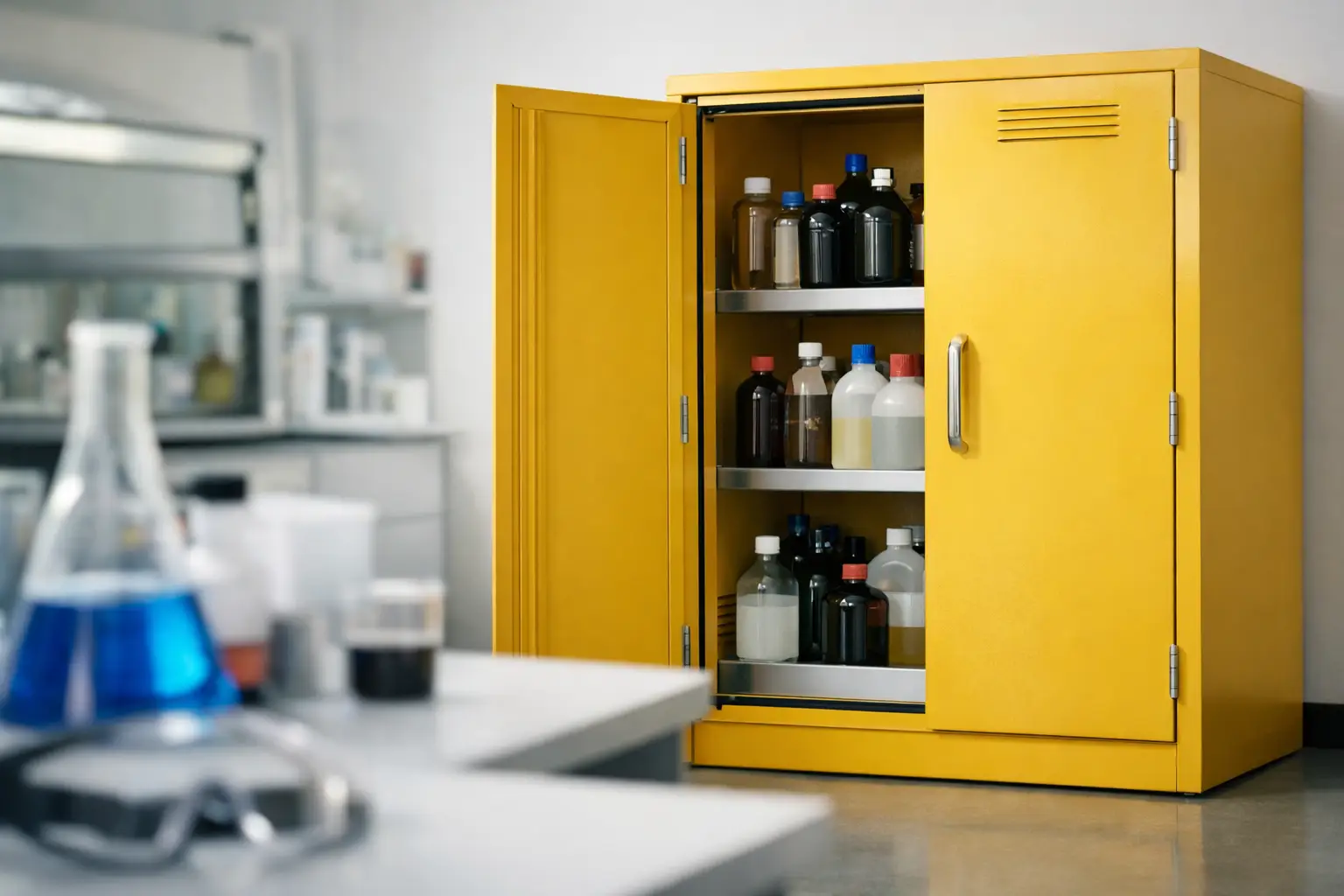
A chemical cabinet that is the wrong size, wrong material, or wrong internal layout creates problems long before an inspection does. It slows handling, increases spill risk, and makes segregation harder than it should be. That is why chemical storage cabinet requirements matter at the purchasing stage, not after installation.
For most business buyers, the right cabinet starts with a basic question: what exactly will be stored, in what quantities, and under what operating conditions? A cabinet for general laboratory reagents is not automatically suitable for flammable liquids, corrosives, oxidizers, or mixed-use industrial environments. The requirement is not simply to buy a cabinet labeled for chemicals. The requirement is to match cabinet design to the hazard profile, workflow, and compliance expectations of the facility.
What chemical storage cabinet requirements actually cover
When buyers review chemical storage cabinet requirements, they are usually looking at a mix of safety, material compatibility, operational practicality, and regulatory fit. Those factors overlap, and one weak point can make the whole storage setup less effective.
The first area is chemical compatibility. Acids, bases, solvents, and aggressive cleaning agents do not behave the same way in storage. Cabinet body material, shelf finish, sump design, hinge quality, and locking components all need to hold up to the chemicals being stored. A painted steel cabinet may suit many industrial applications, but some corrosive environments may call for specialized coatings or different internal protections.
The second area is hazard segregation. Incompatible chemicals should not share the same cabinet simply because there is empty shelf space. Acids and bases, oxidizers and organics, and flammables and certain reactive materials often require separation. This is where internal configuration matters. Adjustable shelves, compartment options, and clearly defined storage zones reduce the temptation to place incompatible products side by side.
The third area is containment. Cabinets should help control leaks and minor spills through features such as liquid-tight sills or integrated sumps. This is a practical requirement, not just a specification line. In active workplaces, containers are moved, decanted, and returned to storage regularly. Small failures happen. A cabinet should limit how far a spill can travel and simplify cleanup.
Material and construction requirements
A chemical storage cabinet needs more than a strong outer shell. It needs construction details that stay reliable under daily use. Doors should close squarely. Shelves should carry real working loads without deforming. Welds, bends, and joints should be consistent, especially in project environments where cabinets are used heavily across shifts.
Steel remains a common choice because it offers strength, impact resistance, and long service life. For many facilities, that is the right direction. But steel alone is not the requirement. The finish matters just as much. Powder coating quality, corrosion resistance, and the cabinet’s ability to tolerate aggressive atmospheres all affect long-term performance.
Shelf design is another point buyers sometimes underestimate. Shelves should be adjustable, easy to clean, and capable of supporting the weight of stored containers without instability. Deep shelves may increase capacity, but they can also reduce visibility and make first-in, first-out handling less controlled. In many applications, easier access is safer than maximum density.
Locking systems also deserve attention. A lock should support access control without slowing authorized users unnecessarily. In some facilities, a simple keyed lock is enough. In others, restricted access is essential because the cabinet contains hazardous materials that should only be handled by trained staff. The requirement depends on site policy, but the cabinet should support that policy rather than work against it.
Chemical storage cabinet requirements for flammables and corrosives
This is where generic buying decisions often fail. Flammable storage and corrosive storage are not interchangeable needs, even if both involve chemicals.
For flammable liquids, the cabinet is expected to reduce risk associated with ignition and fire spread. That usually means a purpose-built metal cabinet with appropriate fire-resistant design features, clear hazard labeling, self-closing or close-fitting doors where required, and spill containment at the base. Capacity also matters. Overloading a flammable cabinet with too many containers or oversized drums creates handling problems and may conflict with applicable codes.
For corrosives, the focus shifts toward material resistance and containment. Strong acids or bases can attack finishes, hardware, and even shelving if the interior is not designed for that exposure. A cabinet used for corrosives should be selected with the exact chemical class in mind, because not all corrosives affect materials in the same way.
Mixed storage is where many facilities need to slow down and review their assumptions. One cabinet may appear to solve a space problem, but combining chemical families can create a larger safety issue. If the site handles several chemical groups, separate cabinets are often the more practical and compliant choice.
Ventilation, labeling, and location
Ventilation is one of the most misunderstood parts of chemical storage cabinet requirements. Some buyers assume every cabinet should be vented. That is not always the case. Whether ventilation is appropriate depends on the chemical type, local code requirements, manufacturer design, and the facility’s overall safety plan. In some cases, improper venting can reduce cabinet performance rather than improve it. This is a point where site-specific review matters.
Labeling should be clear, durable, and visible from normal approach distance. Staff should be able to identify cabinet contents quickly without opening the doors. That supports safer handling, faster inventory checks, and more effective emergency response. Labels should align with the hazard class of the stored materials and the site’s internal identification system.
Cabinet location is just as important as cabinet specification. A well-built unit placed in a poor location still creates operational risk. Cabinets should be positioned away from ignition sources when storing flammables, should not obstruct exits or key circulation paths, and should allow enough clearance for safe door swing and container handling. Buyers planning larger fit-outs should think about traffic patterns, replenishment routines, and how frequently users need access.
Capacity planning is a safety requirement too
It is common to focus on compliance features and ignore volume growth. That usually leads to overcrowding within months. Once containers start being stored on top of cabinets, in work areas, or in temporary floor positions, the original cabinet no longer solves the problem.
Good capacity planning starts with current inventory, but it should also account for delivery frequency, shift usage, container sizes, and seasonal demand changes. A cabinet that fits the chemical list on paper may still be undersized if operators use mixed bottle sizes or require separation between opened and unopened stock.
This is where custom configuration can make a measurable difference. Additional shelves, divided compartments, reinforced storage levels, or dimensions built around a specific container profile can improve both safety and storage efficiency. For buyers managing multiple sites or standardized facility rollouts, consistency across cabinet formats can also simplify training and inspection routines.
Buying for compliance without buying blind
The most practical approach is to treat the cabinet as part of a larger chemical management system. The cabinet itself should support safe segregation, controlled access, spill containment, and durable service life. But it also has to fit the site’s chemical inventory, local regulations, and user behavior.
That means asking direct procurement questions before placing an order. What chemicals will be stored? What is the largest container size? Is the main risk flammability, corrosion, toxicity, or incompatibility? Is standard sizing enough, or does the room require a custom footprint? Will the cabinet be used in a lab, workshop, production area, maintenance room, or school facility? Each answer changes the right specification.
For business buyers, there is also a supply-side requirement: consistency. Cabinets should arrive with dependable build quality, repeatable dimensions, and clear product data. In project purchasing, small inconsistencies become installation delays and approval issues. That is one reason many buyers prefer working with a manufacturer that can supply both standard units and custom metal solutions for site-specific requirements, such as Loxmet.
The best cabinet choice is rarely the one with the longest feature list. It is the one that fits the chemicals, the users, and the environment without compromise. If your team starts with the real storage risks instead of a generic product category, the specification gets clearer fast – and the cabinet performs the way it should from day one.