


Highlights
Almirah Locker Buying Guide for Businesses

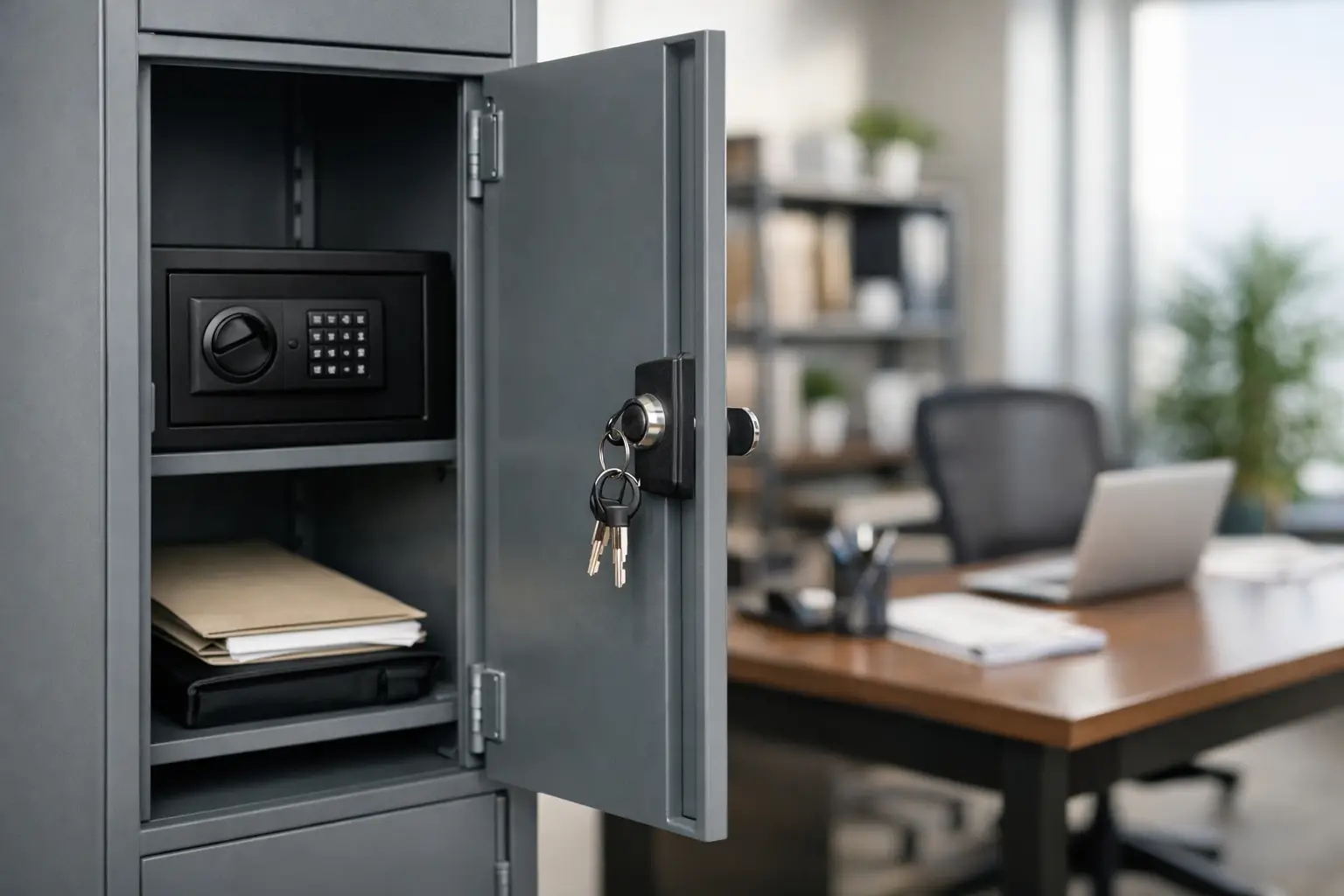
If you are sourcing storage for a workplace, an almirah locker is rarely just a cabinet with a lock. It often carries documents, uniforms, devices, tools, personal items, or controlled supplies that need to stay protected, organized, and easy to access. That is why business buyers usually care less about appearance alone and more about steel thickness, lock options, internal layout, and how the unit will perform after years of daily use.
In commercial settings, the term almirah locker is used broadly. Sometimes it refers to a full-height steel cupboard with lockable doors and shelves. In other cases, it means a wardrobe-style storage unit for employee belongings, files, or operational equipment. The label matters less than the application. What matters is whether the product fits the workflow, the floor plan, and the level of security the site actually needs.
What an almirah locker needs to do in a business setting
A business purchase should start with function. In an office, the unit may need to secure files, laptops, and stationery while maintaining a clean visual line. In a school or staff area, it may need to handle high-frequency opening and closing with minimal maintenance. In a factory, warehouse, or service facility, the demands are tougher. The locker may need reinforced doors, corrosion-resistant finishing, and compartments sized for PPE, radios, scanners, or folded workwear.
That is why a domestic buying mindset does not translate well to commercial procurement. A unit that looks acceptable in a catalog can fail quickly if hinges loosen, locks wear down, or shelves bend under routine loads. For facility managers and distributors, replacement costs and service disruption often matter more than the initial unit price.
How to choose the right almirah locker
The right specification comes from the use case, not from a generic size chart. Start by defining who will use the unit and what they need to store. Personal storage, archive storage, device storage, and uniform storage each require a different internal arrangement.
Size and proportions
Height is usually the first decision. Full-height models maximize vertical capacity and are often chosen for staff rooms, back offices, and operational areas where users need space for bags, coats, or bulkier items. Mid-height units can work better under windows, in compact admin rooms, or in spaces where visibility across the room matters.
Width and depth deserve just as much attention. A narrow unit may save floor space but limit what can be stored on shelves or hangers. A deeper cabinet improves capacity, though it can make aisles tighter in high-density layouts. For larger projects, this becomes a planning issue rather than a product issue. The best unit on paper can still be wrong if it disrupts circulation or cleaning access.
Internal layout
This is where many purchases go off track. An almirah locker with only open shelves may work for document boxes but not for employee garments or mixed-use storage. If users need to hang clothing, include a hanging rail. If they store small valuable items, consider lockable inner compartments. If inventory changes often, adjustable shelves add flexibility and reduce the chance that the unit becomes obsolete after one department change.
Mixed-use interiors are often the safest choice for commercial buyers. A combination of shelves and hanging space covers more scenarios and helps standardize purchasing across multiple sites.
Locking system
Lock choice should reflect both risk level and user turnover. Basic key locks are still common because they are simple and cost-effective. They work well when access is limited and key control is manageable. For schools, gyms, shared staff areas, or larger operations, hasp locks, padlock fittings, or digital options may be more practical.
There is no single best answer here. Keyed locks reduce user responsibility for supplying their own padlock, but they create key management work. Padlock-ready doors shift that burden to the user, but consistency can suffer. In higher-control environments, central access planning may matter more than the lock itself.
Material quality is the difference between short-term and long-term value
A commercial almirah locker should be judged as a working asset. Steel grade, sheet thickness, welding quality, and powder coating all affect service life. Buyers who focus only on dimensions and price often miss the cost of weak construction.
Door rigidity is one of the clearest signals of overall quality. If the door panel flexes too easily, locking performance and alignment can degrade over time. The same applies to shelf loading. A shelf that holds the required weight on day one may still fail if the steel gauge is too light for repeated use.
Finish quality also matters more than many buyers expect. In humid rooms, changing areas, utility zones, and industrial settings, poor coating performance leads to corrosion, chipped edges, and a tired appearance long before the product should need replacement. For distributors and project buyers, that affects customer satisfaction as much as durability.
Where almirah lockers work best
The strength of an almirah locker is its versatility. In offices, it supports secure storage without the visual bulk of open shelving. In schools and training centers, it helps control access to records, uniforms, and staff materials. In gyms and staff changing rooms, wardrobe-style configurations can support personal storage with better vertical use of space.
Industrial sites often get the most value from this format because it bridges the gap between a standard office cabinet and a dedicated worker locker. One unit can store documents, PPE, tools, and personal items if specified correctly. That matters when floor space is limited or when site managers want fewer product types across one facility.
Healthcare and lab-adjacent environments may also use almirah-style storage where enclosed, durable, cleanable metal units are preferred. Here, the key question is not whether the unit is labeled an almirah locker, but whether it meets hygiene, organization, and access requirements.
Standard model or custom build?
For many buyers, a standard model is the fastest and most economical route. It shortens lead times, simplifies repeat ordering, and makes rollout easier across several locations. If the storage requirement is conventional, standardization usually wins.
Custom production becomes valuable when the site has unusual dimensions, a specific internal configuration, branding requirements, or operational constraints such as sloping tops, perforated panels, master-key access, or color coding by department. It also makes sense when buyers want one storage family to serve multiple functions while keeping a consistent look.
The trade-off is simple. Customization gives closer fit, but it can increase planning time and reduce interchangeability. For project buyers, the right decision often depends on whether the priority is speed or exact operational alignment.
Questions procurement teams should ask before ordering
A strong procurement process usually tests the specification before it tests the price. Ask how the unit will be used after installation, not just how it will look on delivery. Will users carry wet clothing, heavy binders, boxed supplies, or electronics? Will cleaning teams move around it daily? Will departments share access, or is each unit assigned to one person?
It is also worth asking how often the storage need may change. A fixed interior is efficient when the use case is stable. If departments are growing, relocating, or repurposing space, a more flexible layout often protects the investment better.
For international buyers and distributors, consistency matters as much as design. Repeatable quality, dependable lead times, and the ability to match future orders to existing installations often separate a capable manufacturer from a short-term supplier. That is one reason many commercial buyers work with manufacturers such as Loxmet when they need both standard production and customization under one supply relationship.
The practical mistake to avoid
The most common mistake is treating all metal storage units as interchangeable. They are not. Two products can share similar dimensions and still differ significantly in rigidity, lock reliability, coating performance, and expected service life.
A lower purchase price can be reasonable if the use case is light and the environment is controlled. But for staff facilities, education projects, industrial sites, and multi-user areas, under-specification usually shows up quickly. Doors sag, shelves distort, and replacement cycles shorten. That turns a saving into an avoidable operating cost.
A well-chosen almirah locker should support the way your site runs, not force your team to work around storage limitations. If the unit matches the real use case, the result is straightforward: better organization, better security, and fewer problems to manage later.