


Highlights
Athletic Lockers for High-Traffic Facilities

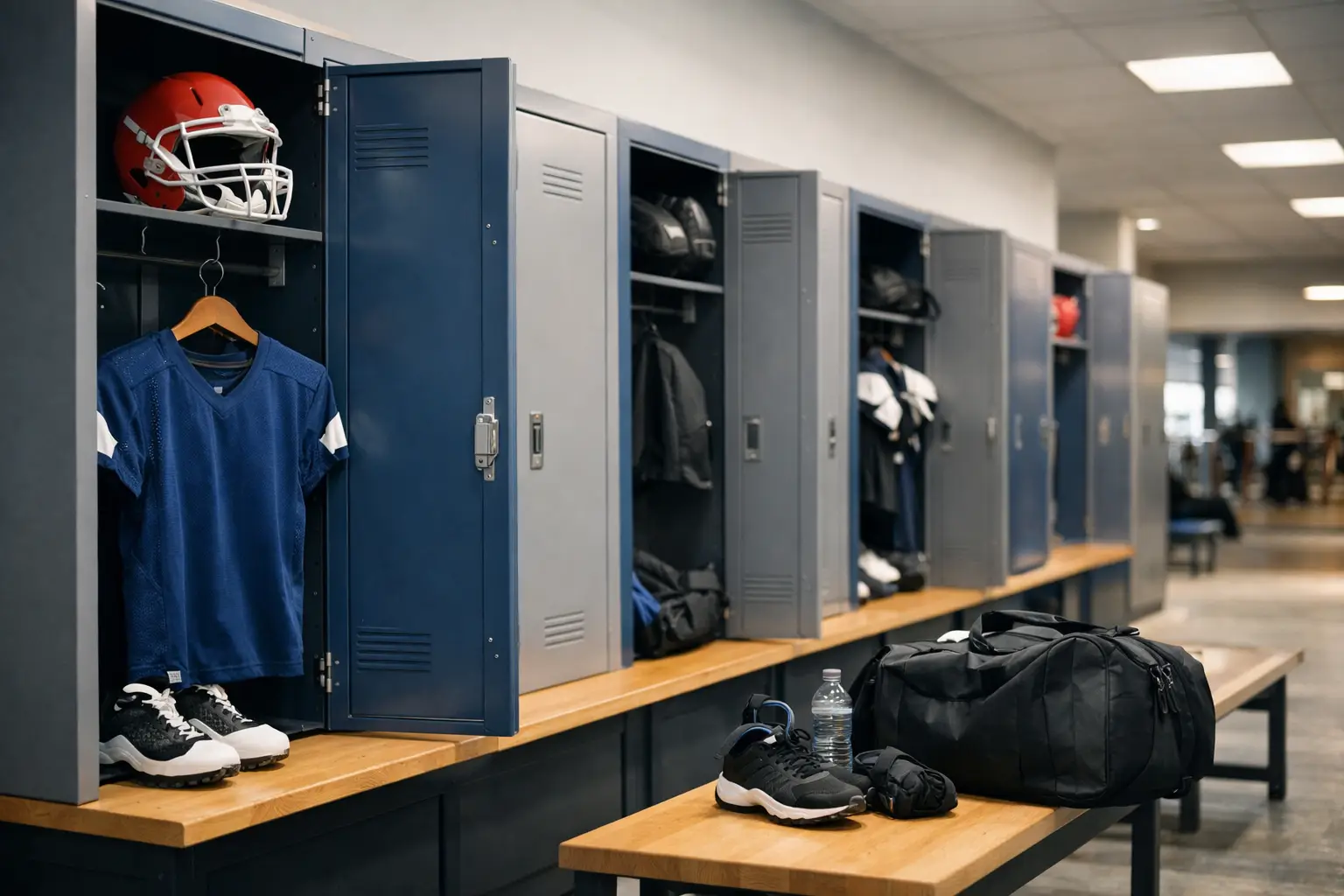
A locker room fails fast when storage is treated as an afterthought. Doors sag, ventilation falls short, damp gear sits too long, and replacement costs start showing up much earlier than expected. Athletic lockers are used hard, often by rotating groups of students, members, teams, or staff, so the buying decision needs to be based on operating conditions, not just layout drawings.
For facility managers, procurement teams, and commercial fit-out buyers, the real question is not whether lockers are needed. It is which locker specification will hold up under daily impact, moisture exposure, and repeated turnover without creating maintenance problems. In gyms, schools, training centers, sports complexes, and employee wellness spaces, locker performance affects security, hygiene, traffic flow, and the long-term cost of ownership.
What athletic lockers need to handle
Athletic environments create a different demand profile than standard office or staff storage. Users are moving quickly, carrying bags, shoes, uniforms, helmets, and personal items. Doors are opened and closed constantly. Wet clothing, towels, and footwear increase humidity inside each compartment. In many facilities, cleaning crews work around the lockers every day, which adds another layer of wear.
That combination changes the specification. Athletic lockers need strong body construction, reliable hinges, practical ventilation, and finishes that can tolerate routine cleaning. If the material or design is too light, the product may still look acceptable on installation day, but the problem shows up later through bent doors, misalignment, corrosion risk, or poor user experience.
This is why metal remains a practical choice for many commercial and institutional buyers. A properly manufactured metal locker offers the structural strength needed for repeated use while also supporting a wide range of compartment sizes, locking options, and layout formats. It also gives buyers more control when a project needs customization.
Choosing athletic lockers by use case
Not every locker room operates the same way. A school sports facility has different pressures than a private fitness club or a professional training center. The right specification depends on who uses the lockers, how long items remain stored, and how much abuse the units are expected to absorb.
Schools and colleges
In school settings, athletic lockers often need to support high user turnover and hard daily use. Students may store backpacks, gym clothes, shoes, and equipment in a short access window before and after classes or practice. In this case, durability usually matters more than premium appearance. Buyers tend to benefit from simple, dependable locking methods, easy-to-clean surfaces, and ventilation that helps reduce odor buildup.
Fitness clubs and gyms
Commercial gyms usually prioritize user convenience, clean presentation, and efficient capacity planning. Day-use lockers may be smaller if members are storing only clothing, shoes, and valuables. Full-height compartments make more sense when gym bags or coats need to fit comfortably. In these spaces, the number of users at peak times is often more important than total membership count. That affects how many lockers are actually needed.
Sports teams and training facilities
Team environments often require larger athletic lockers with enough internal volume for uniforms, pads, bags, and personal gear. Bench integration can also be useful when players need a defined changing area. Here, compartment size and structural strength carry more weight than density. If equipment is bulky, narrow lockers create frustration and reduce actual usability.
Employee wellness and workplace locker rooms
Industrial employers, healthcare operators, and large campuses sometimes include athletic-style changing spaces for wellness programs, on-site fitness areas, or shift-based staff facilities. These projects often need lockers that align with broader workplace standards for durability, hygiene, and controlled access. In these cases, buyers may also want the locker design to match nearby metal storage systems for a more consistent specification across the site.
Size, layout, and capacity planning
A common mistake in locker procurement is maximizing locker count without considering how people actually move through the room. High-density layouts can look efficient on paper but create congestion when doors open into narrow aisles or when multiple users need benches and access space at the same time.
Start with the storage requirement. If users carry only light personal items, smaller compartments may be enough. If they carry duffel bags, outerwear, or sports equipment, width and depth become more important. Height matters too, especially when long garments or stacked gear need to stay off the floor.
Double-tier and multi-tier formats can increase capacity, but they are not always the best answer. They work well for day-use environments with limited storage needs. They are less effective when the application calls for full personal organization, better airflow, or larger equipment storage. This is one of those decisions where more compartments do not automatically mean a better result.
Why ventilation matters in athletic lockers
Ventilation is not a small detail in sports and fitness settings. Poor airflow leads to lingering moisture, unpleasant odor, and a worse user experience overall. It can also shorten the service life of stored items and increase complaints in enclosed changing areas.
Well-designed athletic lockers should support air movement without compromising strength or security. The right level of ventilation depends on the environment. A school gym with brief storage cycles may need less airflow than a team facility where damp gear remains inside for extended periods. Buyers should think about usage duration, local humidity, HVAC performance, and cleaning routines when comparing locker designs.
Ventilation should also work with the locker interior, not against it. If the compartment is too cramped, airflow becomes less effective. A balanced design combines usable space with practical vent placement.
Locking options and security expectations
Security requirements vary by facility type. In some athletic spaces, a basic hasp or padlock-ready design is enough because users bring their own locks and store items for short periods. In other cases, facilities want integrated locks to simplify administration or reduce misuse.
The right choice depends on turnover, management style, and the value of stored contents. A private gym may want a straightforward, low-maintenance locking system for member convenience. A school may prefer a more controlled approach to reduce replacement and misuse issues. For employer-operated locker rooms, assigned storage can justify a more permanent locking solution.
There is always a trade-off between simplicity and control. More advanced locking options can improve user management, but they also affect budget, maintenance planning, and replacement procedures. Buyers should evaluate the lock as part of the whole system, not as a separate accessory.
Material quality and construction details
Two lockers can look similar in photos and perform very differently in service. For commercial buyers, construction details matter. Steel thickness, door reinforcement, frame rigidity, weld quality, coating performance, and hardware specification all affect long-term reliability.
This is especially true in athletic areas, where impact and moisture exposure are routine. A lighter-duty product may reduce initial cost, but if it needs frequent adjustment or early replacement, the total cost quickly changes. Institutional and project buyers are usually better served by focusing on service life, consistency, and maintenance demands rather than chasing the lowest unit price.
Powder-coated metal construction is a common choice because it offers durability, a professional appearance, and good resistance to wear when properly manufactured. For demanding environments, the finish quality matters as much as the base material. Cleaning chemicals, humidity, and daily contact all test the surface over time.
Custom athletic lockers for project requirements
Standard sizes work for many facilities, but not every locker room is standard. Columns, restricted wall lengths, bench zones, team-specific dimensions, and branding requirements often create the need for customization. That is where manufacturing flexibility becomes valuable.
Custom athletic lockers can help buyers solve practical problems such as unusual compartment widths, sloping tops, integrated seating, special ventilation patterns, numbered doors, or coordinated color schemes. In some projects, custom production is less about appearance and more about getting the room to function correctly without wasted space.
For distributors and project buyers, it also helps to work with a manufacturer that can supply more than one storage category. Locker rooms often sit alongside office storage, staff cabinets, shelving, or PPE storage. Consolidating those needs with one capable supplier can simplify procurement and help keep specification standards consistent across the facility.
What buyers should ask before placing an order
Before finalizing a locker package, it is worth confirming how the units will be used five years from now, not just on opening day. Ask whether the locker size matches actual gear, whether ventilation is sufficient for the environment, whether the lock type suits the user group, and whether the construction level is appropriate for traffic volume.
Lead time matters too. So does the ability to scale repeat orders if the facility expands or if a distributor needs ongoing supply. A dependable manufacturing partner should be able to provide standard products quickly while also supporting project-specific changes when required. That balance is often what separates a short-term purchase from a workable long-term supply relationship.
Loxmet approaches athletic locker projects the same way it approaches other heavy-duty storage requirements – with a focus on durable metal construction, practical customization, and supply reliability for business buyers.
The best locker room projects are rarely the most complicated. They are the ones where the storage specification matches the real pace, moisture level, and traffic pattern of the facility from day one.