


Highlights
See Through Door Locker Buying Guide

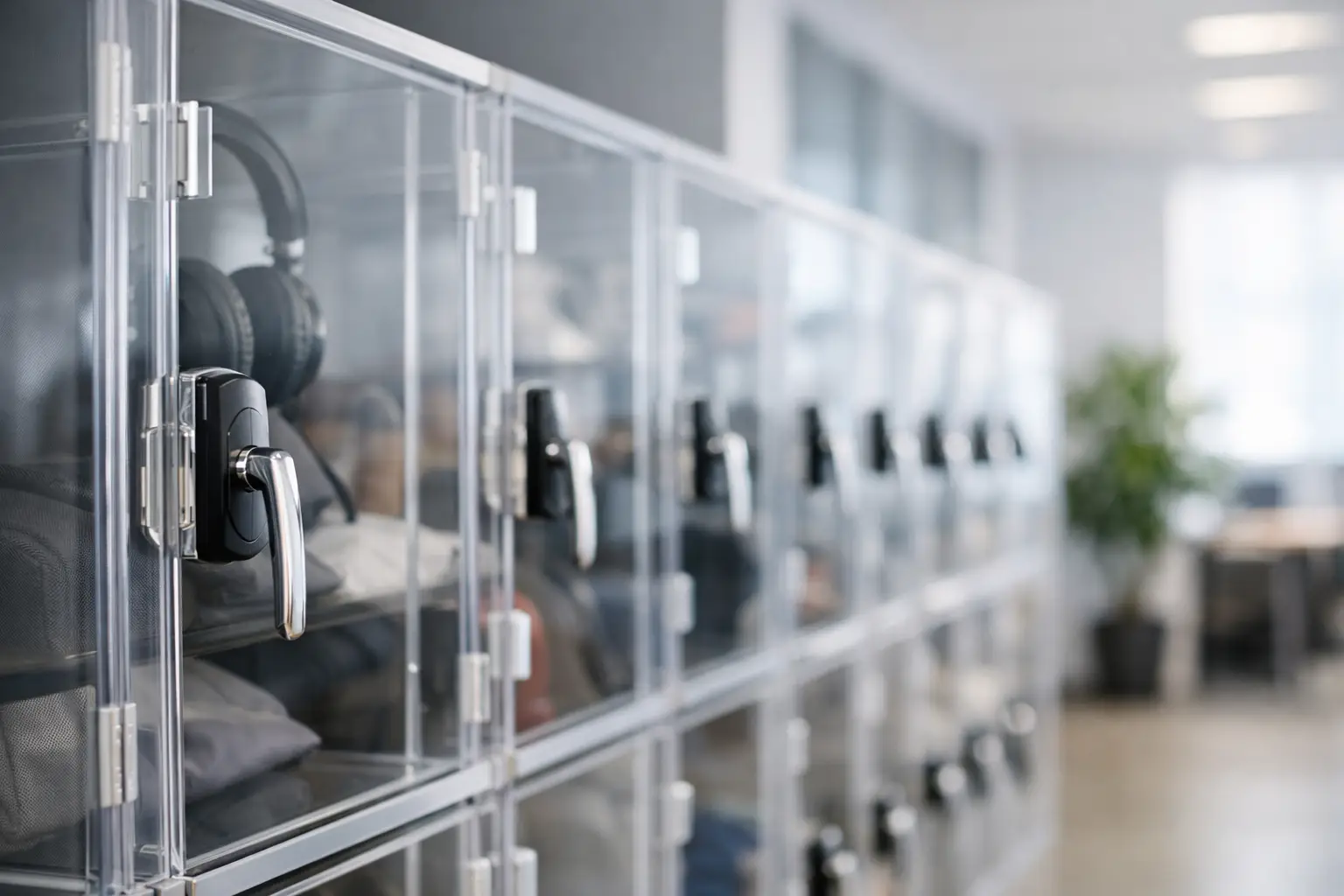
When staff keep opening locker doors just to check contents, small delays start adding up. A see through door locker solves a simple operational problem – it lets teams confirm what is stored, whether a compartment is occupied, and whether items are where they should be without unnecessary access.
For business buyers, that visibility is not just a convenience. It can support better supervision, quicker turnover, and fewer avoidable interruptions in workplaces, schools, gyms, production areas, and shared-use facilities. The right locker depends on what needs to be visible, how much security is required, and what kind of environment the unit must handle.
What a see through door locker is really for
A see through door locker is designed to provide partial or full visual access to stored items while keeping compartments physically separated and lockable. In most commercial settings, this means one of two constructions: a metal locker with perforated or mesh doors, or a locker using clear inserts such as polycarbonate panels.
Those two options serve different purposes. Mesh and perforated doors are common when airflow matters and when users or supervisors only need general visibility of contents. Clear-panel doors are a better fit when quick item identification matters more, such as device storage, issued equipment, uniforms, or personal effects in monitored spaces.
The main advantage is operational clarity. Teams can see whether lockers are in use, check for obvious compliance issues, and reduce the need to unlock compartments just for inspection. That can improve routine management in high-traffic environments.
Where a see through door locker makes the most sense
The strongest use case for a see through door locker is shared or supervised storage. In these settings, visibility supports process control without removing individual compartment access.
Workplaces and industrial facilities
In factories, warehouses, and production sites, transparent or semi-visible locker doors can help supervisors confirm PPE storage, issued equipment return, or locker occupancy. If the environment is dusty, humid, or demanding, the locker body still needs to be built like industrial furniture. Visibility only adds value if the core construction is durable.
Gyms, staff changing rooms, and leisure facilities
In locker rooms, visible doors can reduce abandoned-use issues and help staff identify forgotten items faster. Mesh versions are often preferred here because ventilation matters as much as access control. A fully clear door may not be ideal in all changing environments, especially where user privacy expectations are higher.
Schools and training centers
Educational facilities often need a balance between supervision and personal storage. A see through door locker can help staff monitor misuse, identify prohibited bulk storage, or confirm occupancy during turnover periods. The trade-off is clear: better oversight can also raise privacy concerns if visibility is too direct.
Device storage and managed charging areas
Where tablets, scanners, radios, or handheld equipment are assigned by shift, clear-door lockers can speed up issue and return routines. Staff can quickly confirm whether a device is present, charging, or missing. In these use cases, visibility directly supports accountability.
Mesh, perforated, or clear panel – which door type fits best?
This is where procurement decisions become more practical. The phrase see through door locker sounds simple, but there are several ways to achieve visibility, and each option changes performance.
Mesh doors
Mesh doors offer the most ventilation and a good level of visibility. They work well for employee lockers, sports facilities, and industrial settings where airflow and ruggedness matter. They are also less likely to show scratches and daily wear than clear panels.
The downside is that visibility is less precise. You can generally see what is inside, but not always in detail. If the goal is exact item identification, mesh may not go far enough.
Perforated metal doors
Perforated doors are a more controlled version of visible storage. They maintain the strength and appearance of a standard metal locker while allowing airflow and limited visibility. For many commercial buyers, this is the safest middle ground because it preserves a more traditional industrial look.
However, perforation gives less visual access than mesh or transparent inserts. It is better for occupancy checks and ventilation than for detailed content confirmation.
Clear polycarbonate or acrylic inserts
These doors offer the highest visibility. They are useful when staff need to confirm contents quickly or where presentation matters in cleaner environments such as offices, schools, and managed device storage rooms.
The trade-off is maintenance and impact performance. Material choice matters. Polycarbonate is generally the stronger option for commercial use. Acrylic can offer good clarity, but in hard-use settings it is usually less forgiving. Buyers should also ask how the transparent panel is fixed into the metal frame and whether replacement is possible without replacing the full door.
Security and visibility are not opposites
A common concern is whether a see through door locker reduces security. The answer depends on the application.
Visual access does not mean weak access control. A well-built locker can still use strong steel construction, reinforced doors, anti-pry design features, and reliable lock options. In fact, visible storage can improve control in supervised environments because misuse is easier to detect early.
That said, visibility is not right for every asset. If users are storing confidential documents, high-value electronics, medication, or personal belongings in a setting with limited supervision, fully visible doors may create unnecessary exposure. In those cases, standard solid-door lockers or selective visibility designs are often more appropriate.
The best approach is to match visibility to risk. General equipment, uniforms, shared tools, and low-sensitivity items are good candidates. Sensitive or highly valuable contents usually are not.
What business buyers should check before ordering
A locker can look suitable on paper and still fail in daily use. For commercial projects, door visibility is only one part of the specification.
Start with the body material and gauge. The frame and carcass should match the expected use level. Light-duty units may be acceptable for low-traffic office storage, but schools, industrial facilities, and gyms usually need heavier construction.
Then review the lock type. Cam locks, padlock fittings, hasp locks, keyless systems, and digital locking all change how the locker performs in practice. A see through door locker in a staff-managed environment may work well with simple keyed access. A self-service or rotating-user environment may require more flexible locking.
Door hinges, ventilation pattern, labeling, compartment size, and cleaning requirements also matter. If the locker is going into a wet or humid area, finish quality and corrosion resistance become more important. If it will be installed across multiple sites, standardization and replacement part availability should also be part of the buying decision.
For project buyers, customization often makes the difference between an acceptable locker and a useful one. Size, door layout, color, numbering, sloping tops, benches, and locking systems may all need adjustment to fit the site.
When a see through door locker is the wrong choice
Not every facility benefits from visible storage. There are situations where the better specification is a solid-door locker with stronger privacy and a more conventional appearance.
If the locker room serves employees who need discretion for personal belongings, fully visible compartments may create resistance. If the facility handles sensitive materials, visible doors can increase risk rather than reduce it. If the space is public-facing and aesthetics are tightly controlled, mesh or highly transparent doors may not fit the design brief.
This is why selection should begin with the use case, not the door style. Buyers sometimes start with a visual preference and then try to make the application fit. It works better the other way around.
A practical way to specify the right unit
For most commercial buyers, the specification process should start with three questions: what needs to be visible, who needs to see it, and how tough does the locker need to be?
If the goal is ventilation and general supervision, mesh or perforated metal is usually enough. If the goal is rapid visual identification of contents, clear inserts are often the better route. If the environment is harsh, the structural quality of the metal body and frame should carry more weight than appearance alone.
A manufacturer with broad standard models and custom fabrication capability can usually help narrow this down faster. Loxmet works with buyers who need storage that matches real operating conditions, not just catalog dimensions. That matters when projects involve mixed-use spaces, special lock requirements, or rollout across multiple facilities.
A see through door locker is most effective when it removes friction from daily operations without creating new problems around privacy, durability, or maintenance. If the specification is right, the result is simple: better visibility, better control, and fewer wasted steps on the floor.
Choose the door type for the job, not the trend, and the locker will keep doing its work long after the installation is finished.