


Highlights
Smart Charging Lockers for Modern Facilities

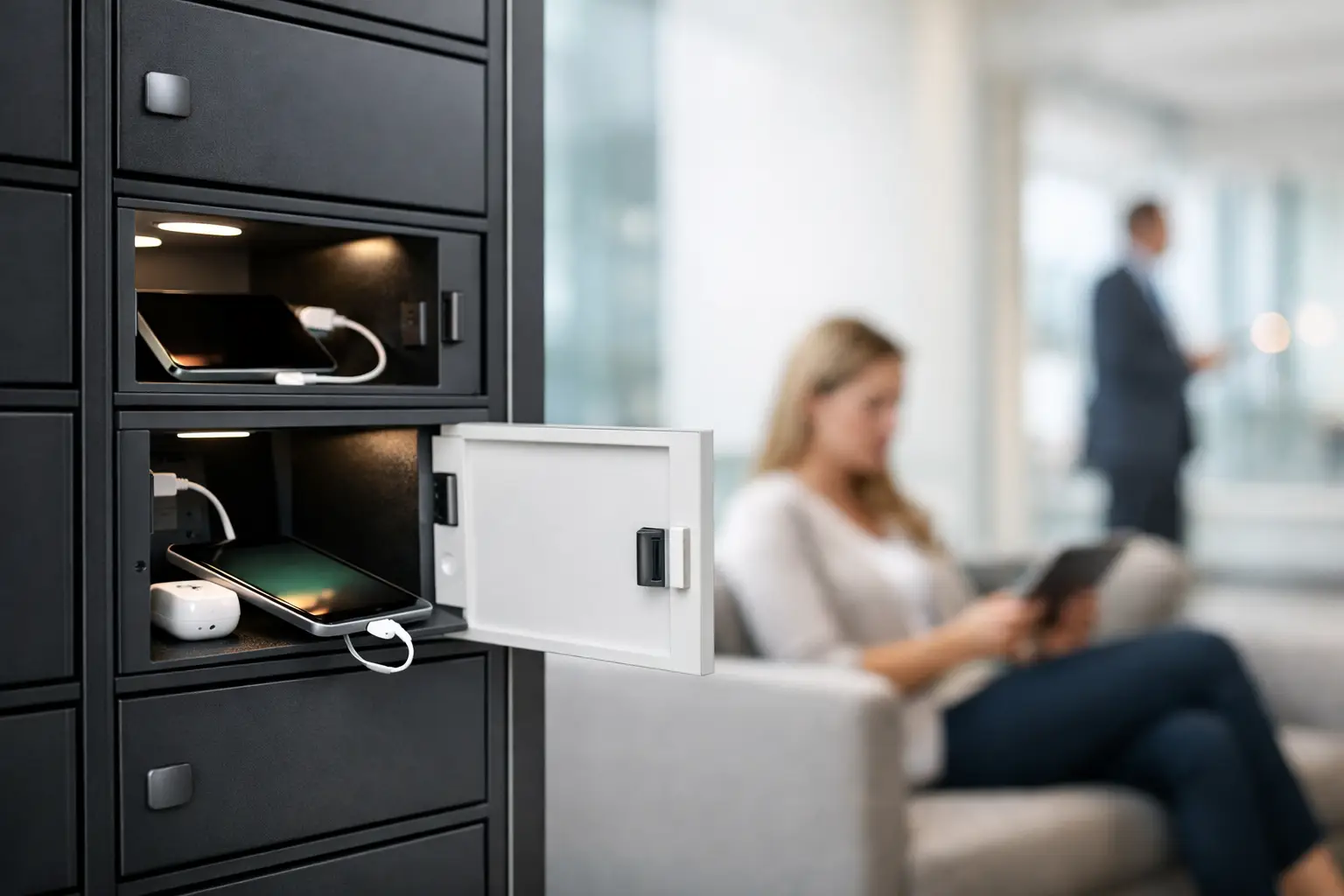
A dead tablet at shift change, a missing company phone, or a hallway full of chargers plugged into random outlets usually points to the same problem: devices are now part of daily operations, but storage planning has not kept up. Smart charging lockers solve that gap by combining secure metal storage with controlled charging, access management, and better device accountability.
For business and institutional buyers, this is not a convenience product. It is an operational asset. The right locker system protects expensive devices, reduces loss, supports shared equipment programs, and keeps workplaces safer and more organized. The wrong system creates bottlenecks, shortens device life, and adds avoidable maintenance issues.
What smart charging lockers actually do
At a basic level, smart charging lockers provide individual compartments where phones, tablets, laptops, scanners, radios, or handheld tools can be stored and charged at the same time. What makes them smart is the layer of control built around that storage. Depending on the application, that can include timed access, user-specific locking, audit trails, network visibility, power management, and status monitoring.
This matters because charging alone is rarely the full requirement. In a school, the issue may be student device control and overnight charging. In an office, it may be secure short-term storage for employee phones. In logistics or manufacturing, it may be shift-based allocation of shared scanners and handheld terminals. Each case needs charging, but the access logic is different.
That is why buyers should separate two questions early. First, what devices need to be charged? Second, how should users access them? A locker can have excellent charging performance and still be a poor fit if the access method does not match the workflow.
Where smart charging lockers deliver the most value
The strongest use cases are environments where many users depend on mobile devices but do not have dedicated desks or fixed charging stations. Schools and training centers use them to manage student laptops and tablets. Offices use them for hot-desking environments, visitor phone storage, and shared device pools. Gyms and public facilities use them to offer secure charging to members and staff. Industrial sites use them to control scanners, communication devices, and shift equipment.
Healthcare, transport, and field service operations also benefit when battery-dependent devices must be ready at the start of every shift. In these settings, device downtime has a direct cost. If a worker spends 20 minutes looking for a charged unit or reporting a missing asset, the storage system is already failing.
There is also a safety and housekeeping benefit. Centralized charging reduces cable clutter, removes ad hoc charging habits, and keeps devices in a designated location. That is especially useful in facilities where clear circulation space and predictable storage zones matter.
Choosing the right smart charging lockers
Procurement decisions usually go wrong when buyers focus only on compartment count and price. Those two points matter, but they are not enough. The better approach is to evaluate the locker as a system made up of enclosure quality, charging design, locking method, ventilation, and serviceability.
Start with the devices
The device mix drives compartment size, shelf spacing, cable routing, and power requirements. A phone locker and a laptop locker are not interchangeable. Tablets in protective cases, barcode scanners with cradles, or radios with charging docks all change the internal dimensions needed.
Shared fleets can also evolve. If your operation may shift from small tablets to larger rugged devices next year, it is worth planning extra tolerance into the compartment design now. Tight internal sizing may look efficient on paper but become restrictive very quickly.
Match the locking system to the user flow
PIN access, RFID, key locks, and centrally managed electronic locking all have a place. The best option depends on turnover, user volume, and how often devices are assigned or reissued.
For lower-tech environments or simple staff storage, mechanical access can still be the right choice. For higher-volume shared device programs, electronic control often improves accountability and reduces admin time. Facilities with changing users, temporary staff, or shift rotation generally benefit from access systems that can be reassigned quickly.
Pay attention to charging design
Not every charging locker handles power in the same way. Some rely on standard outlets inside each compartment. Others use integrated USB charging. Neither approach is automatically better. It depends on the device fleet and how often it changes.
Standard outlet-based setups offer more flexibility for mixed device types and future replacements. Integrated charging can be cleaner and easier for specific devices, but it may be less adaptable later. Buyers should also ask about load management, cable organization, and protection against overheating. Charging performance is only useful if it is consistent over time.
Ventilation is not optional
Heat is a practical issue, not a minor spec detail. Multiple devices charging in enclosed compartments generate temperature buildup, especially in high-use environments. Poor airflow can affect battery health, shorten charger life, and increase service calls.
Well-designed metal lockers with proper ventilation and sensible internal layout tend to perform better in demanding conditions. This is one area where industrial manufacturing quality has a direct impact on product life.
Why material and construction still matter
Smart features get attention, but the cabinet body still does the heavy lifting. In commercial settings, lockers are opened hundreds of times, loaded with valuable equipment, moved during fit-outs, and exposed to hard daily use. Thin materials, weak hinges, poor door alignment, and low-grade finishes create long-term problems no software layer can solve.
For B2B buyers, durability is part of total cost. A charging locker that needs frequent door adjustments, lock replacements, or finish repairs is not a low-cost option. Heavy-duty steel construction, stable frames, quality welds, and reliable coating systems matter because they reduce maintenance and extend service life.
This is also where custom production can be valuable. Standard sizes work for many projects, but some facilities need specific compartment dimensions, master access requirements, branding, or electrical layouts. A manufacturer with both standard capacity and custom fabrication options gives buyers more control over fit and rollout timing.
Common trade-offs buyers should consider
There is no single best configuration for every site. Higher security can mean more admin if credentials are managed poorly. More compartments can improve density but reduce internal space per device. Faster charging may increase heat load if ventilation is inadequate. Networked features can improve reporting, but some sites prefer simpler standalone units for easier deployment.
The right answer depends on how the locker will be used day after day. A university with hundreds of users may prioritize centralized management and fast turnover. A factory issuing scanners at the start of each shift may care more about rugged construction and reliable charging consistency. An office fit-out may prioritize clean design, compact footprint, and low-maintenance access.
That is why site planning matters as much as product selection. Placement, power supply, user volume, supervision level, and cleaning access should all be reviewed before finalizing the specification.
Smart charging lockers as part of a wider storage plan
The best results usually come when charging lockers are not treated as a standalone purchase. They work better as part of a broader facility storage strategy that also considers employee lockers, office cabinets, PPE storage, and shared equipment control.
That integrated approach helps procurement teams standardize finishes, optimize floor space, and source from fewer suppliers. It also makes expansion easier. If a facility starts with one charging bank and later needs more units, consistency in dimensions, materials, and manufacturing quality becomes a real advantage.
For distributors and project buyers, supplier reliability is just as important as product design. Lead times, batch consistency, customization capacity, and long-term parts support all affect project outcomes. A dependable manufacturing partner can simplify both initial rollout and future repeat orders.
What a good specification looks like
A strong specification is clear on five points: device type, user count, charging method, access control, and environment. From there, details such as door numbering, power distribution, coating finish, ventilation pattern, and compartment size can be set with fewer compromises.
This is also the stage to think about cleaning, cable replacement, and service access. A locker that looks efficient in a rendering may become frustrating if maintenance teams cannot reach internal components easily. Practical serviceability often gets overlooked until the first charger fails.
For commercial buyers, the goal is simple. Choose a locker system that protects devices, supports daily routines, and holds up under real facility conditions. Smart charging lockers should reduce friction, not introduce another layer of it.
If you are planning a device storage project, start with the workflow rather than the feature list. The better the locker matches the way people actually collect, return, and charge devices, the better the result will be six months after installation.