


Highlights
Cell Phone Locker Buying Guide for Workplaces

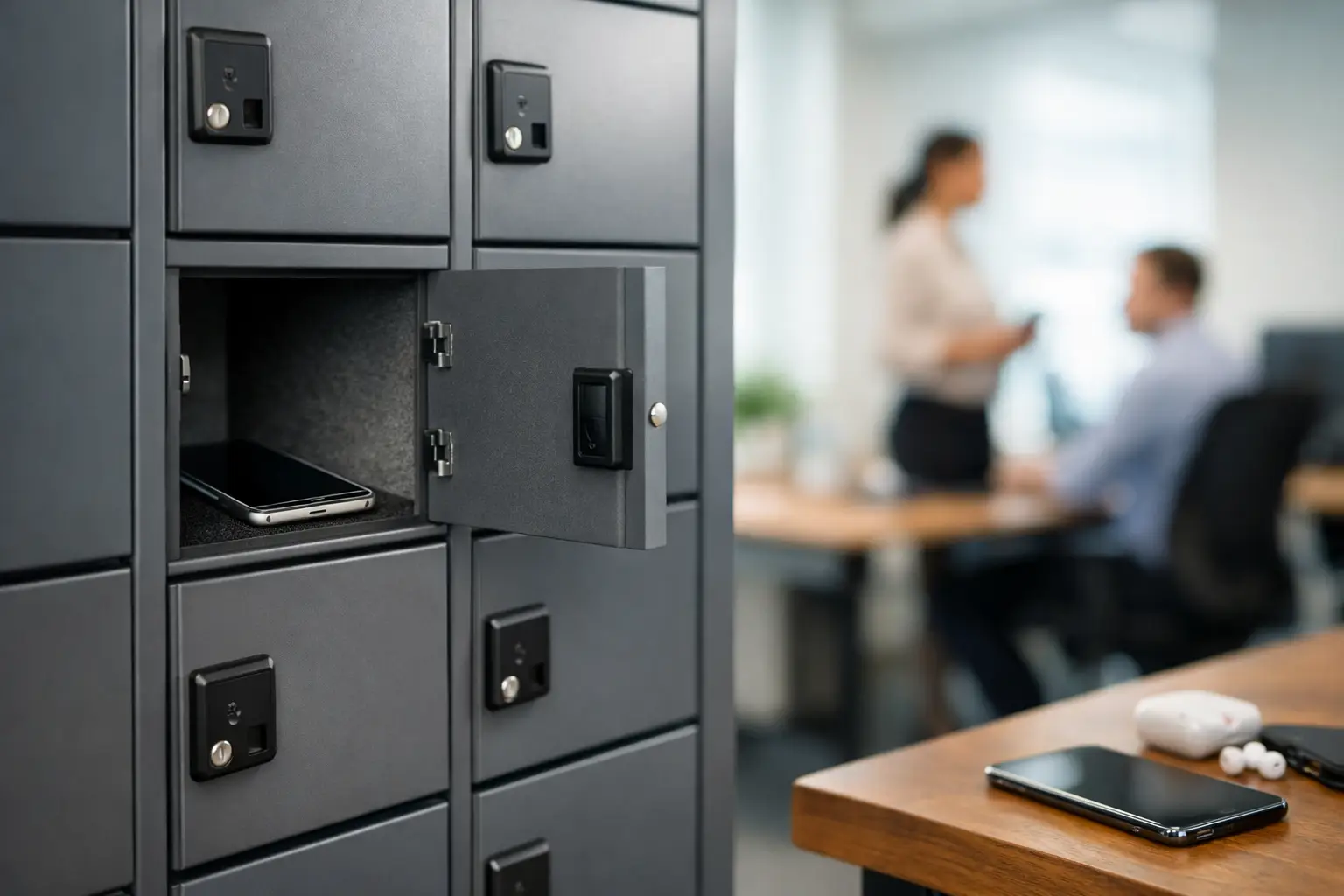
A cell phone locker solves a very specific problem: personal devices need to be stored securely without slowing down the workplace. In offices, schools, gyms, factories, and controlled facilities, that sounds simple until you factor in traffic flow, charging needs, liability, and limited floor space. The right locker setup protects devices, keeps operations organized, and reduces avoidable interruptions.
What a cell phone locker is really for
At a basic level, a cell phone locker is a secure compartment system designed for short-term or daily device storage. In practice, buyers are usually solving one of three issues. They need to keep phones safe in shared environments, they need to restrict phone use in controlled areas, or they need to provide charging while devices are stored.
Those use cases matter because they change the product specification. A school may prioritize many small compartments with simple access control. A production site may need stronger steel construction and strict key management. A gym or office may care more about appearance, user convenience, and charging integration. The term is the same, but the buying criteria are not.
Where cell phone lockers make the most sense
Cell phone lockers are now common across a wide range of commercial and institutional settings. In schools and training centers, they help reduce classroom distraction and support device policies without collecting phones manually. In offices, they create a cleaner front-desk process for visitors and secure storage for staff in shared areas.
Industrial sites often use them to keep personal devices out of restricted production zones. That can support safety rules, confidentiality requirements, and workflow discipline. In gyms, wellness facilities, and public venues, compact phone lockers give users a practical place to store small valuables without taking a full-size locker.
Healthcare settings also use small-compartment lockers where staff need fast access to personal items during shifts but cannot carry phones into certain rooms. In each case, the product works best when it fits the real operating pattern of the site rather than a generic storage plan.
How to choose the right cell phone locker
The first decision is capacity. Buyers often underestimate how many compartments they need because they count current users instead of peak usage. Shift overlap, visitor traffic, seasonal demand, and future headcount all affect locker quantity. A system that runs at full occupancy from day one usually creates delays and misuse.
Compartment size is the next issue. Modern phones are larger, and many users also carry cases, power banks, cards, or keys. If the compartment is too tight, it limits usability and increases the chance of damage. If it is too large, you lose density and waste space. The best balance depends on whether the locker is intended only for phones or for small personal items as well.
Then there is access control. Key locks are straightforward and cost-effective, especially for employee-assigned use. Cam locks also remain a practical choice for many workplaces that want simple administration. Digital locks can reduce key handling and may suit shared-use environments better, but they add cost and require planning around batteries, code management, or service access. There is no universal best option. It depends on how often users change, who manages the system, and how much control the facility requires.
Charging or non-charging cell phone locker?
This is one of the most important buying decisions. A non-charging cell phone locker is often the better choice when security and storage are the only priorities. It is simpler, easier to maintain, and usually more flexible in placement because it does not depend on electrical access.
A charging locker becomes the stronger option when users regularly need powered devices at the end of a shift, class, or visit. Offices, education settings, transport hubs, and staff welfare areas often benefit from this. Charging adds convenience, but it also changes the product. Ventilation, cable routing, socket configuration, power load, and service access all need to be considered from the start.
It is also worth thinking about how users actually charge. Some environments want built-in sockets so users bring their own adapters. Others prefer integrated USB charging to reduce clutter. The right answer depends on device mix, replacement policy, and how much standardization the site can enforce.
Material and construction matter more than buyers expect
For commercial use, light-duty construction rarely performs well over time. A cell phone locker may be compact, but it still sees frequent daily use, repeated door opening, and occasional misuse. The steel gauge, door reinforcement, hinge quality, surface finish, and welding standard all affect service life.
This is particularly important in schools, gyms, and industrial settings where usage can be intensive. Thin doors may flex. Weak hinges can loosen. Poor coating performance can lead to visible wear and corrosion in humid or demanding conditions. A well-made metal locker holds up better, looks better longer, and reduces replacement cycles.
That is why procurement should evaluate construction details, not just dimensions and price. A lower initial cost can become expensive if the units need early maintenance or replacement. For distributors and project buyers, consistent manufacturing quality also matters because it affects installation performance and after-sales risk.
Layout, footprint, and user flow
A good locker specification can still fail if the layout is wrong. Cell phone lockers are often installed in corridors, entry points, locker rooms, reception areas, staff break zones, and classrooms. These are all spaces where congestion matters.
Wall-mounted or compact vertical units can save floor space in tighter environments. Freestanding units may work better where capacity is the priority or wall conditions are unsuitable. Door swing, aisle clearance, and queuing space should be checked early, especially for sites with shift changes or class transitions.
It also helps to decide whether users need quick individual access or longer dwell time at the locker bank. If many people arrive and open lockers at the same time, narrow layouts can create bottlenecks. In high-traffic settings, spreading capacity across multiple smaller banks often works better than concentrating everything in one location.
Security expectations should be realistic
A cell phone locker improves control, but it is not a substitute for a full security system. Buyers should match the locker specification to the risk level. For everyday staff storage, a durable metal body with reliable locks may be enough. For public-facing areas or higher-risk environments, tamper resistance, controlled access zones, and surveillance around the installation may also be needed.
This is where policy and product need to work together. If keys are not managed, if codes are shared, or if lockers are placed in unmonitored areas, even a strong unit can underperform. The product should support the process, not carry it alone.
Customization is often the difference between a workable solution and a good one
Standard locker models are a practical starting point, but many buyers need adjustments to match the site. That may mean specific compartment counts, mixed locker sizes, ventilation patterns, color requirements, numbering systems, sloped tops, master key options, or integrated charging layouts.
For project-based procurement, customization is often less about appearance and more about operational fit. A school may need numbering aligned with class management. A manufacturer may want the locker bank sized to a precise wall length. A distributor may need a version adapted for local market preference. Working with a manufacturer that can produce both standard and custom metal storage solutions gives buyers more control over the final result.
What to ask before placing an order
Before selecting a cell phone locker, buyers should clarify a few operational points internally. Who will use it, and how many users need access at peak times? Is charging required or just secure storage? Will lockers be assigned or shared? Who manages keys or codes? Where will the units be installed, and what are the electrical and space constraints?
Those questions usually reveal the right specification quickly. They also reduce the risk of ordering a product that looks correct on paper but causes problems in daily use. For commercial buyers, that early clarity saves time in procurement, installation, and after-sales support.
A well-selected cell phone locker is a small product with a direct operational impact. When capacity, construction, security, and layout are aligned with the site, it keeps devices protected and the environment better organized. If you are specifying for multiple locations or a project rollout, it pays to treat it like any other serious storage category – with clear requirements, durable materials, and a supplier that understands how workplaces actually use it.