


Highlights
Budget Locker Solutions Without Quality Compromise

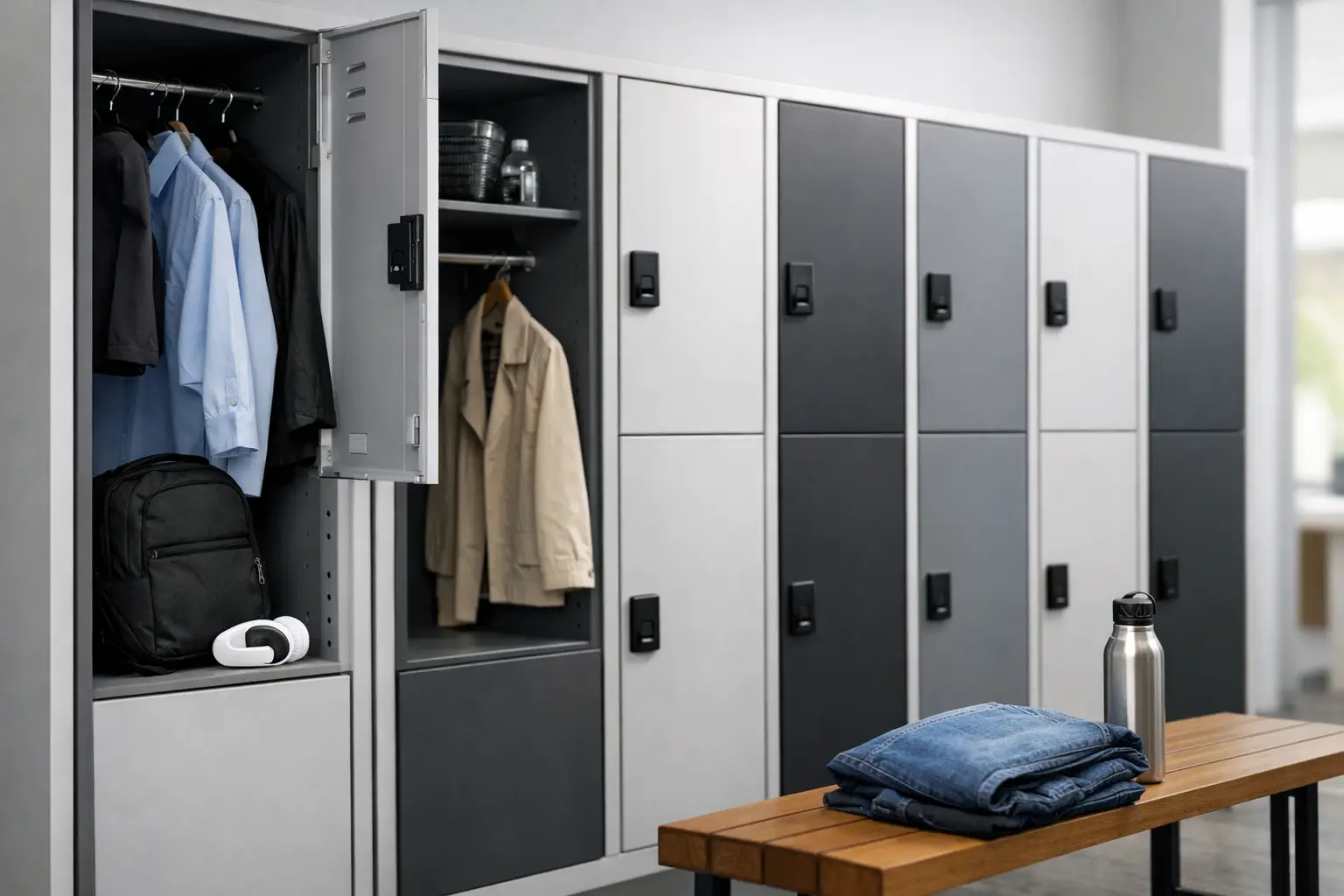
A low purchase price can become an expensive decision when locker doors bend, locks fail, or replacement parts are unavailable six months later. For procurement teams, budget-friendly locker solutions without compromising on quality means controlling total ownership cost, not simply selecting the lowest quote.
The right locker program should fit the facility, the users, and the expected service life. That may mean standard steel lockers for an office changing area, charging lockers for shared devices, PPE lockers for industrial teams, or a custom layout for a restricted footprint. The most cost-effective option is the one that performs consistently without creating maintenance, security, or replacement costs.
What Quality Should Mean in a Budget Locker Project
Quality is not one specification. It is the combined result of material selection, fabrication, finish, hardware, and supplier support. A locker can look similar in a catalog while delivering very different performance in daily use.
Start with the steel construction. Sheet thickness should match the environment and expected usage. Light-duty storage may suit a more economical configuration, while schools, gyms, factories, warehouses, and employee changing rooms usually need stronger doors, reinforced frames, and durable internal components. A heavier construction may cost more initially, but it can reduce dents, door alignment issues, and early replacement.
Door design matters as much as the cabinet body. Doors should close evenly, resist twisting, and maintain a reliable gap around the frame. Stiffening profiles, folded edges, and properly positioned hinges help lockers withstand repeated opening and closing. These details are especially relevant where hundreds of users share facilities across multiple shifts.
The surface finish also affects long-term cost. Powder coating provides a practical, durable finish for metal lockers when the steel preparation and coating process are properly controlled. For humid locker rooms, cleaning areas, healthcare facilities, or industrial locations, buyers should confirm that the finish is appropriate for moisture exposure and routine cleaning practices.
Budget-Friendly Locker Solutions Without Compromising on Quality
The most reliable way to protect the budget is to define requirements before comparing prices. A quote is only useful when every supplier is pricing the same functional need. Dimensions, door count, lock type, ventilation, internal fittings, color, delivery format, and installation conditions can all change the actual value of a locker offer.
Choose the right locker format first
Over-specification wastes capital, but under-specification creates operational problems. Single-door lockers provide maximum vertical storage for uniforms, coats, and personal protective equipment. Multi-door lockers increase user capacity within the same floor area and often work well for offices, schools, gyms, and short-duration personal storage.
Z-lockers can support hanging garments in a compact footprint. Compartment lockers are practical for small personal items, valuables, phones, or shared-use environments. Charging lockers are a better choice where employees, students, visitors, or technicians need secure device storage with power access.
The key question is not, “Which locker is cheapest?” It is, “What must each compartment safely store, and how often will it be used?” A locker intended for a wallet and phone does not need the same internal volume as one intended for workwear, helmets, bags, or PPE.
Standardize where possible
Custom fabrication is valuable when a project has unusual dimensions, specific security needs, branding requirements, or an operational layout that standard products cannot meet. However, standard locker models are often the fastest and most economical route for projects with straightforward requirements.
Standardization can reduce production complexity, shorten lead times, simplify spare-part planning, and create a consistent appearance across sites. It also makes phased rollouts easier. A business can add matching lockers later without redesigning the original installation.
A practical approach is to use standard cabinet sizes and configurations for most of the project, then customize only the elements that genuinely require it. This might include a specific color, a sloped top for cleaning access, a numbered door system, or a tailored bench and locker arrangement. Selective customization preserves flexibility without adding unnecessary cost across every unit.
Match the lock to user behavior
Lock selection should follow how the facility operates. A simple cam lock can be suitable for assigned long-term users. Hasps may work where the operator wants users to provide their own padlocks. Digital, RFID, or combination locks can be appropriate for shared or high-turnover environments, but they introduce different management needs, such as credential control, battery replacement, user support, and reset procedures.
The lowest-cost lock is not automatically the lowest-cost system. If keys are regularly lost, a keyed solution can generate administrative work and replacement expenses. If temporary users need secure storage, a shared-use electronic system may offer better operational control. The appropriate choice depends on whether lockers are assigned permanently, used per shift, or accessed by visitors.
Where Cost Savings Should Not Be Taken
Some cost reductions are reasonable. Others move risk into the facility. Buyers should be cautious when an offer is vague about steel thickness, hinge design, coating, lock specifications, or warranty terms. Missing details often make it difficult to compare products fairly.
Avoid reducing quality in these areas:
- Door and frame rigidity, particularly in high-traffic facilities
- Lock reliability and the availability of replacement keys or components
- Powder-coat quality for areas exposed to cleaning products or humidity
- Ventilation for clothing, workwear, PPE, and frequently used compartments
- Anchoring provisions and safe installation for banks of lockers
Ventilation deserves particular attention. For wet clothing, uniforms, work boots, or protective equipment, airflow supports cleaner and more usable storage. It is a small design feature with a large effect on user satisfaction and facility hygiene.
Similarly, do not overlook installation. Locker banks should be level, correctly joined where required, and securely fixed when stability or site safety demands it. A well-built locker can still perform poorly if it is installed on an uneven surface or arranged without sufficient clearance for doors, aisles, and cleaning access.
Compare Suppliers Beyond the Unit Price
For commercial buyers, supplier reliability is part of product quality. A low quote is less valuable if product specifications change, delivery dates are uncertain, or after-sales support is unavailable when a lock or door needs replacement.
Request clear information on manufacturing origin, material and finish specifications, production capacity, warranty coverage, packaging, lead time, and spare-part availability. If the project includes several product categories, such as lockers, office cabinets, shelving, benches, or chemical storage cabinets, consider the value of sourcing from one capable manufacturer. Coordinated supply can reduce administrative work, simplify design consistency, and make delivery planning more manageable.
For distributors, consistency is equally important. A manufacturer should be able to support repeat orders, stable specifications, practical minimum order quantities, and product ranges that address more than one customer segment. A reliable locker line can serve offices, education, leisure, healthcare, industrial facilities, and commercial fit-out projects when configurations are selected properly.
Loxmet approaches this requirement through industrial metal fabrication, standard product availability, and project-based customization. For buyers, the useful measure is not a claim of premium quality by itself. It is whether the supplier can document the construction, produce to the agreed specification, and support the product throughout its working life.
Plan for the Full Service Life
A locker project should be reviewed over years, not just at the point of delivery. Calculate likely maintenance needs, expected user volume, cleaning routines, potential relocation, and future expansion. A modular system with consistent dimensions can be easier to expand than a collection of unrelated cabinets bought at different times.
Consider replacement parts early. Doors, locks, keys, hinges, shelves, and feet are the components most likely to need attention over a long service life. Access to these parts can keep a locker bank operational without replacing complete units. That is a direct saving for facility managers and a practical advantage for procurement teams managing multiple locations.
Color and identification also support long-term use. Door numbering, department allocation, and color zoning can reduce confusion in busy facilities. These choices do not need to be elaborate. They need to be clear, durable, and aligned with how people move through the space.
The best locker purchase is rarely the lowest figure on the first quotation. It is the solution that fits the workday, withstands repeated use, and remains simple to maintain. Define the real operating requirement, compare specifications line by line, and invest only where performance demands it. That is how a budget remains protected without asking users to accept lower-quality storage.