


Highlights
How to Choose a 4 Door Locker for Workplaces

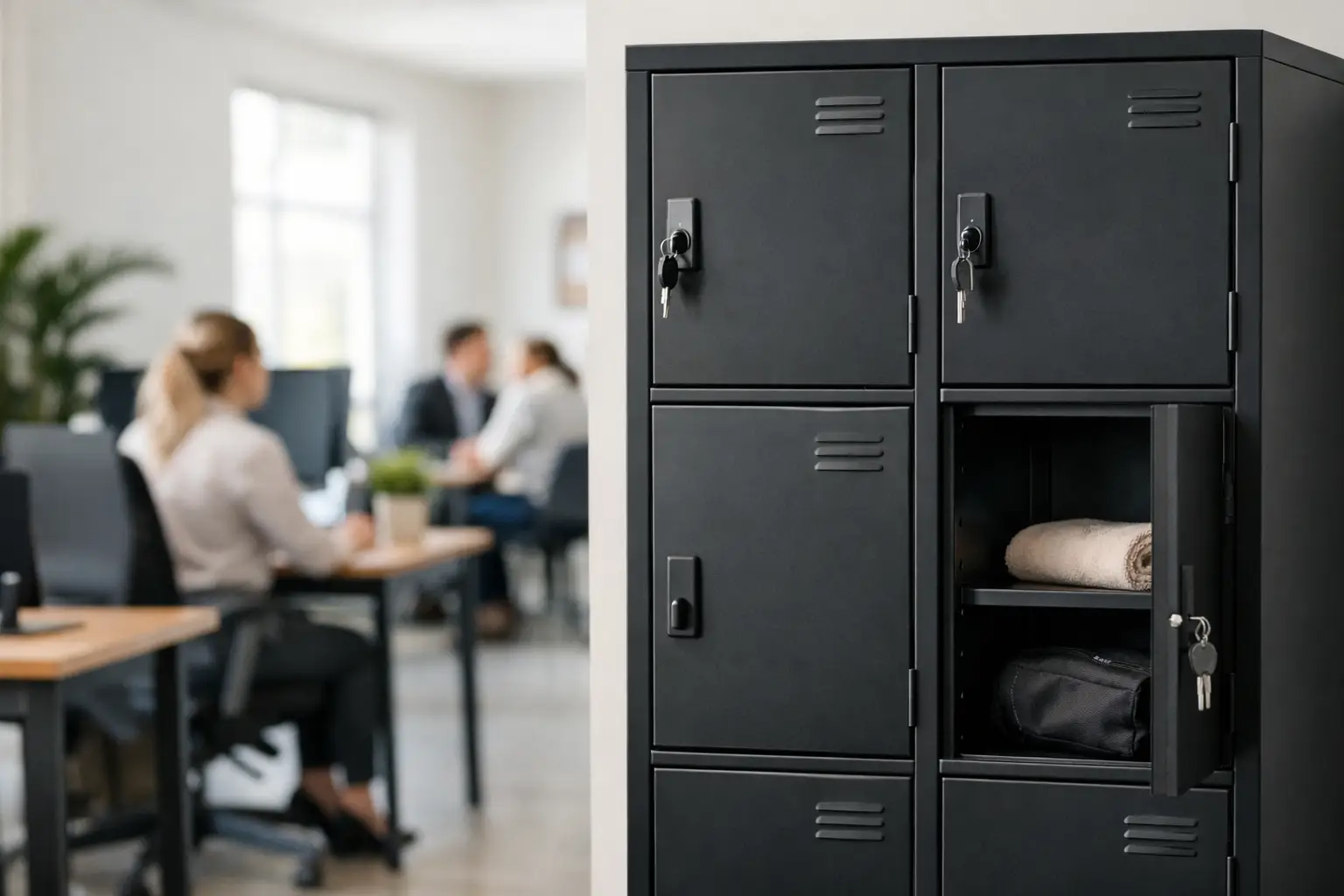
A crowded changing room, staff entrance, or production floor does not need more floor area to become organized. It needs storage that gives each user a defined, secure compartment without spreading lockers across the room. A 4 door locker does exactly that: it places four independently secured storage spaces in one vertical cabinet footprint, making it a practical choice for businesses that need capacity without sacrificing circulation space.
For procurement and facility teams, the right unit is not simply a matter of door count. Steel grade, door reinforcement, locking method, ventilation, interior layout, finish, and installation conditions all affect how the locker performs over years of daily use. The best specification depends on who will use it, what they need to store, and how hard the environment is on equipment.
Where a 4 Door Locker Fits Best
Four-compartment lockers work well where users need personal storage for uniforms, bags, valuables, or light work equipment. They are common in offices, schools, fitness facilities, healthcare settings, staff rooms, warehouses, and industrial sites. The vertical format makes them particularly useful in narrow locker rooms and wall-lined areas where every square foot matters.
The trade-off is compartment height. A four-door configuration offers more users per cabinet than a two-door locker, but each compartment is shorter. It is well suited to folded clothing, shoes, personal belongings, and smaller PPE. If users must hang long coats, store tall boots, or keep bulky protective equipment, a one-door or two-door layout may be more appropriate. Many projects use more than one locker configuration in the same facility so storage matches the role rather than forcing every employee into the same format.
A 4 door locker can also simplify phased expansion. A facility can add banks of matching cabinets as headcount grows, maintaining a consistent layout and avoiding the visual disorder created by mixed storage products.
Start With the Use Case, Not the Catalog
Before selecting dimensions or colors, define the operational purpose of the locker bank. A staff locker in a corporate office faces different demands than one installed next to a fabrication line. In a clean office environment, a straightforward key or combination lock and standard ventilation may be sufficient. In a factory, locker doors may experience frequent impacts, heavier contents, dust, and shift-change traffic.
Ask how many users require storage at peak occupancy, whether lockers are assigned or shared, and whether belongings include uniforms, helmets, electronics, medication, PPE, or tools. These answers determine compartment volume, lock type, and the level of door and body reinforcement required.
It is also useful to decide whether lockers will be managed by the facility or by individual users. Assigned staff lockers can use keyed or padlock-ready systems. Shared-use facilities may benefit from code locks, coin-operated locks, RFID access, or centrally managed electronic locking. The right choice depends on turnover, security policy, budget, and maintenance capacity.
Consider the surrounding space
A locker specification should include the room, not just the cabinet. Measure usable wall length, ceiling clearance, door swings, aisle widths, accessible routes, and nearby benches. A compact cabinet footprint can still create congestion if doors open into a busy walkway or if users have no space to change safely.
For wet areas or cleaning-intensive environments, consider raised bases, sloped tops, and layouts that make floor access easier. Sloped tops reduce dust accumulation and discourage items being left above the lockers. Plinths or legs can support cleaning underneath, though they may add height and affect overall stability requirements. There is no universal best option; it depends on housekeeping practices and site conditions.
Construction Details That Affect Service Life
A locker can look similar on a quotation sheet while performing very differently on site. Heavy-duty steel construction is central to long-term value, especially in high-use settings. Buyers should review steel thickness, frame design, door edges, hinge arrangement, and reinforcements rather than focusing only on external dimensions.
Doors are the most frequently handled component. A reinforced door is less likely to flex, rattle, or distort under repeated use. Full-length or well-positioned internal stiffeners help maintain alignment, while concealed or protected hinges reduce opportunities for forced entry and accidental damage. Door returns and folded edges also matter because they improve rigidity and remove sharp exposed steel edges.
Powder coating provides a durable surface finish for standard workplace use. A properly prepared and coated metal surface resists chips, scratches, and routine cleaning better than a lightly finished cabinet. Where humidity, corrosive conditions, or frequent washdown are factors, the finish specification and material choice should be reviewed more closely. Ventilation and moisture management are equally important in facilities where damp uniforms or footwear are stored.
Loxmet manufactures heavy-duty metal storage solutions for projects that require standard products, tailored configurations, and dependable repeat supply. For larger rollouts, working with a manufacturer that can maintain consistent specifications across orders reduces replacement and expansion problems later.
Locking Options Should Match Daily Management
The lock is not an accessory. It is the component users interact with every day, and a poor match can create a constant stream of lost-key requests, access disputes, and maintenance calls.
A cylinder lock is familiar, economical, and suitable for permanently assigned lockers. Master-key capability can give authorized managers access when required, but key control must be managed properly. A hasp and staple arrangement allows users to supply their own padlocks, which can work well in gyms, temporary workforces, or facilities where management does not need to issue keys.
Combination and digital locks remove the need for physical keys, but they introduce battery management, code resets, user training, and sometimes software administration. They make sense when locker turnover is high or when access records are needed. For industrial sites, choose locking hardware designed for repeated use and verify that it can be serviced without replacing the whole door.
Ventilation, Interiors, and Useful Add-Ons
Ventilation is often treated as a basic feature, yet its importance rises quickly when lockers hold workwear, shoes, towels, or PPE. Perforations or louvers allow air movement and help reduce trapped odor and moisture. They are not a substitute for a drying room when garments are heavily soaked, but they improve day-to-day conditions in most staff areas.
Inside the compartment, simple additions can make the locker far more functional. A hanging rail or coat hook supports uniforms and bags. A fixed shelf separates footwear from personal items. Name card holders help with locker assignment, while door-mounted mirrors or internal hooks may suit changing areas. These details should serve a clear use case rather than add unnecessary cost to every unit.
For device-heavy workplaces, charging lockers may be a better fit than adapting a standard personal locker. Electrical charging requires purpose-designed compartments, cable routing, ventilation, and appropriate electrical protection. Keeping personal storage and charging functions separate can improve both safety and user convenience.
Specify the Locker Bank as a Project
Commercial locker purchases work best when treated as a layout and operations project rather than a collection of individual cabinets. Confirm the total user count, required door quantity, cabinet dimensions, color, lock type, ventilation pattern, base option, numbering, and delivery access before production begins.
For multi-site buyers and distributors, standardizing a core specification creates practical advantages. Replacement doors, spare locks, additional locker banks, and future fit-outs become easier to manage when the same dimensions and components are used consistently. Custom colors, branding, special perforation patterns, and unique internal fittings can be valuable, but they should be balanced against lead time, spare-part planning, and future repeat orders.
Installation also deserves early attention. Locker banks may need wall fixing, leveling, joining between units, or anchoring based on site conditions and local safety requirements. A cabinet that is stable on a warehouse floor may require a different approach on uneven surfaces, raised flooring, or high-traffic public areas.
A Practical Buying Standard for 4 Door Lockers
The most effective 4 door locker is the one that fits the users’ belongings, withstands the actual environment, and can be maintained without creating work for the facilities team. Capacity is valuable, but only when each compartment remains usable and secure.
Choose durable steel construction, select locks based on how access is managed, allow for ventilation where clothing or PPE is stored, and plan the bank around real movement through the room. When those decisions are made early, a locker installation becomes a reliable part of workplace operations rather than another item that needs constant attention.