


Highlights
How PPE Lockers Suppliers Support Safer Sites

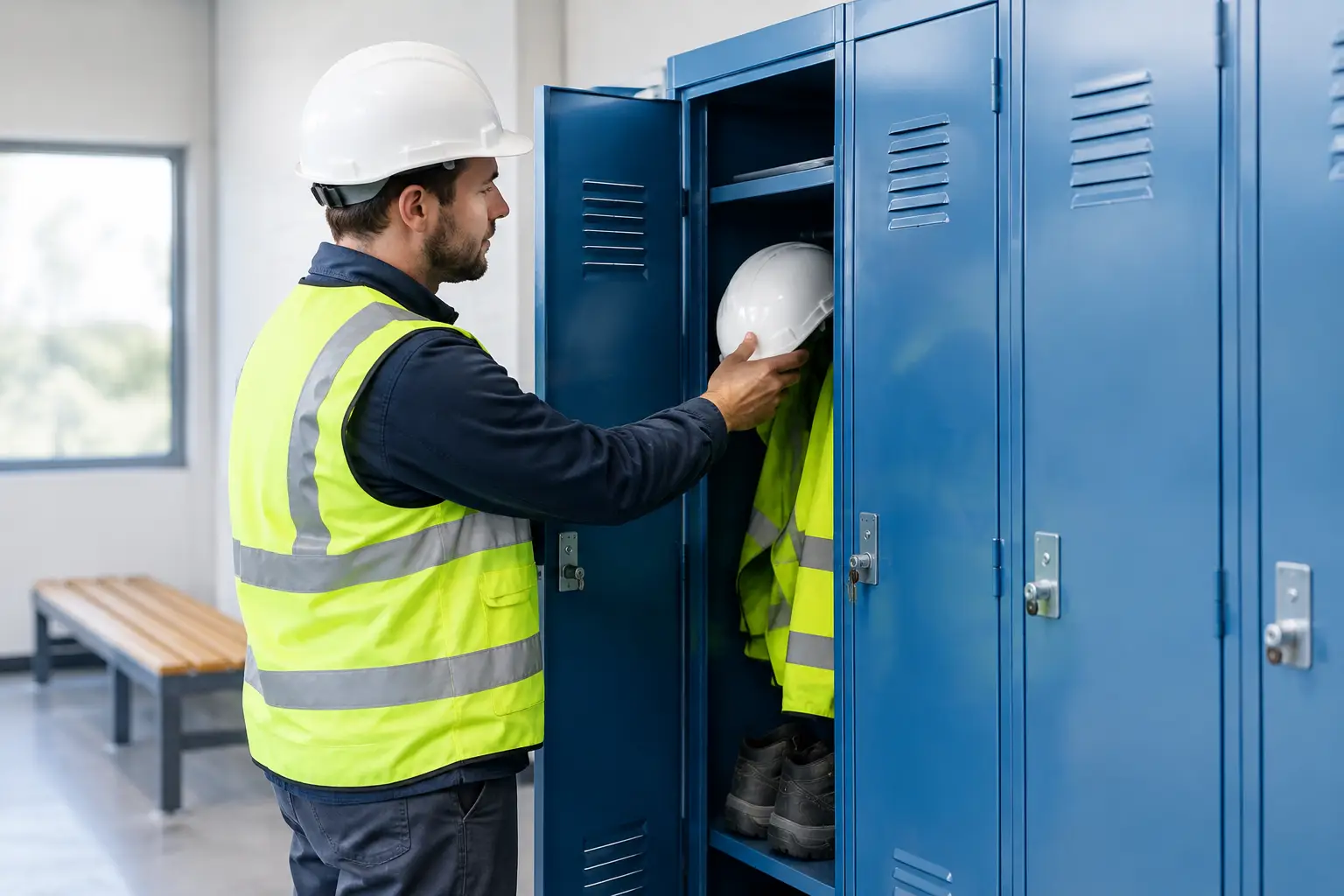
A missing hard hat, damaged respirator, or pair of gloves left on a workbench can quickly become more than a housekeeping issue. It affects safety compliance, shift readiness, and the life span of expensive equipment. PPE lockers suppliers help facilities create a controlled storage point for personal protective equipment, giving each employee or team a secure, organized place to access and return essential gear.
For procurement and facility teams, the right supplier is not simply a source of metal cabinets. The supplier should understand daily use, cleaning routines, changing headcounts, access control, and the conditions that cause ordinary storage to fail. A locker that looks suitable on a specification sheet but cannot handle damp clothing, repeated door impacts, or high-turnover use will create replacement costs well before its expected service life.
What PPE Lockers Must Do in Real Workplaces
PPE storage has a different job from standard personal storage. In warehouses, manufacturing plants, construction compounds, healthcare facilities, laboratories, and utilities sites, lockers may need to separate clean and used equipment, protect issued items from loss, and keep aisles clear. The layout must support the way people start and finish shifts, not force them into slow or confusing routines.
A well-planned PPE locker system improves accountability. When every worker has an assigned compartment, supervisors can establish clear responsibility for issued equipment. This is particularly useful for helmets, eyewear, hearing protection, protective clothing, harnesses, and task-specific tools that must remain available at the point of use.
Ventilation is often a deciding factor. Workwear and protective gear can retain moisture, dust, and odors after a shift. Perforated doors, louvers, or ventilated cabinet designs help air circulate, although the correct solution depends on what is being stored. Equipment requiring controlled drying or decontamination may need a separate process rather than relying on locker ventilation alone.
How to Evaluate PPE Lockers Suppliers
The strongest PPE lockers suppliers begin with questions about the facility rather than a generic product recommendation. They should ask who will use the lockers, what equipment will be stored, how many compartments are required, whether uniforms and footwear are included, and where the units will be installed.
Start with construction, not appearance
Metal thickness, frame design, door reinforcement, hinges, and powder coating have a direct effect on working life. In high-use changing areas, doors are opened and closed hundreds of times each week. Weak hinges and thin doors are usually where failure appears first.
Ask suppliers to provide clear information on material grade, steel thickness, coating process, and the door and locking construction. A premium finish is useful, but industrial performance depends on the full build quality. Welded or reinforced sections can provide better resistance to movement and impact than lightly assembled units, especially in busy production environments.
Match compartment dimensions to PPE
A compact multi-door locker may be efficient for gloves, masks, eyewear, and small issued items. It is not automatically suitable for bulky work boots, high-visibility jackets, helmets, or fall-arrest equipment. Selecting too small a compartment causes gear to be piled, damaged, or stored elsewhere.
Before requesting a quote, measure the largest items employees need to store. Consider whether gear must hang, sit flat, dry between shifts, or remain separated from personal clothing. Full-height lockers with hanging rails can suit workwear programs, while divided lockers may support clean-and-used garment separation. For shared equipment, wider compartments or dedicated issue cabinets may work better than individually assigned units.
Choose locking that fits the access model
The best lock depends on who uses the locker and how often assignments change. Padlock hasps offer flexibility where workers bring their own locks. Cam locks can be practical for fixed users, while combination locks reduce the need to distribute keys. Digital access options may be suitable for sites that need an audit trail or frequent user changes.
There is a trade-off. More advanced access systems can improve control, but they may require power, administration, replacement credentials, or software support. For a stable workforce with simple requirements, a dependable mechanical lock can be the more efficient long-term choice. A capable supplier should explain these differences without pushing unnecessary complexity.
Check the supplier’s customization capability
Standard products are often the fastest and most economical route, particularly when a facility needs lockers quickly. Custom production becomes valuable when the available space is tight, the workforce uses specialized PPE, or the project needs specific colors, compartment arrangements, benches, numbering, or lock preparations.
Customization should not mean starting from zero. An experienced manufacturer can adapt proven metal locker designs while retaining reliable construction and predictable production. This reduces project risk and helps maintain consistency if the facility expands later.
Questions That Prevent Costly Procurement Mistakes
A supplier comparison should go beyond unit price. Low-cost lockers can carry higher lifetime costs through damaged doors, difficult maintenance, poor finish durability, and early replacement. Request enough information to compare products on an operational basis.
When reviewing proposals, confirm these four areas:
- Material specifications, corrosion protection, and expected use environment
- Internal dimensions, ventilation details, and accessory options
- Locking choices, replacement parts, and maintenance requirements
- Lead time, minimum order flexibility, packaging, and delivery arrangements
Warranty terms also deserve attention. A long warranty is meaningful when it is backed by clear manufacturing responsibility and accessible support. Buyers should understand what is covered, how replacement components are handled, and whether the supplier can provide matching units in future orders.
For distributors and fit-out companies, continuity matters just as much as the first shipment. Projects often develop in phases, and customers expect later additions to match existing installations. A manufacturer with a broad catalog and repeatable production standards can support this more effectively than a source that changes designs from batch to batch.
Plan the Locker Area as Part of the Workflow
Even a well-made locker will underperform if the room layout is poorly planned. Allow enough clearance for doors to open safely and for employees to move through the area during shift changes. Where lockers face each other, aisle width should account for open doors, benches, and the number of people expected at peak periods.
Benches can improve the changing process for workers using boots or protective clothing. Numbered doors, compartment labels, and clear allocation rules reduce confusion. In facilities with strict hygiene requirements, separate zones for personal items, clean PPE, and used gear may be necessary. This approach supports better housekeeping and makes inspections easier.
Consider the installation surface as well. Uneven floors can affect door alignment and create ongoing maintenance issues. In areas exposed to moisture, cleaning chemicals, or heavy traffic, the cabinet finish and base design should be selected for that environment. Wall fixing or anchoring may be appropriate where security, stability, or site rules require it.
Why Manufacturer Capability Matters
Many storage projects involve more than PPE lockers. A site may also require employee lockers, charging lockers, office cabinets, shelving, chemical storage cabinets, benches, or dormitory furniture. Working with a manufacturer that covers multiple categories can simplify specification, finish matching, ordering, and delivery coordination.
Loxmet supports commercial buyers with heavy-duty metal storage solutions, standard product availability, and custom fabrication for project requirements. This combination is useful when a buyer needs fast access to proven locker configurations but also requires dimensions or features adapted to a particular operation.
The right supply partner should be able to scale with the project. That includes accommodating a pilot installation, a phased rollout, or a larger distribution order without reducing build quality. It also means communicating clearly about production timing, technical details, and any design limits before the order is placed.
A PPE locker purchase is a practical safety decision with a long service life. Choose a supplier that understands the equipment, the workflow, and the conditions on site, and the locker area will remain orderly long after the installation team has left.