


Highlights
Choosing the Right Multi Door Cabinet

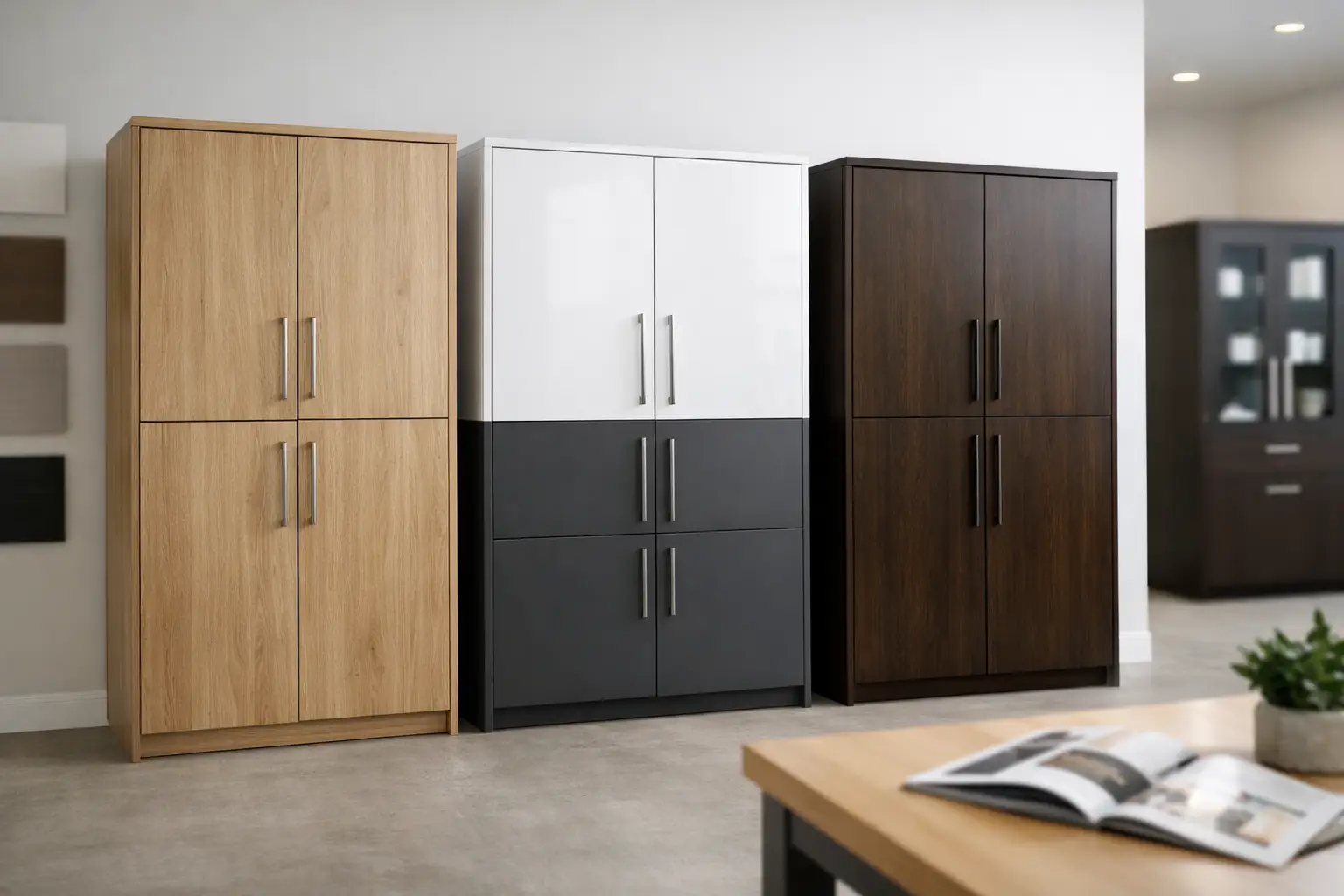
Floor space gets expensive fast when more people, more equipment, and more compliance requirements compete for the same room. A multi door cabinet solves that problem by turning one storage footprint into several secure compartments, making it easier to assign, separate, and control access without adding more units than the site can handle.
For business buyers, this is not just a furniture decision. It affects workflow, user accountability, cleaning routines, and long-term replacement costs. The right cabinet can simplify daily operations for years. The wrong one creates congestion, damage, and constant complaints from users who do not have enough space or the right level of security.
Where a multi door cabinet makes the most sense
A multi door cabinet works best where multiple users need individual storage in a shared area. That includes offices, schools, gyms, staff rooms, healthcare facilities, warehouses, factories, and commercial changing areas. In each case, the core requirement is similar: divide storage clearly, keep access controlled, and use space efficiently.
In offices, the need is often personal item storage, document separation, or device management for hybrid teams. In industrial sites, the same format may be used for PPE, tools, or shift-based staff belongings. In schools and sports facilities, compartment count and user turnover become more important than decorative appearance. The application changes the specification.
That is why buyers should avoid treating all multi-compartment cabinets as interchangeable. Door count alone does not tell you whether the unit is suitable for employee bags, folded uniforms, helmets, cleaning supplies, or electronic devices. Internal dimensions, locking options, ventilation, and material strength matter just as much.
What to check before selecting a multi door cabinet
The first question is simple: what exactly will be stored inside each compartment? If the answer is only wallets, phones, and small personal items, smaller doors may be enough. If users need to store backpacks, safety shoes, binders, or bulky PPE, the compartment must be deeper and taller. A cabinet that looks efficient on paper can fail quickly if real-world items do not fit.
The second question is how many users need access at the same time. In a busy locker room or shift-change area, narrow aisles and tightly spaced doors slow movement and create friction. In a controlled office setting, that may be less of a concern. High-traffic environments need layouts that support fast access without crowding.
The third question is how long the cabinet needs to last under daily use. Commercial and institutional buyers should focus on steel thickness, door reinforcement, hinge quality, coating performance, and lock durability. A low-grade unit may reduce upfront cost, but frequent repairs, bent doors, and lock failures usually erase that saving.
Multi door cabinet layouts and the trade-offs
A higher door count increases storage density, but there is always a trade-off. More compartments usually mean less usable volume per user. That works well for phone lockers, staff valuables, or temporary storage. It is less effective for uniforms, bags, or mixed-use storage.
Two-door and four-door formats often suit workplaces where each user needs more generous internal space. Six-door and more compact layouts are common where the goal is high-capacity storage in limited floor area. Neither approach is automatically better. It depends on what users need to store and how often they access it.
Vertical layout also matters. Tall stacks of smaller compartments can maximize floor efficiency, but upper and lower doors may be less convenient for some users. This is worth considering in schools, public-facing facilities, and sites with diverse staff groups. Accessibility is part of performance, not an afterthought.
Material and construction standards matter
Metal cabinets remain the practical choice for demanding commercial use because they offer strength, fire resistance advantages compared with many alternative materials, and better long-term dimensional stability. In busy facilities, that means fewer issues with doors going out of alignment, surfaces chipping under impact, or structures weakening under load.
Still, not every steel cabinet performs the same way. Buyers should look at door stiffness, frame strength, weld quality, and finish consistency. Powder-coated surfaces are widely used because they support durability and easier maintenance, but finish quality depends on the full process, not just the label.
For damp, dirty, or high-contact environments, easy cleaning is another practical factor. Smooth metal surfaces and well-designed ventilation openings help reduce dirt buildup and simplify routine maintenance. In healthcare, industrial, and PPE settings, that is not a minor detail. It directly affects housekeeping time and hygiene control.
Security options should match the actual risk
Lock selection often gets less attention than it should. A cabinet used for spare clothing does not need the same lock type as one storing devices, confidential materials, or controlled workplace equipment. Over-specifying locks can add cost without operational benefit. Under-specifying them creates risk and user complaints.
Key locks are straightforward and familiar, but key management can become difficult at scale. Padlock-ready options can work well when organizations want users to manage their own access. Digital and code-based systems offer convenience in some settings, especially where staff turnover or temporary assignment is common, but they require a higher budget and clearer maintenance planning.
The point is to match the security level to the storage purpose. Procurement teams should also consider what happens after installation: who manages lost keys, who resets codes, and how emergency access is handled. The best locking system is the one that fits the site’s daily reality.
Ventilation, visibility, and compliance needs
Some storage applications need more than a lock and a door. If users are storing shoes, workwear, PPE, or damp items, ventilation becomes important to reduce odor and moisture buildup. If the cabinet is used in an industrial or regulated setting, separation between clean and dirty items may also need to be built into the design.
In other applications, visibility matters more. Facilities may want label holders, numbering, or master access arrangements to simplify management. Schools and large employers benefit from straightforward identification systems because storage only stays organized if compartments can be assigned and tracked quickly.
For specialist use, standard office cabinet assumptions do not apply. Chemical storage, battery charging, and PPE management require purpose-built solutions rather than generic multi-compartment formats. A buyer may start with the idea of a multi door cabinet, then find that the real requirement is a more specialized metal storage product built around safety or power integration.
Standard product or custom production?
Standard cabinets are often the right choice when the application is clear, the dimensions are proven, and delivery speed matters. For distributors, fit-out contractors, and procurement teams managing routine projects, standard products reduce complexity and support consistent planning.
Custom production becomes more valuable when the site has unusual dimensions, specific compartment sizes, branding requirements, sloping tops, special lock preparation, or operational details such as mixed compartment heights. In projects with strict space constraints, custom sizing can improve room capacity enough to justify the extra specification work.
This is where manufacturing capability matters. A supplier that understands both catalog products and custom metal fabrication can usually guide buyers toward the most practical option instead of forcing every request into a standard template. Loxmet works in exactly that space, serving buyers who need dependable standard models and project-specific flexibility.
Questions procurement teams should ask before ordering
Before placing an order, buyers should confirm compartment dimensions, full cabinet dimensions, load expectations, lock type, ventilation details, coating specification, and installation requirements. They should also ask whether the cabinet is delivered assembled or flat-packed, and whether the site has any access restrictions that affect delivery.
It is also worth checking future expansion. If one site is likely to scale from 20 users to 60, it makes sense to choose a cabinet family that can be matched later for visual and operational consistency. Mixed storage rooms become harder to manage when every project phase uses a different footprint or locking approach.
Lead time and replacement support should be part of the conversation as well. A cabinet is not only a purchase order line. It becomes part of the site infrastructure. Buyers benefit from working with manufacturers that can provide repeatable product quality and support long-term supply needs.
A well-chosen multi door cabinet does more than store items. It organizes people, reduces friction, and makes shared spaces easier to run day after day. When the specification matches the real use case, the cabinet stops being a storage problem and starts working like fixed equipment the team can rely on.