


Highlights
PPE Lockers vs. Standard Employee Lockers: Which One Keeps Your Team Safer and Your Audit Cleaner?

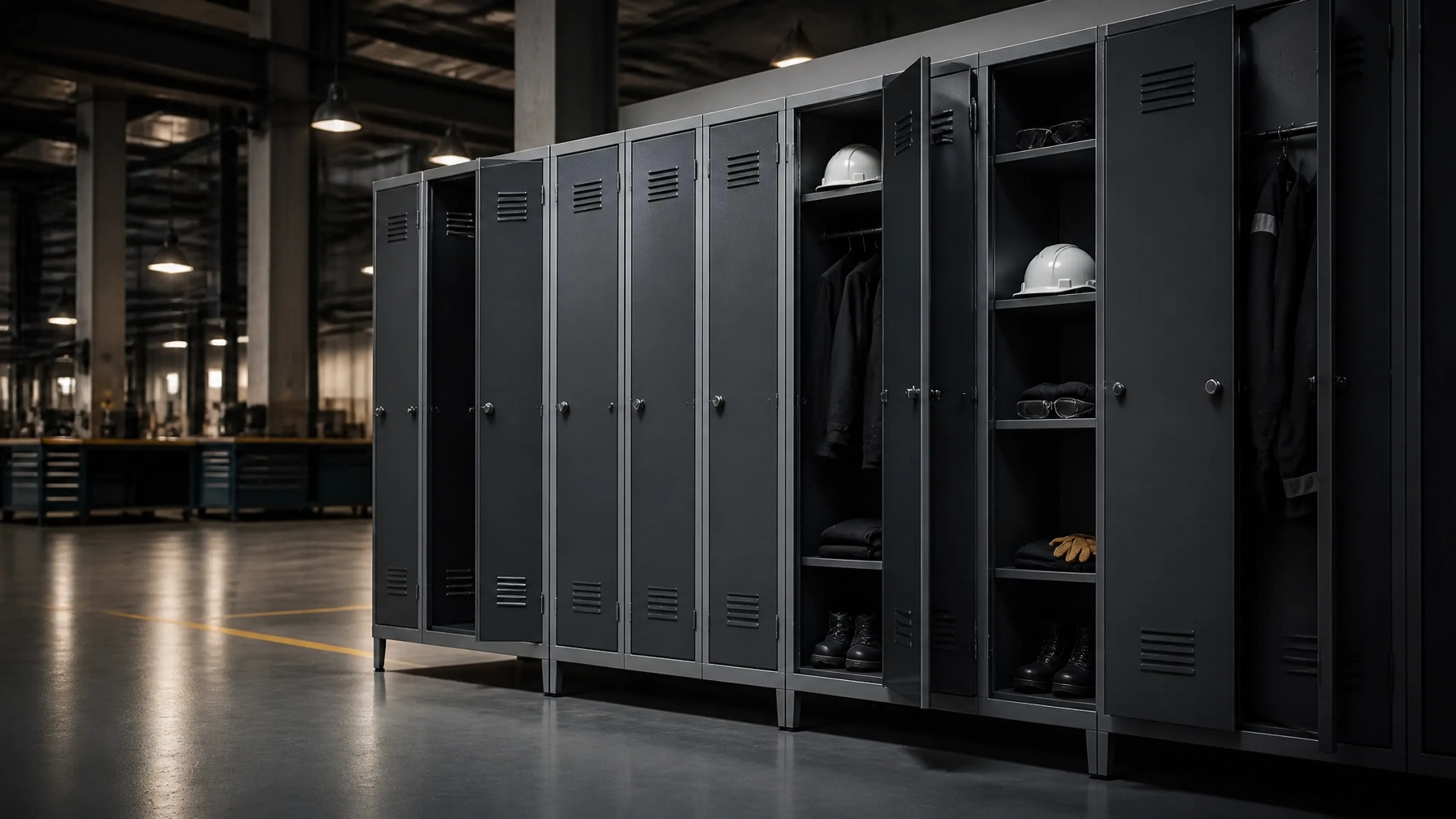
When employees need protective equipment, a standard employee locker is not always the best storage solution. The right choice depends on what must be stored, whether clothing can become contaminated, how often equipment is inspected, and how clearly your team must separate clean and used items.
PPE lockers organize protective equipment. Clean and dirty lockers separate workwear from personal clothing. Standard employee lockers provide secure general storage.
The important question is not simply, “Which locker is cheaper?” It is:
Which storage arrangement delivers the required hygiene, security, capacity, and daily control for your workplace?
PPE Lockers vs. Standard Employee Lockers: The Short Answer
| Requirement | PPE Lockers | Standard Employee Lockers |
|---|---|---|
| Main purpose | Store PPE, tools, small equipment, and protective accessories | Store personal belongings, bags, coats, uniforms, and work items |
| Internal layout | Multiple smaller compartments or dedicated equipment sections | Usually one full-height or tiered compartment |
| Best for | Factories, workshops, laboratories, warehouses, healthcare, and technical workplaces | Offices, schools, gyms, staff rooms, and general changing areas |
| Hygiene control | Supports labelled and organized PPE storage | Hygiene depends on use and internal management |
| Clean/dirty separation | Can be combined with dedicated compartments or separate locker banks | Usually not built for clean/dirty separation |
| User model | Assigned, shared, or team-controlled depending on PPE type | Usually assigned to one employee or user |
| Audit visibility | Easier to check equipment locations and compartment use | Better for personal storage than PPE control |

What Are PPE Lockers Used For?
PPE lockers are designed for organized storage of personal protective equipment and related work items.
Typical contents include:
- Safety helmets and bump caps
- Safety glasses and goggles
- Gloves and ear protection
- High-visibility vests
- Respirators and masks
- Protective footwear
- Small tools and work accessories
- Face shields and other task-specific equipment
A multi-door PPE locker gives each item, worker, team, or task a clearly identified location. This reduces loose equipment around the workplace and helps employees find the correct PPE before starting work.
For shared equipment, clear labels are important. A door can be marked by equipment type, department, work area, or shift. For assigned PPE, each compartment can be linked to an employee or job role.
This structure supports a cleaner daily routine:
- PPE is collected from a known location.
- Employees return equipment after use.
- Supervisors can identify missing or misplaced items.
- Equipment awaiting inspection or repair can be separated from ready-to-use PPE.
A PPE locker does not replace a PPE risk assessment, cleaning procedure, inspection process, or training program. It supports those procedures by giving the equipment a secure and organized home.
When Are Standard Employee Lockers Enough?
Standard employee lockers are suitable when the main requirement is secure personal storage.
They work well for:
- Coats, bags, and personal belongings
- Phones and wallets
- Office or school uniforms
- Non-contaminated work clothing
- Shoes and everyday accessories
- General staff changing rooms
A standard single-tier locker provides useful hanging space for a coat or uniform. Two-tier and multi-door models can increase capacity where floor space is limited. Loxmet’s standard-size metal lockers include different widths, heights, depths, and door configurations for offices, factories, schools, gyms, and public facilities.
However, a standard locker becomes less suitable when employees must store bulky PPE, wet workwear, contaminated garments, or several separate clothing types in the same unit.
Before choosing a standard locker, ask:
- Will clothing become wet, oily, dusty, or chemically contaminated?
- Must personal clothing remain separate from workwear?
- Does the locker need space for boots, helmets, or protective suits?
- Will the contents be inspected regularly?
- Is the locker used by one employee or by several shifts?
If the answer involves contamination, strict hygiene, or large protective equipment, specify a more suitable configuration.
Clean and Dirty Lockers: When Separation Matters
Clean and dirty lockers are designed to keep personal or clean clothing separate from used workwear.
A divided locker can provide:
- A clean section for personal clothing or fresh uniform
- A dirty section for used workwear
- Separate hanging or folded storage
- Clearer daily changing routines
- Reduced risk of clothing being mixed by mistake
This is particularly useful in manufacturing, healthcare, food production, laboratories, maintenance, waste handling, and other workplaces where clothing may become soiled or exposed to workplace substances.

Do uniform lockers need clean/dirty separation? Not always. The requirement depends on the workplace risk, the type of workwear, the substances involved, and local regulations or internal procedures.
Where contamination is possible, physical separation is stronger than relying only on labels. A clean/dirty locker, two separate locker banks, or a dedicated dirty-clothing container can help prevent poor storage practices.
Used or contaminated PPE should not simply be placed into a clean locker. Follow the site’s cleaning, decontamination, laundering, and disposal procedures. For high-risk substances, the locker is not a substitute for closed containers, specialist handling, or a controlled decontamination area.
Are PPE Lockers Legally Required?
There is no universal rule requiring a product specifically named a “PPE locker.” Legal requirements depend on the country, industry, hazard, and applicable workplace regulations.
The usual requirement is functional: PPE and protective clothing must be stored appropriately, protected from damage and contamination, and kept separate from personal clothing where necessary.
For example:
- UK HSE guidance states that PPE should be stored properly, such as in a dry and clean cupboard, and protected from contamination, damage, and loss. See the HSE PPE maintenance guidance.
- HSE guidance also supports separate storage for daywear and workwear where contamination is a risk. The HSE COSHH good practice guidance provides further information.
- In the United States, OSHA’s 29 CFR 1910.141(e) requires separate storage for street clothes and protective clothing in certain situations involving potential contamination with toxic materials.
Therefore, the practical answer is:
PPE lockers are not automatically legally required by name. Suitable PPE storage and separation may be required by the risk and the applicable regulations.
Ask your health and safety professional to assess the workplace before final procurement. Requirements for chemicals, asbestos, lead, biological materials, food production, and other high-risk activities can be site-specific.
Can PPE Be Stored in Standard Office Cabinets?
Sometimes, but only when the cabinet is suitable for the equipment and the risk.
A standard metal office cabinet can be appropriate for clean, dry, non-contaminated items such as boxed gloves, safety glasses, spare masks, or packaged PPE. It should be lockable, clean, dry, and clearly labelled.
It is usually not the best choice for:
- Bulky helmets and boots
- Used or wet workwear
- Contaminated protective clothing
- PPE requiring airflow or drying
- Equipment that needs individual assignment
- Items needing frequent inspection and quick access
Do not store contaminated PPE together with documents, personal clothing, food, or clean equipment. OSHA’s Chemical Protective Clothing guidance highlights the importance of separating potentially contaminated clothing from street clothing and unused protective clothing.
Ventilation and Compartment Design
Ventilation does not make contaminated PPE safe by itself, but it can support drying and reduce the problems caused by damp storage when the equipment and risk assessment allow it.
When comparing industrial lockers, consider:
- Ventilation slots or perforated doors
- Airflow around hanging garments
- Space for boots and helmets
- Shelves for smaller equipment
- Easy-clean internal surfaces
- Secure lock options
- Clear door labels
- Sloping tops where dust accumulation is a concern
- Adequate depth for protective clothing
- Wall fixing or floor anchoring where required
Compartment size is equally important. Small compartments are efficient for gloves, goggles, masks, and other accessories. Full-height compartments are more practical for overalls, jackets, boots, and helmets.
A mixed solution is often best: multi-door PPE lockers for small equipment, clean and dirty lockers for clothing, and standard employee lockers for personal belongings.
Should PPE and Uniform Lockers Be Assigned or Shared?
The correct choice depends on the equipment and the workflow.
Assigned lockers
Assigned lockers are useful when:
- Each employee has personal workwear
- Uniforms need to remain with one user
- Employees work different shifts
- Personal accountability is important
- The stored equipment is sized or fitted for one person
Clean and dirty clothing lockers are commonly assigned because each employee needs a controlled place for personal clothing and workwear.
Shared lockers
Shared PPE lockers can be effective when:
- Equipment is issued by task or work area
- Employees work rotating shifts
- PPE is cleaned and inspected between uses
- Compartments are labelled by equipment type
- A supervisor controls return and inspection
Shared use requires a clear procedure. The workplace should define who cleans the equipment, who checks it, where damaged PPE goes, and how missing items are reported.
For many facilities, the best arrangement is a combination of assigned uniform lockers and shared multi-door PPE storage.
PPE Locker Procurement Checklist
Before requesting a quotation, confirm:
-
PPE list
Identify helmets, boots, gloves, masks, suits, tools, and accessories. -
Contamination risk
Separate clean clothing, used workwear, and potentially contaminated PPE where required. -
User numbers
Calculate peak users per shift, not only total employee headcount. -
Assignment method
Decide whether compartments are personal, shared, departmental, or task-based. -
Locker dimensions
Confirm width, depth, height, and internal clearance for bulky equipment. -
Ventilation and drying
Specify suitable airflow and drying arrangements for the workplace conditions. -
Security and access
Choose key locks, padlock fittings, combination locks, or another suitable system. -
Cleaning and inspection
Check that surfaces and internal sections support the site’s maintenance routine. -
Future changes
Allow for new employees, additional PPE, shift changes, or production expansion. -
Custom requirements
Ask for a made-to-measure layout if catalogue dimensions do not fit the changing room.

Loxmet PPE and Workplace Locker Solutions
Loxmet supplies PPE multi-door lockers for organized storage of protective equipment, tools, and smaller work items. For clothing separation, our clean and dirty lockers provide divided storage for clean garments and used workwear.
Our range supports:
- Heavy-duty metal construction
- Multi-door and multi-compartment layouts
- Standard catalogue configurations
- Clean and dirty separation
- Flexible production
- Custom dimensions and internal arrangements
- International supply from Istanbul, Turkey
- A 10-year warranty against production faults
If your facility needs a specific width, door arrangement, bench combination, colour, or internal layout, visit the Loxmet customization page. Our team can review your floor plan, employee numbers, PPE list, and storage procedure before quotation.
Frequently Asked Questions
What are PPE lockers used for?
PPE lockers are used to store protective equipment such as helmets, gloves, goggles, masks, safety footwear, workwear, and task-specific tools in a secure and organized way.
Are PPE lockers legally required?
Not usually by product name. The applicable legal duty generally focuses on suitable, clean, secure storage and separation from personal clothing where contamination is possible. Check the requirements for your country and workplace risk.
Can PPE be stored in standard office cabinets?
Clean, dry, non-contaminated PPE can sometimes be stored in a suitable office cabinet. Bulky, wet, contaminated, or frequently inspected equipment normally requires a more appropriate PPE storage arrangement.
Do uniform lockers need clean/dirty separation?
Only when the workplace risk or procedure requires separation. Clean and dirty lockers are strongly suitable where workwear can become wet, soiled, contaminated, or difficult to clean.
Should PPE and uniform lockers be assigned or shared?
Uniform lockers are generally assigned. PPE lockers can be assigned or shared depending on the equipment, cleaning process, shift pattern, and accountability requirements.
How do I choose the right industrial locker?
Start with the PPE list, contamination risk, number of users per shift, available floor space, required compartment sizes, ventilation needs, and cleaning procedure. Then compare standard and custom configurations.
Choose Storage That Matches the Risk
Standard employee lockers are practical for personal belongings and general workwear. PPE lockers are better for organized equipment control. Clean and dirty lockers are the stronger choice when clothing separation and hygiene are central requirements.
Do not select only by door count or initial price. Review the workplace risk, daily workflow, storage capacity, and inspection process.
Compare Loxmet products or contact our international sales team to request a practical quotation for your facility.
If you are planning new changing areas or upgrading existing storage, contact Loxmet today. Our team can help you compare PPE lockers, clean and dirty lockers, and standard employee locker options for a secure, practical, and audit-ready solution.
Choose the Right PPE Storage Arrangement
The best locker system depends on the equipment, workplace risk, hygiene procedure, and daily workflow. Loxmet can help you compare PPE multi-door lockers, clean and dirty lockers, and standard employee storage for your facility. Contact our team with your PPE list, employee numbers, room dimensions, and preferred configuration to begin.