


Highlights
What Size Locker for Employees?

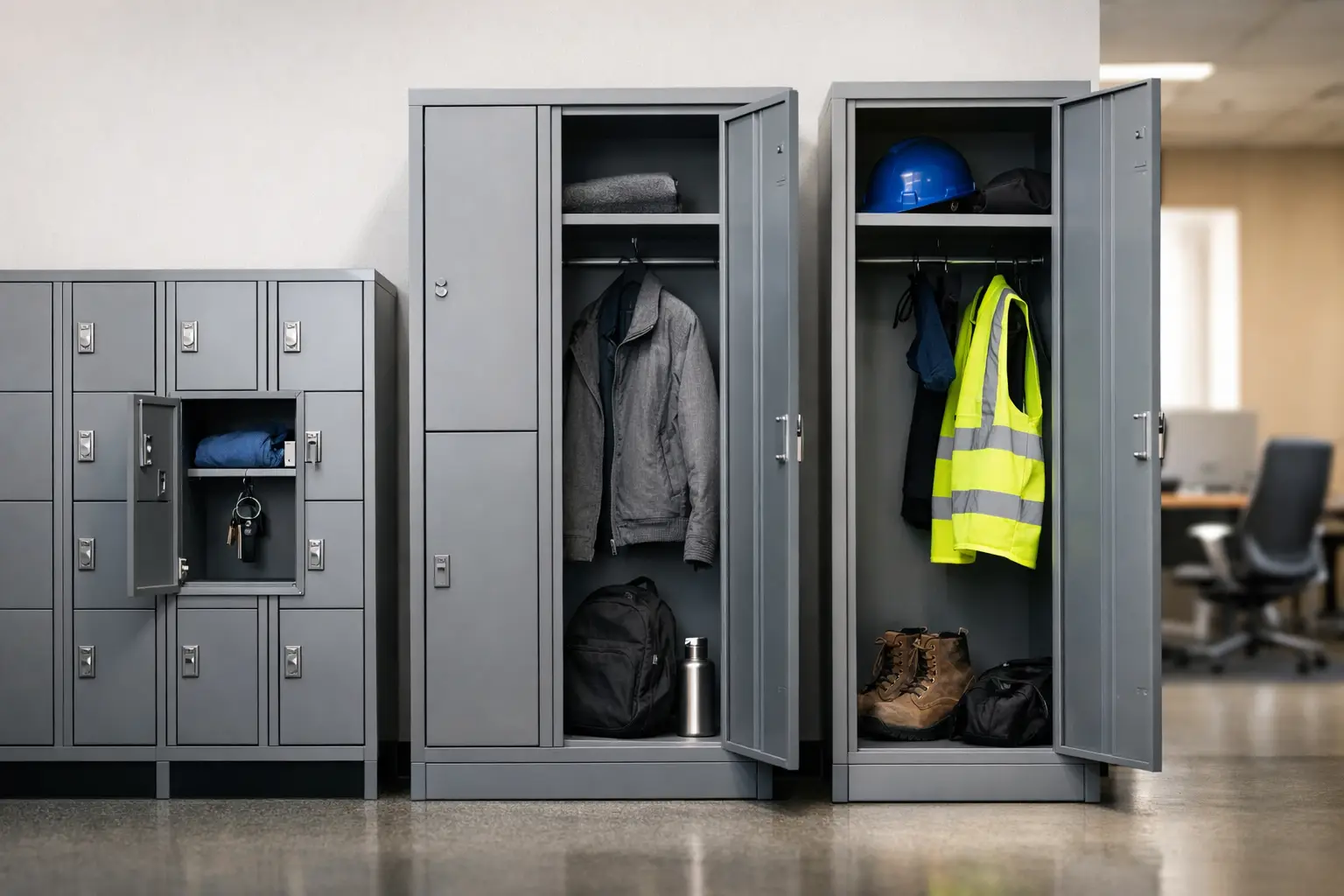
If you are planning a staff changing area, the wrong locker size shows up fast. Employees end up balancing bags on top, hanging jackets on door corners, or asking for extra storage by the second week. The real question behind what size locker for employees is not just dimensions. It is how people work, what they need to store, and how much floor space your facility can afford to give up.
For most workplaces, there is no single standard size that fits every team. An office with light personal storage needs will not require the same locker footprint as a factory issuing PPE, workwear, and boots. A gym staff room differs from a hospital changing area. The right decision comes from matching locker dimensions to actual use, not guessing from a catalog photo.
What size locker for employees depends on daily use
Start with the items employees need to store during a normal shift. If the locker is only for a handbag, lunch, phone, and a light jacket, a compact personal locker may be enough. If employees change on site and need space for uniforms, shoes, and personal clothing, you need a full-height option with hanging room.
This is where many projects go off track. Buyers often size lockers by the number of users first and by storage demand second. That can create a layout with enough doors but not enough usable capacity. In practice, one well-sized locker per employee is usually better than trying to save space with undersized compartments that create overflow.
A practical way to think about sizing is by use category. Small lockers work for wallet-and-phone storage. Medium lockers suit bags, folded clothing, and basic personal items. Large lockers are better for hanging garments, boots, and bulkier equipment. If your operation includes helmets, face shields, or site-specific PPE, depth becomes just as important as height.
Common employee locker sizes and where they fit
In many commercial projects, full-height lockers are the default because they give the broadest flexibility. A typical full-height employee locker often falls around 72 inches high, 12 to 18 inches wide, and 18 inches deep. That size works well when staff need to store coats, uniforms, backpacks, and shoes in one secure compartment.
For office environments, narrower lockers can be a better use of space. Widths around 12 inches may be enough when the main need is personal belongings rather than changing-room storage. If users carry larger bags or winter outerwear, moving to 15 or 18 inches wide usually improves day-to-day usability.
Depth is often underestimated. A locker that looks adequate from the front can feel cramped once a backpack or hard hat goes inside. Eighteen inches deep is a reliable benchmark for many employee applications because it accommodates more than just folded garments. If your staff store thicker PPE, tool belts, or larger personal bags, 18 inches or more is typically the safer choice.
Half-height and multi-tier lockers also have a place. They help when floor area is tight and employees only need short-term personal storage. Two-tier or three-tier units can increase capacity in offices, call centers, or controlled staff areas where hanging long garments is not necessary. The trade-off is obvious – higher user count per wall, but less storage volume per person.
How to choose locker size by workplace type
Office workplaces usually need the least internal volume. Employees often need storage for a backpack, laptop bag, lunch, and outerwear. In this setting, narrower lockers or multi-tier configurations can work well, especially if you want to maximize headcount without overbuilding the storage room.
Industrial and manufacturing sites usually need more generous dimensions. Workers may need to separate clean clothes from workwear, store boots, and secure PPE. In these environments, full-height lockers with internal shelves, hanging rails, or divided compartments are often more practical than compact personal lockers.
Healthcare, laboratory, and hygiene-sensitive facilities have another layer of complexity. Storage may need to support separation between personal and work items. That can make twin-compartment or Z-style lockers a strong option, especially where changing protocols matter and space efficiency still matters.
Fitness centers, schools, and hospitality staff areas often land somewhere in the middle. Uniforms, shoes, and personal bags all need space, but not every user requires a wide full-height locker. Here, it helps to look at the actual item mix rather than the industry label.
The layout matters as much as the locker size
When buyers ask what size locker for employees, they are usually balancing storage against room capacity. This is where overall layout should guide the final choice. Wider lockers reduce the total number of users per wall. Deeper lockers can tighten circulation if the aisle is already narrow. Taller lockers increase storage volume without increasing footprint, but only if the top space remains accessible and useful.
Aisle width matters in changing rooms and shift-based environments. If many employees use the lockers at the same time, overcrowding becomes a daily operational issue. A smaller locker that allows better circulation can outperform a larger one in a tight room. On the other hand, if aisle space is acceptable, a slightly deeper locker may prevent constant complaints about lack of capacity.
Bench integration should also be considered early. In staff changing areas, benches affect movement patterns, door swing, and how much clear space users need. Locker planning is not only about cabinet dimensions. It is about whether the full room works during shift change.
Internal features can change the size you need
Two lockers with the same outside dimensions can perform very differently depending on internal design. A single full-length compartment gives flexibility for hanging garments and storing bags. Add shelves, hooks, or a separate shoe section, and the same shell becomes more organized but less open.
This matters if employees carry mixed items. For example, a 12-inch-wide locker with a shelf and coat hook may be enough for office staff. That same width may feel too tight for industrial users with boots and bulky outerwear. In those cases, increasing width or depth is often more effective than simply adding internal accessories.
If mobile devices need secure storage or charging, that can also influence specification. A standard garment locker may not be the best answer if the real need includes power access, cable management, or separate compartments for valuables. The storage function should define the format.
When smaller lockers are the right choice
There is a tendency to assume bigger is always better. In commercial projects, that is not always true. Oversized lockers take up more floor area, increase material cost, and may reduce total capacity in the room. If employees only need basic day-use storage, compact lockers can deliver a better return on space.
This is especially relevant in offices, administrative areas, and shared work environments where locker use is mostly for personal belongings during the day. In these settings, slimmer lockers with efficient locking systems often meet the need without consuming space that could be used for circulation or additional work functions.
The key is to avoid forcing light-use environments into changing-room specifications. Not every employee locker needs to store boots and a winter coat.
When larger lockers are worth the footprint
Larger lockers make sense when replacement cost, compliance, or employee efficiency matters more than density. If workers need to keep uniforms clean, store PPE properly, or secure valuable equipment, undersized lockers create friction and shorten product life. Doors get forced, contents spill out, and shared areas lose order.
In heavy-duty environments, larger lockers are often the more economical long-term choice because they match real use. This is also where durable metal construction becomes important. High-frequency use, wet garments, impact, and cleaning routines put more demand on the product than office conditions do.
For distributors, contractors, and facility buyers, this is usually the line that matters most: buy for the task, not just the plan view.
A practical specification approach
If you need a starting point, begin with three questions. What exactly will each employee store? Will they use the locker for changing or only for personal items? How many people will access the room at the same time?
From there, test the room against a few realistic locker footprints rather than chasing one assumed standard. In many projects, 12-inch-wide lockers improve density, 15-inch-wide lockers provide a balanced middle ground, and 18-inch-wide lockers give better comfort for uniforms and bulkier items. Depth around 18 inches works for many employee applications, but high-bulk storage may justify more.
If your operation has mixed needs, a single locker model may not be the best answer. It can be more effective to combine sizes across departments or use custom metal fabrication for exact fit, especially when floor space is fixed and user needs are not. That is often the smarter commercial decision than overcompensating with one oversized format everywhere.
The best locker size is the one employees can actually use without workarounds. If the compartment fits the job, the room stays organized, the product lasts longer, and the investment performs the way it should.