


Highlights
Workplace Locker Room Design That Works

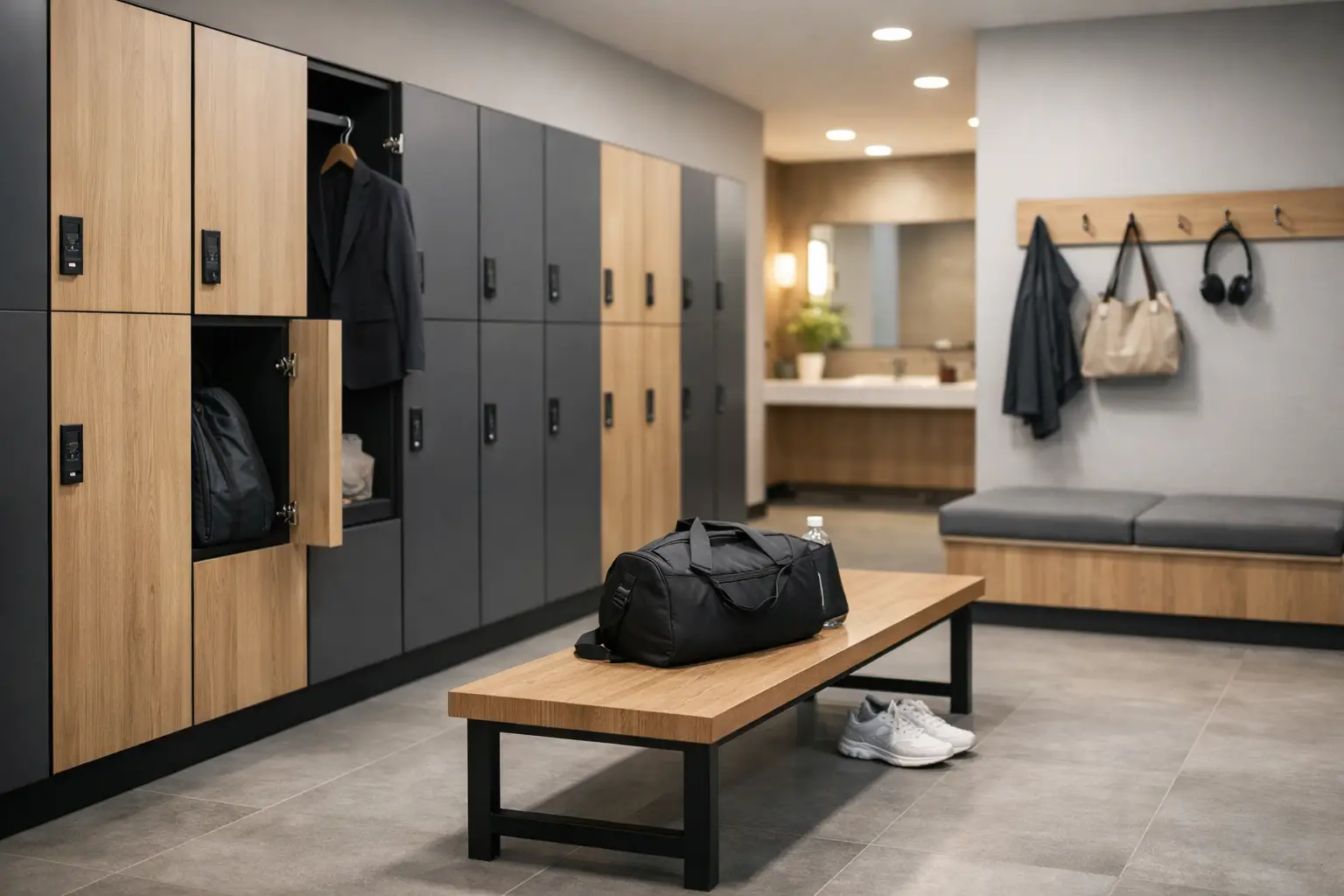
A locker room that looks acceptable on installation day can fail within months once shift changes, wet floors, crowding, and daily wear start putting pressure on it. That is why workplace locker room design should be treated as an operational planning decision, not a finishing detail. For employers, facility managers, and project buyers, the right design improves storage control, employee comfort, hygiene, and long-term maintenance costs.
The best locker rooms are not defined by appearance alone. They are defined by how well they handle real use. In an industrial plant, that may mean separating clean and dirty clothing. In a hospital, it may mean secure personal storage in a compact footprint. In a gym or staff facility, it may mean quick turnover, easy cleaning, and reliable ventilation. Good design starts when the room is planned around those daily demands.
What workplace locker room design needs to solve
A workplace locker room has a simple job on paper. It stores personal items, supports changing, and gives staff an organized place to prepare for work. In practice, it has to do more than that. It must support traffic flow before shifts, reduce clutter, limit damage, and stand up to moisture, impact, and frequent cleaning.
This is where many projects go off track. Buyers often focus on locker count first, then try to fit benches and circulation into the space that remains. That usually creates narrow aisles, blocked doors, and a poor user experience during peak periods. A better approach is to plan around movement first, then match locker sizes and quantities to actual user needs.
There is also a security question. Employees need confidence that their personal items, uniforms, devices, and work gear are protected. The right locking method, door construction, and compartment layout depend on the workplace. A corporate office may need simple day-use storage, while a factory may need heavy-duty lockers with multiple compartments and stronger access control.
Start with the user profile, not the floor plan
Before choosing products, define who will use the room and how. A locker room for office staff differs from one designed for manufacturing teams, warehouse workers, food processing personnel, or healthcare employees. The same square footage can perform very differently depending on user behavior.
If workers arrive and change at the same time, the room needs wider circulation paths and enough bench space to avoid bottlenecks. If shifts overlap, entry and exit flow matters more than total capacity on paper. If users carry PPE, boots, helmets, or bags, standard slim compartments may not be enough. If wet clothing is common, ventilation and material selection become more important than a purely visual finish.
This early definition stage helps prevent expensive revisions later. It also improves procurement decisions because locker dimensions, door formats, support furniture, and accessories can be selected against real operating conditions rather than assumptions.
Layout decisions that affect daily performance
In most projects, layout has the biggest impact on whether the room works well. A dense layout may increase locker count, but it can also create congestion and make cleaning more difficult. An open layout improves movement and housekeeping, but it may reduce storage density. The correct balance depends on how often the room is used and how long users stay there.
Single-sided rows placed against walls are often effective in smaller rooms. Double-sided locker islands can improve capacity in larger spaces, especially when combined with central benches. End-of-row clearance matters more than many plans suggest because locker doors need to open without interfering with passing traffic.
Benches should support changing without turning the room into an obstacle course. Fixed benches are stable and efficient, while freestanding models can offer more flexibility during renovation or phased installation. In high-use environments, integrating bench placement into the locker layout usually produces a cleaner result than trying to add seating later.
Accessibility should be considered from the start, not treated as an adjustment. That includes reach range, turning space, and practical access to lockers and benches. A room that technically fits the equipment but is difficult to use will create complaints quickly.
Choosing the right lockers for the environment
Locker selection is the core of workplace locker room design, but the right model depends on the storage task. Full-height lockers work well when users need space for clothing, uniforms, and larger personal items. Multi-door lockers help increase capacity where users only need to store smaller belongings. Z-lockers or L-shaped designs can improve hanging space while keeping the footprint efficient.
Material choice matters just as much as locker size. Metal lockers remain a strong option for workplace environments because they offer durability, security, and long service life under regular use. In demanding facilities, buyers should pay attention to steel thickness, door reinforcement, coating quality, and hinge performance. A locker room may contain dozens or hundreds of units, so even minor weaknesses can turn into frequent maintenance issues over time.
Ventilation is another practical point. Employees storing used uniforms, work shoes, or PPE need airflow. Perforated doors or integrated ventilation details can help reduce odor and moisture buildup. That is especially useful in industrial settings, sports facilities, and high-humidity environments.
Locking options should match the operating model. Padlock-ready doors are common and cost-effective. Built-in key locks can simplify control in assigned locker systems. Digital access solutions may suit some sites, but they are not always the best answer in harsh or wet environments. The right decision depends on traffic level, administrative control, and maintenance capacity.
Materials, finishes, and hygiene standards
A locker room is a hard-working space. Surfaces are exposed to moisture, cleaning chemicals, abrasion, and impact from bags, shoes, and equipment. That means materials and finishes should be selected for durability first.
Powder-coated metal is a practical choice for many workplace installations because it is resistant to daily wear and easier to maintain than lower-grade finishes. The coating system should be suitable for the room conditions. In dry office-adjacent environments, standard finishes may perform well for years. In humid or washdown areas, higher corrosion resistance may be necessary.
Floors and wall areas around lockers should also support cleaning efficiency. If housekeeping teams cannot easily access corners, bases, and under-bench areas, dirt and moisture will collect. Elevated locker legs or base designs can improve cleaning access, although closed plinth designs may be preferred in some applications for visual consistency. It depends on the cleaning routine and the risk of water exposure.
Hygiene is not only about washability. It is also about reducing clutter and keeping personal items organized off the floor. The right mix of compartments, hooks, shelves, and seating can have a direct effect on how clean the room stays during daily use.
Storage planning beyond basic personal items
Many workplace locker rooms now serve more than one storage function. In addition to clothing and bags, users may need to store PPE, helmets, tools, documents, or mobile devices. That changes the specification.
A basic personal locker may be enough for offices or light commercial environments. Industrial sites often require compartment layouts that separate workwear from personal items. Some facilities need charging capability for phones, scanners, or radios. Others need dedicated PPE lockers to keep safety equipment organized and ready between shifts.
This is where custom production can add value. Standard products cover many common needs, but not every workplace fits a standard format. Adjusting compartment size, door configuration, ventilation details, sloping tops, lock types, or bench integration can improve the room without overcomplicating the project. For buyers managing a rollout across multiple facilities, a manufacturer with both standard range and custom capability can simplify sourcing.
Common mistakes in workplace locker room design
The most common mistake is planning for maximum capacity instead of practical use. A room can meet the required locker count and still perform poorly if employees cannot move comfortably through it at shift start and end.
Another issue is underestimating moisture and wear. Lockers in active workplaces are not decorative furniture. Weak doors, poor coatings, and light-duty components create avoidable replacement costs. It is usually more cost-effective to specify durable units from the start than to manage repairs across a large installation.
Buyers also sometimes overlook future change. Headcount can grow. PPE requirements can shift. Assigned storage may become shared day-use storage, or the reverse. A design with no flexibility can become restrictive faster than expected.
A procurement-focused approach to better results
For commercial buyers, the best results usually come from treating locker room design as part of facility performance. The right specification should balance durability, layout efficiency, user comfort, and maintenance needs. It should also reflect the actual environment rather than relying on generic furniture assumptions.
That is why product selection, room planning, and manufacturing capability should be considered together. A supplier that understands heavy-duty use, storage variation, and project requirements can help avoid mismatches between the drawing and the daily reality of the room. For businesses sourcing at scale, that reduces risk and improves long-term value.
A well-planned locker room rarely gets much attention once it is in use, and that is usually the best sign it was designed properly. It supports the workday, protects belongings, and keeps the space organized without creating extra problems for the people managing it.