


Highlights
Cheap Locker Choices That Hold Up at Work

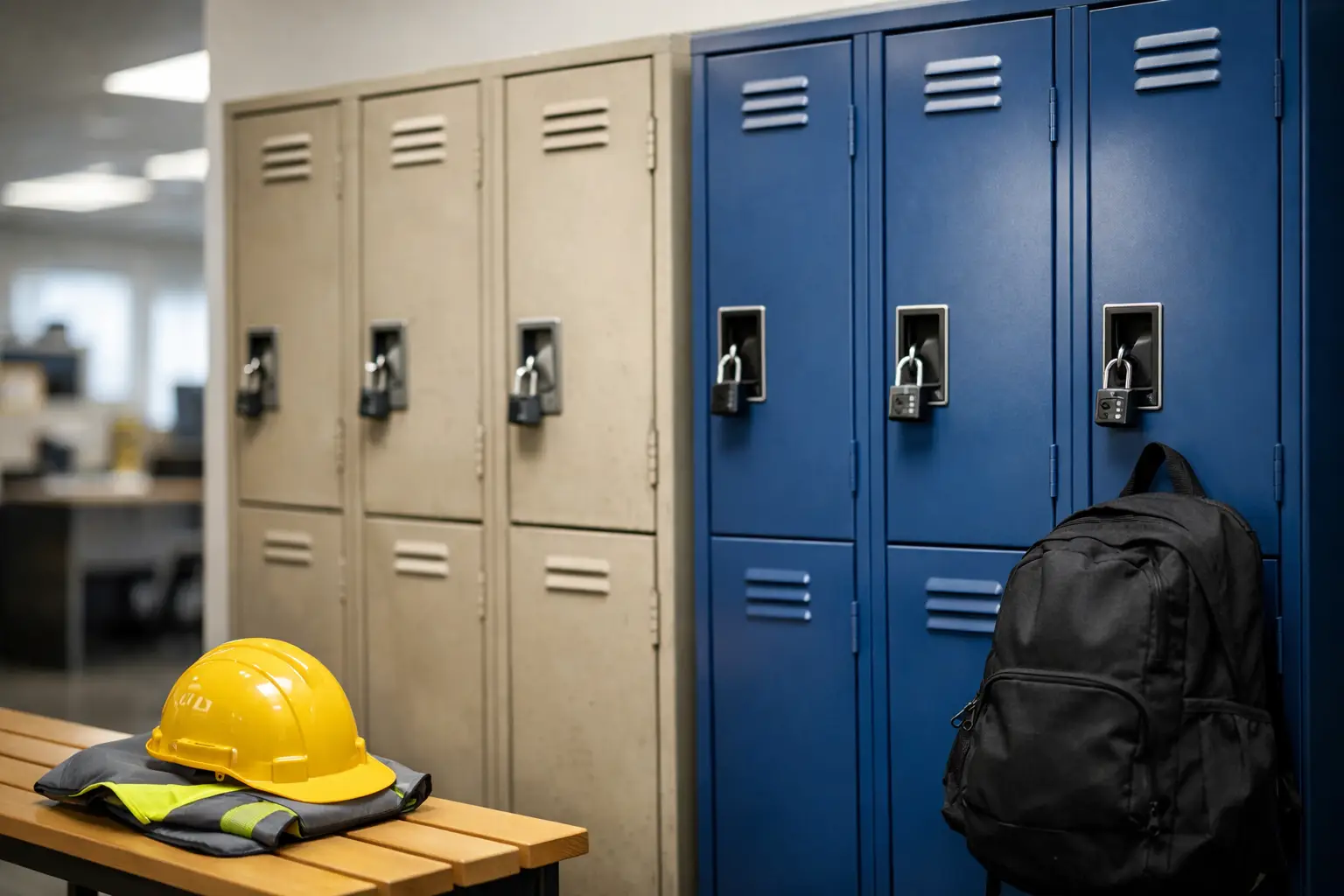
A cheap locker should lower the purchase price, not transfer costs into repairs, replacement, security incidents, or employee frustration. For commercial buyers, the right question is not simply, “What is the lowest unit price?” It is, “Which locker delivers the required service life at the lowest total cost?”
That distinction matters in busy facilities. A locker used once a day in an office changing area faces a different workload from one used across shifts in a manufacturing plant, school corridor, gym, warehouse, or healthcare environment. The most economical choice depends on how the locker will be used, what it must protect, and how easily it can be maintained over time.
What Makes a Cheap Locker a Good Buy?
Low price and low value are not the same. A commercially sound cheap locker is usually a standardized metal unit with an efficient design, appropriate steel thickness, practical locking options, and a finish suited to its environment. Standard sizes and configurations help manufacturers control production costs, which can make durable lockers more accessible without removing the features that matter.
Problems begin when price reductions affect the basic structure. Thin steel, weak door reinforcement, poor weld quality, sharp internal edges, unreliable locks, and inadequate coating may look acceptable when new. Under regular use, those shortcuts can lead to bent doors, failed hinges, corrosion, and difficult maintenance.
For procurement teams, the best value often sits between the lowest-priced product and the most heavily specified model. A heavy-duty locker designed for industrial abuse may be unnecessary for a low-traffic office. Conversely, an entry-level unit is rarely a cost-effective choice for a factory locker room serving multiple shifts.
Start With the Operating Environment
Before comparing quotations, define where the lockers will operate and who will use them. This keeps the specification focused on real conditions rather than general product descriptions.
Humidity, cleaning procedures, dust, temperature changes, and user turnover all influence the right construction. Locker rooms, gyms, and wash-down areas may require stronger corrosion protection and ventilation. Production facilities may need durable doors, reinforced frames, and a finish that resists scratches. Schools and public-facing sites often benefit from designs that reduce snag points and withstand frequent opening and closing.
Storage contents matter just as much. Personal belongings require privacy and reasonable security. PPE lockers need enough internal volume for clothing, footwear, helmets, and equipment. Device charging lockers require managed cable routing, ventilation, electrical safety, and access control. Chemical products should never be placed in a standard personal locker when dedicated chemical storage is required.
A clear use case prevents overbuying while protecting the facility from an under-specified installation.
Cheap Locker Construction Features Worth Checking
The product specification should make it possible to compare alternatives directly. Ask for details on steel construction, door design, frame strength, coating, locking system, and assembly method. Broad claims about quality are less useful than practical information that helps a buyer assess expected performance.
Steel Thickness and Door Strength
The locker door is typically the most frequently handled component and the most exposed to damage. A stiff door with formed edges or reinforcement resists flexing around the lock area. A stable body and frame help the door remain aligned, reducing lock issues and uneven gaps over time.
Steel thickness should match the expected use. There is no single correct gauge for every project. A lighter standard locker can suit controlled office use, while high-traffic employee areas and industrial sites generally benefit from more substantial construction. The key is to ensure the door, body, and frame are appropriate as a system rather than judging the locker by one material figure alone.
Powder-Coated Finish
A quality powder-coated finish supports appearance and protects the metal surface from routine wear. It is especially relevant where lockers are exposed to damp clothing, frequent cleaning, or hard use. Check whether the surface preparation and coating process are suited to the project environment.
Color selection can also serve operations. Different colors can separate departments, designate clean and used PPE zones, organize teams, or support wayfinding in larger facilities. Standard colors may be the most cost-effective route, while custom colors can be justified for fit-out consistency or operational identification.
Hinges, Ventilation, and Internal Details
Hinges should be durable enough for expected daily use and protected against excessive tampering where security is a concern. Ventilation is valuable for workwear, sports equipment, uniforms, and PPE that may retain moisture or odor. Internal shelves, hanging rails, hooks, and compartments should match the contents rather than be added as unnecessary extras.
These details may seem minor at quotation stage. In operation, they determine whether employees can use the locker properly and whether a facility manager receives repeated requests for modifications.
Choose the Right Lock Before You Choose the Price
Locks affect both purchase cost and administration. A basic key lock may be sufficient for assigned lockers with a stable workforce. It is simple, familiar, and economical, but lost keys create replacement work. Hasps can be suitable where users provide their own padlocks, although they place responsibility for access and lock quality on the user.
Combination locks reduce key management but need a reliable procedure for code resets and support. Digital or RFID locking can improve access management in shared-use environments, but it brings a higher initial investment and may require power, batteries, software, or administrative controls.
The lowest-cost lock is not always the least expensive system to run. For example, a facility with high employee turnover may spend significant time managing keys. A more suitable locking approach can reduce administrative effort even if the locker price is higher.
Layout Has a Direct Effect on Cost Per User
A cheap locker becomes more economical when it uses available space efficiently. Facility managers should calculate not only the number of compartments required, but also the footprint, aisle clearance, bench space, accessibility requirements, and future expansion needs.
Multi-compartment lockers can reduce cost per user where people only need to store small personal items. Full-height units provide more capacity for uniforms, coats, bags, and PPE. Z-shaped compartments can provide hanging height while allowing two users to share the vertical space of one full-height locker bay. The right arrangement depends on what users carry and how long items remain stored.
Do not force a high-density layout into a space that needs changing room circulation or frequent access. Crowded aisles and undersized compartments can undermine employee adoption, even when the initial purchase price looks favorable.
When Standard Lockers Are the Best Commercial Choice
Standard metal lockers are often the strongest option for buyers who need dependable products quickly and at a controlled price. They benefit from repeatable manufacturing, established dimensions, and readily available configurations. For distributors and project buyers, standardized products also make future additions easier to match.
Customization is most valuable when it solves a defined operational issue. This could include altered dimensions, compartment arrangements, lock cutouts, color requirements, sloped tops, numbering, ventilation patterns, or integrated seating. Custom fabrication can be a practical route for difficult spaces or specialized workplace requirements, but it should be purposeful. Every modification can affect lead time, tooling, production planning, and unit cost.
For many projects, a standard body combined with selected options offers the right balance of price, delivery speed, and functional fit.
Compare Quotes on Total Ownership Cost
A reliable comparison should account for more than the delivered unit price. Include expected service life, warranty coverage, delivery schedule, installation requirements, replacement parts, lock administration, and the likely need for future expansion.
A lower-priced locker that requires early replacement is rarely a saving. The same applies when inconsistent dimensions make later additions difficult, or when a supplier cannot provide replacement keys, locks, doors, or components. Commercial storage is an operational asset, not a one-time decoration purchase.
For larger orders, request samples or detailed technical information before final approval. Check door operation, edge finishing, lock action, coating quality, ventilation, and how the units will be delivered or assembled. Confirm that the supplier understands the installation conditions, particularly if lockers must fit a restricted access route, a specific wall layout, or a phased project schedule.
Loxmet supplies standard and custom metal storage solutions for business projects, allowing buyers to combine locker requirements with cabinets, shelving, benches, and other workplace storage in one coordinated order.
Buy for the Work the Locker Must Do
The best cheap locker is not the one with the smallest figure on a quotation sheet. It is the one that fits the users, survives the environment, supports daily management, and remains serviceable as the facility changes. Set the operating requirements first, then select the simplest metal locker specification that meets them with confidence.