


Highlights
Skinny Lockers for High-Density Storage

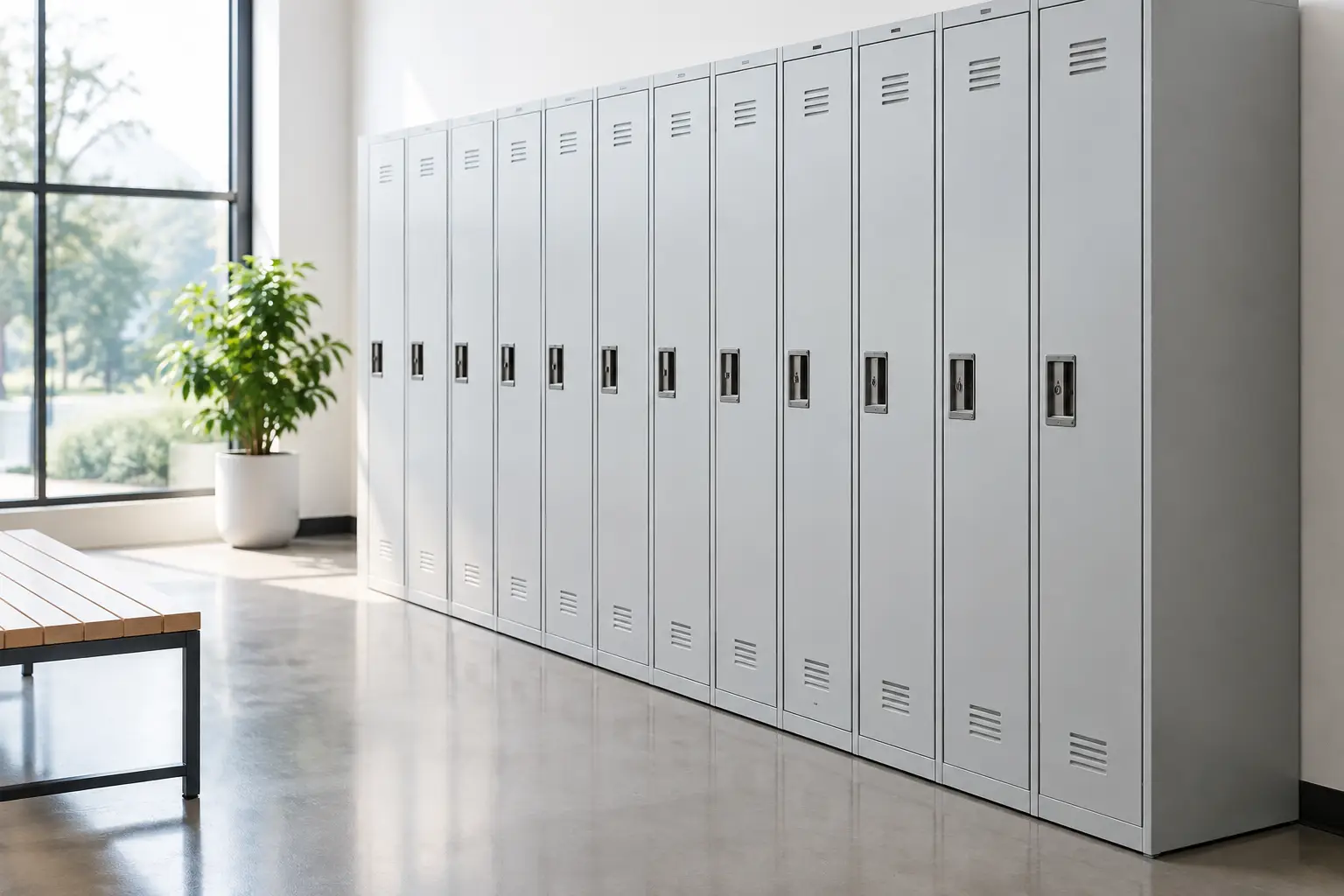
Skinny lockers solve a common facility problem: people need secure personal storage, but the available wall space is limited. By reducing the width of each compartment, they allow schools, workplaces, gyms, industrial sites, and public facilities to provide more individual lockers without expanding the room footprint. The result can be a cleaner changing area, more orderly employee storage, and better use of every square foot.
The narrow format is not automatically the right answer for every project. A locker that is too slim for the items users carry will create frustration rather than efficiency. The best specification balances compartment width with the expected contents, user volume, circulation space, security needs, and the operating conditions of the facility.
What Are Skinny Lockers?
Skinny lockers are narrow individual storage compartments arranged in a multi-door locker body. They are commonly used where users need to store smaller personal belongings, uniforms, shoes, bags, tablets, documents, or PPE rather than large sports equipment or bulky workwear.
The defining feature is width. Instead of allocating a broad compartment to each user, the cabinet is divided into multiple vertical sections. This enables high-density storage along a single wall and can increase the number of assigned lockers in a locker room, corridor, staff area, or production facility.
For commercial buyers, the term should not be treated as a fixed product specification. A narrow locker may be appropriate at one width for phones and wallets, and at a wider width for folded uniforms and work bags. Depth, height, door configuration, and internal fittings are equally important to the final result.
Where Narrow Locker Layouts Perform Best
Skinny lockers are particularly effective in facilities with many users and predictable storage requirements. Schools can assign one compartment per student where books, outerwear, and personal items are the main contents. Offices can provide secure day-use storage for hybrid teams. Factories and warehouses can separate clean clothing, PPE, and personal effects in compact employee areas.
They are also a practical option for gyms, recreation centers, healthcare facilities, laboratories, and transportation hubs. In these environments, users often need short-term storage for compact belongings. A greater number of doors can improve access during busy shift changes, class transitions, or peak visitor periods.
The trade-off is capacity per user. Narrow compartments are less suitable when workers must store hard hats, large boots, tool bags, long coats, tactical equipment, or several changes of clothing. In those cases, a wider locker, a two-person configuration, or a combination of narrow and full-width compartments may be more useful than maximizing door count alone.
How to Specify Skinny Lockers for a Project
A successful locker purchase begins with the user journey, not the cabinet dimensions. Ask what users will store, whether the locker is assigned or shared, how often it will be opened, and whether the area is dry, humid, dusty, or exposed to demanding industrial use.
Start With Stored Items
A compartment intended for keys, a phone, a small bag, and folded clothing can be narrow. A compartment intended for protective footwear, helmets, winter coats, or laptop bags needs more internal clearance. Measure representative items where possible. Procurement teams often rely on exterior dimensions, but usable internal width and depth determine whether a locker works in daily operation.
Consider vertical space as well. Full-height narrow lockers are efficient for hanging garments, while smaller stacked doors are better for personal effects and short-term use. Multi-tier arrangements can produce a high number of compartments, but each tier must remain easy to reach for the intended users.
Choose the Door Configuration Carefully
The number of doors changes both capacity and user experience. A single full-height door gives each user more vertical room. Two- or three-tier doors create more individual spaces while maintaining a manageable cabinet height. Higher-tier configurations suit small belongings but can make upper compartments less convenient.
Door design should support regular commercial use. Reinforced door edges, concealed or protected hinges, stiffeners, and reliable closing alignment help prevent distortion over time. For high-traffic areas, a locker door should withstand repeated opening, closing, and occasional impact without compromising the lock or frame.
Match the Lock to the Operating Model
Lock selection depends on how the lockers are managed. Assigned employee lockers may use cylinder locks with individual keys or padlock fittings. Shared gym or visitor lockers may benefit from coin-return, combination, digital, or RFID locking systems. Facility managers should also plan for lost credentials, master access, lock replacement, and reassignment procedures.
Electronic locks can reduce key administration, but they introduce requirements for batteries, programming, user support, and access control policies. Mechanical solutions are straightforward and durable, particularly where lockers are assigned for long periods. There is no universal best option. The right lock is the one that fits the daily management process.
Do Not Overlook Ventilation and Hygiene
Ventilation matters when lockers hold workwear, shoes, PPE, or damp garments. Perforated door sections, ventilation slots, or louvered designs help air circulate and reduce odor buildup. In wet areas, locker placement, floor drainage, cleaning access, and corrosion protection deserve the same attention as locker capacity.
For healthcare, food production, and industrial sites, clean and dirty storage may need to be separated. A narrow locker system can support this approach when compartments and internal divisions are configured around the facility’s hygiene procedure. The cabinet should make correct behavior easier, not rely on users to work around unsuitable storage.
Material and Construction Affect Lifetime Cost
High-density storage concentrates a large number of doors, locks, and hinges into a limited area. That makes construction quality especially significant. Thin materials or weak door reinforcement may reduce initial cost, but can lead to bent doors, misaligned locks, and frequent maintenance when usage is intensive.
Commercial metal lockers should be selected for the environment and expected duty level. Powder-coated steel provides a durable finish for many workplace, education, and changing-room applications. The coating quality, steel thickness, weld consistency, frame rigidity, and edge finishing all affect resistance to daily wear.
For demanding settings, buyers should review the practical details rather than only comparing cabinet appearance. These include door stiffeners, hinge type, lock housing strength, adjustable feet, base options, ventilation design, and the ability to replace individual components. A locker system that can be maintained efficiently has a lower long-term operating burden.
Plan the Room, Not Just the Locker Wall
Skinny lockers increase storage density, but the room must still function when many people arrive at once. Door swing, aisle width, benches, access routes, cleaning equipment, and accessibility requirements all influence the layout. A wall filled with lockers may look efficient on a drawing but create congestion during shift changes if circulation has not been planned.
Consider whether doors should open in a consistent direction and whether end panels, sloping tops, or raised bases will simplify cleaning and reduce dust collection. Benches positioned opposite lockers can make changing more comfortable, but they also require sufficient clearance for open doors and passing users.
For larger installations, it is often useful to mix locker sizes. Narrow doors can serve most users, while a smaller number of wider compartments accommodate oversized items, accessibility needs, or supervisors who require additional storage. This approach protects density without forcing every user into the same limited format.
Questions to Ask a Locker Manufacturer
Before approving a project specification, confirm the details that affect installation and operation:
- What are the internal and external dimensions of each compartment?
- Which steel grade, thickness, coating, and color options are available?
- Can ventilation, shelves, garment rails, name holders, and locks be configured for the intended use?
- Are replacement locks, keys, doors, and other service parts available?
- What are the production lead time, minimum order quantity, packing method, and installation requirements?
Custom manufacturing is valuable when a standard model does not fit the room or user requirements. Loxmet supports project-based locker configurations for buyers who need specific dimensions, compartment layouts, colors, locking options, or related metal storage products from one manufacturing partner.
A Better Standard for Compact Storage
The strongest skinny locker project is not the one with the most doors. It is the one that gives every user enough secure space, stays reliable under daily use, and fits the room without creating a bottleneck. Specify the storage need first, then select the narrowest compartment that can serve it comfortably for years.