


Highlights
PPE Cabinet Selection for Safer Workplaces

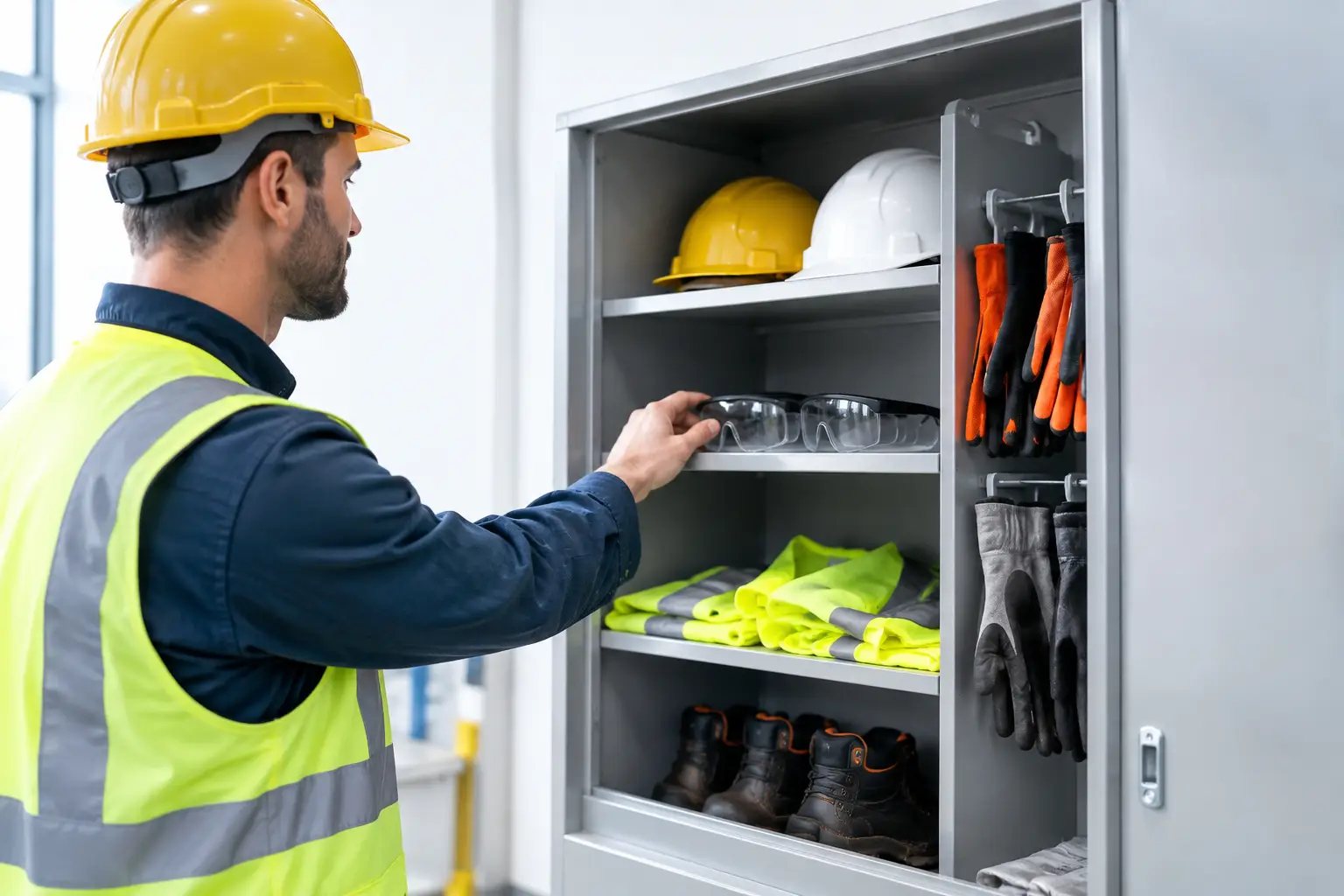
A PPE cabinet is a working part of a safety program, not simply a place to put spare gloves and helmets. When protective equipment is hard to find, exposed to dust, mixed with personal belongings, or stored in damp conditions, employees lose time and the equipment may no longer be ready for use. For facility managers and procurement teams, the right cabinet creates a clear, controlled point of access for essential safety gear.
The best specification depends on what is being stored, who needs access, and the conditions around the storage area. A cabinet for clean disposable supplies in a medical facility has different requirements from one holding high-visibility clothing, hard hats, respirators, and safety boots on a production floor. Selecting by application first prevents costly compromises later.
What a PPE Cabinet Should Solve
Personal protective equipment is often distributed across lockers, shelving, supply rooms, and workstations. That can work in a small team, but it becomes difficult to control as headcount, shifts, and safety requirements increase. A dedicated PPE cabinet gives the operation a defined storage standard.
It should protect equipment from impact, unauthorized removal, contamination, and unnecessary exposure to moisture or dust. It should also make stock checks faster. When supplies are placed in labeled compartments or clearly arranged shelves, supervisors can identify shortages before a shift begins rather than after an employee reaches the work area.
The cabinet also supports accountability. Shared equipment requires a practical way to separate clean items, used items awaiting cleaning, and emergency reserves. Without that separation, workers may take the wrong item or assume equipment is ready when it is not.
For high-traffic facilities, accessibility matters as much as security. A cabinet that is secure but slow to open or poorly positioned will encourage employees to store items elsewhere. The goal is controlled access without creating a bottleneck at the start of each shift.
Start With the PPE You Need to Store
Cabinet dimensions and internal arrangements should follow the actual equipment list. Hard hats, face shields, protective footwear, ear defenders, gloves, coveralls, respirators, and fall-protection components all occupy space differently. A general-purpose steel cabinet with adjustable shelves may suit boxed gloves and folded clothing, while bulky helmets and boots need greater shelf clearance.
Respiratory protection needs special attention. Masks, filters, and related equipment should be kept clean, dry, and protected from crushing. A tightly packed shelf may increase capacity on paper but can damage seals and distort components in daily use. Where respirators are issued individually, compartmentalized storage or lockers may provide better control than one shared cabinet.
For facilities managing clean and used protective clothing, use separate storage zones. This can mean two cabinets, divided compartments, or clearly marked sections within a larger unit. The approach depends on the cleaning process and volume of equipment, but the distinction should be visible and easy to maintain.
Emergency PPE is another separate category. Spill-response goggles, protective gloves, face shields, and similar items should not be buried behind routine consumables. A dedicated, clearly identified cabinet can reduce response time when an incident occurs.
Steel Construction for Demanding Sites
A PPE cabinet in an industrial or institutional environment must withstand more than occasional use. Doors may be opened hundreds of times each week. Staff may place heavy equipment on shelves. Forklift traffic, cleaning routines, changing rooms, workshops, and site dust all create demands that lightweight storage is not designed to handle.
Powder-coated steel is a practical choice for these environments. It provides a durable surface that is easier to clean and is suitable for frequent handling. The cabinet body, doors, hinges, shelf supports, and locking points should be evaluated as a complete system. A strong door panel has limited value if hinges loosen under repeated use or shelves flex under a normal load.
Ask the supplier about steel thickness, shelf load capacity, door reinforcement, and finish options. These details are more useful than a general claim of durability because they show whether the cabinet is matched to the equipment and expected traffic level.
Color can also support operations. Safety teams may use a distinct cabinet color for emergency equipment, while different departments may assign colors by work zone or PPE category. This is not only a visual preference. Consistent identification speeds up retrieval and makes audits easier in large facilities.
Ventilation, Hygiene, and Cleaning
Not every PPE cabinet requires ventilation, but it should be considered when storing footwear, reusable clothing, or equipment returned after use. Moisture and odor can build up in enclosed spaces, particularly in locker rooms, warehouses, construction support areas, and manufacturing sites with hot working conditions.
Ventilated door panels or cabinet openings can improve air circulation while keeping equipment protected and organized. The right level of ventilation depends on the equipment, cleaning procedures, and environmental conditions. For clean packaged products, excessive openings may create an unnecessary dust risk. For damp reusable items, an enclosed cabinet without airflow can create hygiene problems.
The interior should be easy to wipe down, with shelf layouts that do not trap debris. Avoid designs that make it difficult to clean beneath shelves or around door edges. If the facility uses regular washdown or aggressive cleaning chemicals, confirm that the finish and components are appropriate for that routine.
A cabinet is not a replacement for PPE inspection, cleaning, or replacement procedures. It is the storage control that helps those procedures work consistently.
Locking and Access Choices
The correct locking system depends on whether equipment is shared, individually assigned, or restricted to trained personnel. A central keyed lock can be sufficient for a supply cabinet managed by a supervisor. Individual locks or compartment doors may be more suitable where employees are issued personal equipment.
For sites operating multiple shifts, consider who must access the cabinet outside normal office hours. A lock that depends on one key holder can delay work and encourage informal workarounds. Facilities may choose master-key systems, combination locks, or electronic access depending on their internal security policy.
There is a trade-off between access control and simplicity. Electronic systems can provide stronger oversight in some applications, but they add power, administration, and maintenance requirements. A well-built mechanical locking system is often the right solution for standard PPE storage. The priority is reliable access for authorized users and clear responsibility for stock.
Size, Layout, and Installation Planning
Before placing an order, measure more than the available wall space. Check door swing, aisle clearance, nearby workstations, evacuation routes, and the movement of carts or material-handling equipment. A cabinet that fits the floor plan but blocks a route during busy periods creates a daily operational problem.
Think about capacity over the expected service period. Procurement teams should account for headcount growth, seasonal staffing, additional PPE categories, and reserve stock. Buying too small often leads to boxes placed on top of cabinets or supplies returned to open shelving, which defeats the purpose of organized storage.
Adjustable shelves provide useful flexibility when inventory changes. Hanging rails can support coveralls and protective garments. Divided sections help separate sizes or departments. For high-density requirements, a combination of full-height cabinets and smaller issue cabinets may use the room more efficiently than one oversized unit.
Wall anchoring or floor fixing should be considered for tall cabinets, busy areas, and sites where security is a concern. Fixing requirements must be reviewed alongside the wall or floor construction. A durable cabinet performs best when installation is planned as carefully as the product specification.
Questions to Ask a PPE Cabinet Manufacturer
Commercial buyers should request information that relates directly to the site rather than selecting solely from an image or external dimensions. Confirm the cabinet material, finish, internal configuration, load limits, ventilation option, lock type, and installation requirements. For projects with specific branding, hygiene, or workflow needs, ask whether color, dimensions, shelf arrangements, labeling, and locking can be customized.
Lead time also matters. Standard cabinet models may be available faster, while made-to-order configurations can better fit a complex application. The decision depends on whether the operational benefit of customization justifies the additional planning time. A manufacturer with both standard products and custom metal fabrication capability gives buyers more room to balance speed, budget, and site requirements.
Loxmet supports this type of project planning with heavy-duty metal storage solutions designed for commercial and institutional use. For distributors and multi-site buyers, consistent product quality and repeatable specifications are particularly valuable when PPE storage must be standardized across locations.
A well-specified cabinet makes protective equipment easier to issue, inspect, replenish, and protect. Start with the equipment and workflow, then choose the steel construction, access method, and internal layout that staff can use correctly every day.