


Highlights
Uniform Lockers: Clean Storage for Staff Workwear

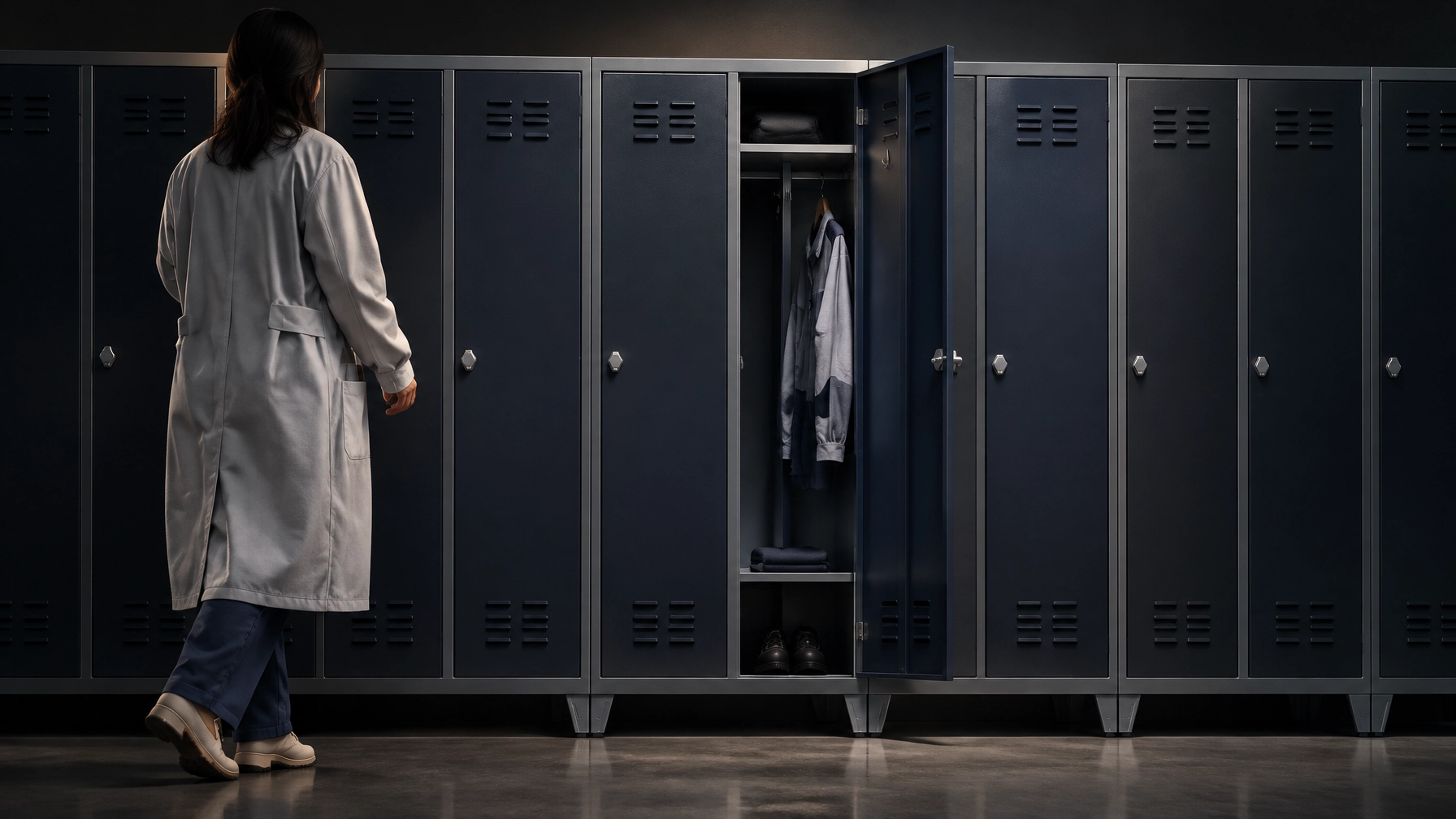
Uniform lockers give employees a secure, personal place to store uniforms and work clothing between shifts. The right configuration keeps garments organized, supports a tidy changing area and helps your team separate everyday clothing from protective equipment where needed.
| Storage type | Main purpose | Typical configuration |
|---|---|---|
| Uniform lockers / workwear lockers | Personal storage for uniforms, overalls and work clothing | Full-height compartment, often with a rail, hooks and shelf |
| Clean/dirty lockers | Keep clean-issued clothing apart from used workwear | Separate compartments or designated clean and used storage |
| PPE lockers | Store protective equipment such as helmets, gloves and safety footwear | Compartments sized for specific gear and access needs |
What Uniform Lockers Are
Uniform lockers are staff lockers selected around the clothing employees wear for work. Depending on the role, that may mean a uniform, coat, overalls or other garments that need to stay separate from personal belongings. A full-height locker can keep clothing on a hanger and leave room for shoes or a bag below.
The term workwear lockers is often used for the same general purpose. The practical question is what each user needs to store. A compact uniform for a service role has different space requirements from a coat or full-length coverall used in manufacturing or facilities work.
For many teams, personal access is also important. An assigned locker supports a simple routine: store personal belongings securely, change into work clothing and keep the changing area orderly. Browse Loxmet Standard Size Lockers to compare catalogue configurations.

Choose the Right Configuration
Single-Tier or Multi-Tier?
A single-tier locker offers a taller compartment that suits garments needing to hang. It is a practical starting point for coats, uniforms and workwear that should not be folded into a small space. Multi-tier lockers divide the cabinet into smaller individual compartments, so they can suit users who mainly store bags and personal items.
Match the compartment to the largest item users will keep inside. If garments need to hang, confirm usable internal height and whether the selected model includes a hanging rail. For exact planning, check the product details and compare the room layout with our locker size guide.
Rail, Hooks and Shelf
A hanging rail helps keep work clothing off the compartment floor. Hooks provide a convenient place for a coat or personal items, while a shelf can hold smaller belongings. Check that the arrangement fits your uniform, footwear and bag requirements without forcing items together.
Ventilation and Garment Care
Consider ventilation where staff store clothing that is damp from weather, perspiration or the workday. Locker ventilation supports airflow, but it does not replace a suitable drying arrangement when garments become wet. If clothing needs to be dried, plan for that separately and confirm the storage system supports your workplace routine.
HSE guidance for construction welfare says changing areas should have seating and facilities for drying clothing where needed. It also says contaminated protective equipment should be kept separate from everyday clothing. Use the HSE guidance on changing rooms and lockers as a reference, alongside the requirements that apply to your workplace.
Uniform, PPE and Clean/Dirty Storage
These locker types can work together, but they solve different storage needs.
Uniform or workwear lockers are for employees’ work clothing. A standard personal locker is often suitable when garments are clean or when used clothing is handled through a separate collection and laundry routine.
Clean/dirty lockers are designed to separate clean clothing from used workwear. The separation supports a clear storage process where clean garments and worn garments should not share the same space. “Dirty lockers” describes the used-clothing side of that arrangement; it is not another name for a general uniform locker. Explore the Clean & Dirty Lockers range when segregation is part of your workplace plan.

PPE lockers are for protective equipment, rather than general uniform storage. Depending on the equipment, staff may need defined spaces for helmets, gloves, footwear or other gear. HSE says PPE should be stored properly when not in use, for example in a dry, clean cupboard, and reusable PPE should be cleaned and kept in good condition. See the HSE overview of PPE at work and its PPE maintenance guidance.
A changing room may need more than one locker type. For example, a workplace can provide full-height staff lockers for garments and separate PPE lockers for assigned protective gear. Define what each space stores and how used clothing or equipment is collected.
Workplace Use Cases
Uniform storage is useful wherever employees change for work or need secure storage during a shift:
- Manufacturing and operations: Full-height space for work clothing, with clear separation from personal items where required.
- Service workplaces: Personal staff lockers for uniforms, coats and everyday belongings.
- Healthcare support teams: Organized storage for staff clothing and personal items, based on the facility’s changing and laundry procedures.
- Food-adjacent, non-hazardous roles: Locker allocation that supports the employer’s clothing and changing routines.
For changing rooms, coordinate locker access with seating and circulation. Adding locker room benches gives employees a place to sit while changing and can help keep the room organized.
Buying Checklist
Before you choose, confirm:
- Users: How many employees need a locker, and how is access assigned?
- Stored items: Uniforms, coats, footwear, bags and any other regular items.
- Compartment format: Full-height hanging space or smaller multi-tier compartments.
- Internal layout: Rail, hooks, shelf and usable space for the largest garment.
- Separation: Whether clean clothing, used workwear and PPE need distinct storage.
- Room plan: Locker footprint, door operation, walkways and any bench seating.
- Finish and durability: Loxmet lockers are manufactured with a monoblock welded steel body, DKP sheet of 0.6 mm before paint and electrostatic powder coating, with RAL colour options.
- Supply needs: Standard catalogue products in catalogue colours are generally delivered within 10 working days. Custom colours and made-to-order products typically require approximately 10 additional working days.
Loxmet offers more than 100 standard products and over 10 years of custom metal fabrication experience. Single-unit orders are accepted. The company’s stated credentials include CE, ISO 9001:2015, ISO 10002:2018, ISO 14001:2015 and ISO 45001:2018. A 10-year warranty applies to production faults. For order terms and delivery details, see the Loxmet FAQs.
Buyer Questions
What Is the Difference Between Uniform Lockers and Workwear Lockers?
The terms are commonly used for similar personal storage. Both can refer to lockers for employee uniforms, overalls or other work clothing. Choose the compartment based on garment size and whether clothing needs to hang.
Do Uniform Lockers Need Ventilation?
That depends on what staff store and how garments are handled. Consider ventilation for clothing that may be damp, and plan separate drying arrangements if garments become wet. Follow your workplace procedures and applicable guidance.
When Should We Choose Clean/Dirty Lockers?
Choose a clean/dirty arrangement when your process requires clean-issued clothing to be kept separate from used workwear. Define which compartment is for each purpose and how worn garments are collected or laundered.
Are PPE Lockers the Same as Uniform Lockers?
No. Uniform lockers primarily store work clothing and personal belongings. PPE lockers organize protective equipment such as helmets, gloves and footwear. A workplace may need both.
Should Every Employee Have an Individual Staff Locker?
Individual allocation can make access and responsibility clear, especially where employees need secure storage during a shift. Confirm capacity against your staffing pattern, shift changes and the items users must store.
Can I Order One Locker or Request a Custom Configuration?
Yes. Loxmet accepts single-unit orders and offers custom-made metal fabrication. Send your required dimensions, quantities, colour preference and storage needs through the contact page to discuss a suitable option.
Plan Staff Storage With Confidence
Choose lockers around the clothing, equipment and routines your employees use every day. Compare standard configurations, confirm the room layout and separate uniform storage from PPE or used-workwear storage where needed. Contact the Loxmet team to request product information or a quotation for your workplace.