


Highlights
Budget Locker Buying Guide for Commercial Facilities

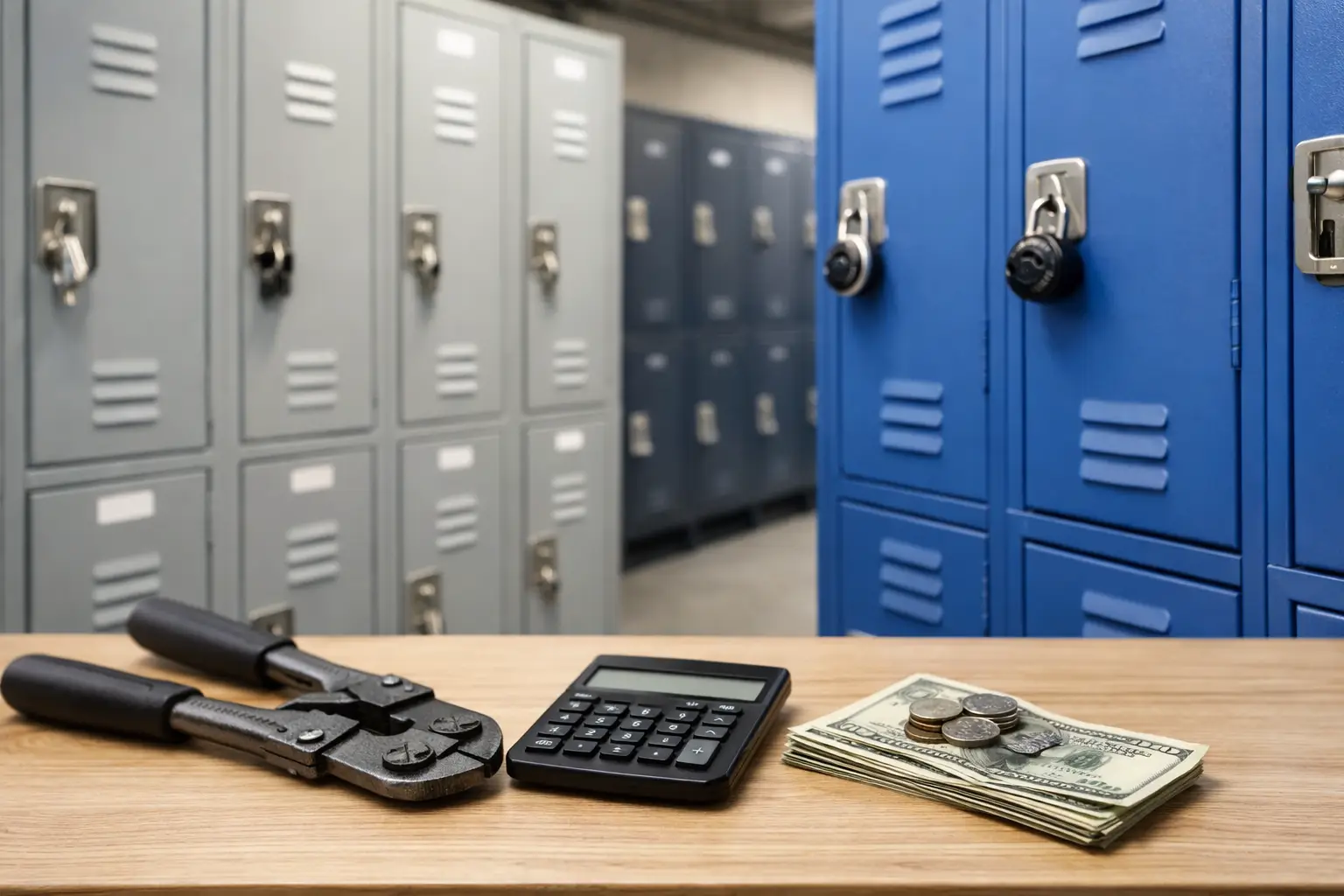
A budget locker is not simply the lowest-priced unit on a quotation. For a facility manager, school buyer, gym operator, or distributor, it is a locker that meets the required level of security, capacity, and service life without paying for features the application does not need. The difference matters. A low purchase price can become an expensive decision when doors bend, locks fail, or replacement units are needed before the original project has paid for itself.
Commercial buyers should assess budget lockers as an operating-cost decision. The right specification controls the initial spend while protecting the daily routines that depend on reliable personal storage.
What a Budget Locker Should Still Deliver
Price-conscious purchasing does not remove the need for basic industrial performance. Employees, students, visitors, and members use lockers repeatedly, often in busy changing rooms, production areas, schools, and recreation facilities. Each unit must tolerate frequent opening, closing, loading, and cleaning.
A practical budget locker should provide a rigid steel body, stable door alignment, secure locking preparation, and a finish suited to the environment. It should also be supplied in a configuration that uses available floor space efficiently. These are functional requirements, not premium extras.
The specification can be simpler when the use case is simple. A standard single-door or multi-compartment locker with a conventional key lock may be the right choice for a staff room with predictable users. There is little value in selecting electronic access, charging capability, or specialized internal fittings when they will not improve the operation.
However, some savings create risk. Thin materials, weak hinges, poorly formed door edges, and inconsistent powder coating often show their cost after installation. A locker that must be adjusted, repaired, or replaced frequently is not a budget solution in any useful procurement sense.
Start With the Facility, Not the Unit Price
The most effective way to buy a budget locker is to define the operating environment before comparing models. A warehouse locker room, a school corridor, a healthcare changing area, and a fitness center may all require metal lockers, but they place different demands on the product.
Consider how many users need storage at the same time, what they need to store, and how long they retain access. Full-height lockers support uniforms, bags, and personal clothing. Two-tier, three-tier, or multiple-compartment designs increase user capacity in the same footprint when individual storage needs are smaller.
Also assess the installation conditions. Humid rooms, wet changing areas, and cleaning-intensive environments may require a more suitable coating system, corrosion-resistant components, or raised legs that make floor cleaning easier. In industrial workplaces, ventilation can be necessary for workwear and PPE. In offices, a compact personal-effects locker may be more appropriate than a large changing-room unit.
This assessment prevents two common mistakes: buying oversized lockers that waste valuable space, or buying compact units that do not hold the items users bring every day. Both errors lead to dissatisfaction and unplanned spending.
Match compartment size to real belongings
Capacity should be based on actual items, not assumptions. Ask whether users store coats, safety boots, helmets, laptops, handbags, tool belts, or only small personal belongings. A narrow compartment may be adequate for a phone and wallet, but it is unsuitable for a winter coat or protective equipment.
Where space is limited, a mix of locker sizes can offer better value than one uniform layout. For example, a facility may need mostly small compartments with a smaller number of full-height lockers for supervisors or employees carrying uniforms. This approach improves utilization without forcing every user into the most expensive format.
Where to Save and Where Not to Compromise
A controlled specification is the foundation of value. Standard dimensions, standard colors, and proven lock options usually reduce lead time and cost because they are easier to manufacture and supply at scale. For many projects, these standard choices deliver everything the site requires.
Buyers can often save by selecting a standard powder-coated finish, a standard door configuration, and straightforward key or hasp locking. Ordering multiple compatible storage products from one manufacturer can also simplify procurement, delivery planning, and installation coordination.
Do not reduce quality in the areas that affect security and structural life. Door stiffness, hinge performance, lock mounting, body construction, and coating quality deserve close attention. These parts determine whether the locker remains functional after thousands of use cycles.
The same principle applies to assembly. Flat-packed lockers can lower freight costs and help access restricted installation areas, but only when the construction is designed for reliable assembly and the installation team has sufficient time and capability. Fully welded units can offer greater rigidity and a faster setup on site, although transportation costs may be higher. Neither format is automatically better. The right choice depends on delivery access, labor availability, project size, and required durability.
Choose Locks for Administration, Not Just Security
Lock selection has a direct impact on management workload. A simple key lock is economical and familiar, but keys can be lost, copied, and difficult to administer across a large workforce. Hasps allow users to provide their own padlocks, which can reduce lock costs but shifts responsibility to the user.
Combination and electronic locks can reduce key management, particularly in shared or rotating-use environments. They may also add cost, battery replacement needs, and a requirement for clear user support. For a fixed employee locker assignment, a mechanical option may be the most cost-effective choice. For visitor facilities or workplaces with changing shifts, managed access may justify the higher initial investment.
Before approving a lock type, establish who assigns lockers, who retains master access, how lost access is handled, and whether users are permanent or temporary. A budget locker system should be affordable to operate, not merely affordable to purchase.
Check the Details That Affect Service Life
Product photos rarely show the details that determine long-term performance. Procurement teams should request clear specifications for steel thickness, door design, hinge type, ventilation, lock compatibility, coating process, and available accessories. A dependable supplier should be able to explain what is standard, what can be customized, and how each choice affects production time and cost.
Pay particular attention to door edges and closing action. Doors should close consistently without excessive movement, and the lock area should resist forced twisting. Verify whether shelves, hanging rails, hooks, name card holders, and sloping tops are included or optional. Small accessories can be essential to usability, but adding them without a clear need can move a project beyond its target budget.
Warranty coverage also deserves review. A long warranty is more meaningful when supported by established manufacturing capability, consistent materials, and a supplier that can provide matching units for future expansion. For multi-site buyers and distributors, continuity of supply is often as valuable as the first shipment price.
Plan for Growth, Replacement, and Project Delivery
Lockers are rarely a one-time requirement. Headcount changes, new locations open, and layouts are revised. Select a range that can be repeated later in the same dimensions, finish, and configuration. Consistency makes replacements easier and keeps the facility appearance organized.
For larger projects, confirm packaging, unloading requirements, delivery schedule, and installation sequence before placing the order. A locker that arrives on time but cannot be moved through the building efficiently can delay an entire fit-out. Standard products may offer faster delivery, while custom sizes and specialized features need additional production planning.
Customization remains valuable when it solves a clear operational problem. Custom compartment dimensions, colors, numbering systems, lock preparations, and ventilation patterns can make a storage system more effective. The key is to specify only the changes that improve use, safety, or space efficiency. Unnecessary variation adds complexity without improving the result.
A manufacturer with both standard products and custom fabrication capability gives buyers a practical route: use proven standard locker designs where they fit, then adapt only the parts of the project that genuinely require it.
Build Value Into the Specification
The best budget locker decision is usually not the cheapest line on a quote. It is the option that fits the room, supports the user, withstands daily use, and can be supplied again when the facility expands. Define the essential requirements early, protect the structural and security elements, and use standardization wherever possible. That is how a cost-conscious locker project remains dependable long after installation.