


Highlights
How to Choose a PPE Locker Manufacturer

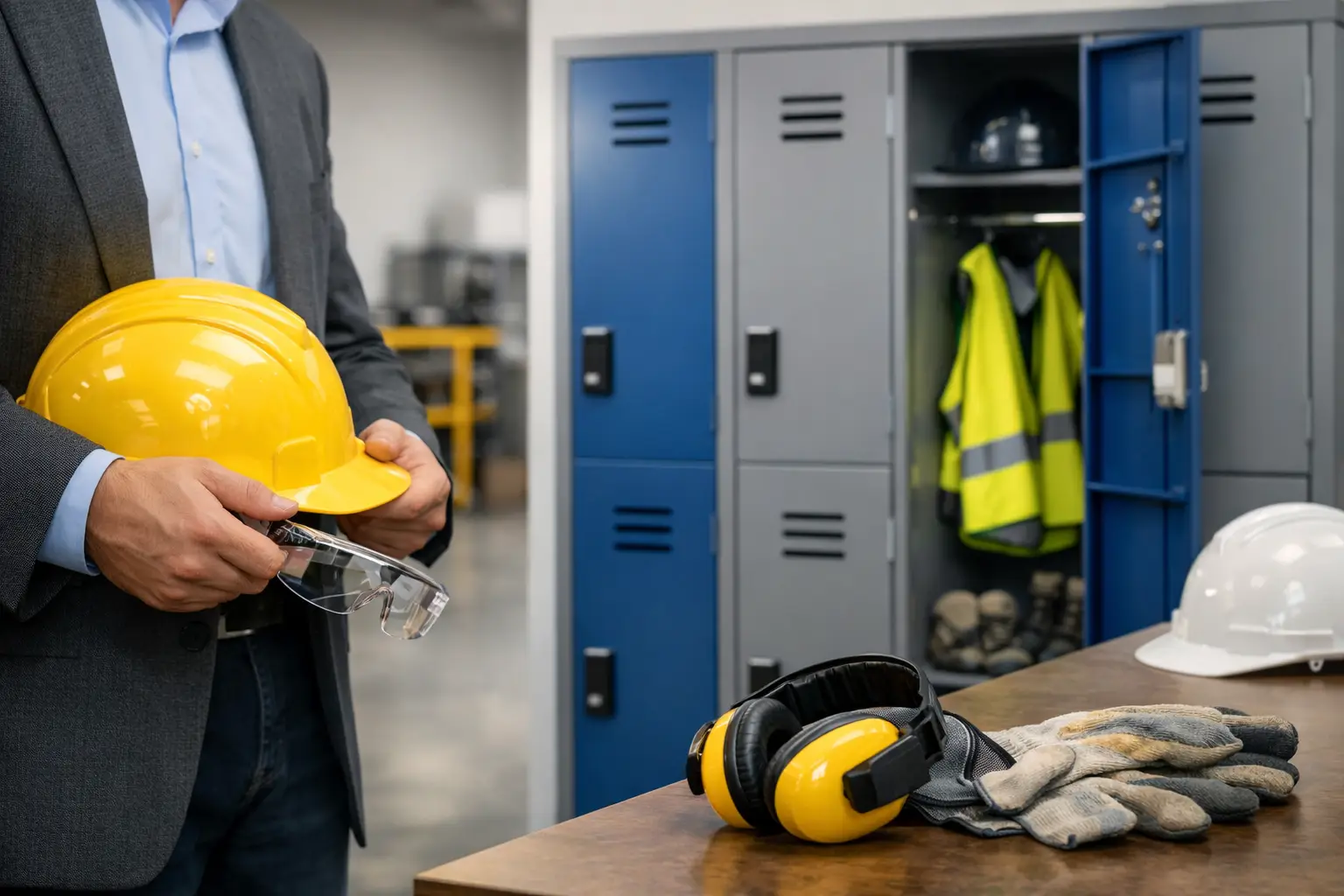
A PPE locker manufacturer is not just supplying metal boxes. In industrial sites, hospitals, labs, utilities, and processing facilities, those lockers become part of the safety system. If they are poorly designed, too light for the environment, or difficult to clean and manage, they create daily friction for staff and long-term cost for the buyer.
For procurement teams and facility managers, the real question is not who can quote a locker fastest. It is who can manufacture a locker that fits the way your site actually operates. That means understanding contamination control, shift patterns, cleaning routines, user volume, access needs, and the physical demands of the space.
What a PPE locker manufacturer should actually deliver
A serious PPE locker manufacturer should offer more than standard dimensions and a color chart. The job is to provide storage that protects equipment, supports workplace discipline, and holds up under constant use. In practice, that means consistent steel quality, durable finishing, secure locking options, and designs that suit real PPE loads rather than an idealized catalog drawing.
This matters because PPE storage needs vary widely. A food production site may need separation between clean and used gear. A manufacturing plant may need ventilated compartments for boots, helmets, gloves, and high-visibility clothing. A healthcare environment may prioritize cleanability and controlled access. A construction support facility may simply need heavy-duty units that survive hard daily treatment. One product type does not fit every operation.
The best manufacturers understand these differences early. They ask how the lockers will be used, who will use them, how often they will be cleaned, and whether standard production can meet the requirement or a custom configuration is the better option.
Why manufacturer capability matters more than a reseller catalog
For business buyers, there is a practical difference between buying from a trading company and buying from a manufacturer. A reseller may offer convenience, but a manufacturer controls production quality, lead time visibility, and design flexibility. That becomes especially important when your project includes non-standard dimensions, sloping tops, perforated doors, internal divisions, bench integration, master key systems, or site-specific powder coating requirements.
A capable manufacturer can also help standardize procurement across multiple storage categories. If your project includes PPE lockers, employee changing lockers, office cabinets, chemical cabinets, and shelving, working with one production partner simplifies specification, finish consistency, and delivery planning.
That does not mean every project requires full customization. In many cases, a standard product is the right commercial decision because it reduces cost and shortens delivery time. The point is that your supplier should be able to offer both – efficient standard production when it works, and custom fabrication when the site demands it.
Key things to assess in a PPE locker manufacturer
Material and construction quality
Start with the basics. Steel thickness, reinforcement, weld quality, door stability, hinge performance, and surface finish will determine how the lockers perform after years of use, not just on delivery day. In high-traffic sites, doors get slammed, compartments get overloaded, and cleaning chemicals are used regularly. Light-duty construction usually shows its limits quickly.
Ask how the units are fabricated and finished. Powder coating quality, corrosion resistance, and edge finishing all matter. So does the manufacturer’s quality control process. If the answer is vague, that is usually a warning sign.
Configuration options
PPE storage is rarely a one-size purchase. Some facilities need full-height compartments for hanging garments. Others need split compartments to keep clean and used items apart. Some require internal shelves, hooks, or boot sections. Ventilation patterns may also need to change depending on what is being stored.
A strong manufacturer should be able to guide configuration choices based on operational use, not just product availability. That saves buyers from paying for features they do not need or missing details that create problems later.
Locking and access control
Security needs depend on the workplace. In some facilities, a simple cam lock is enough. In others, padlock hasps, central locking, digital access, or master key systems make more sense. Shared shift environments and multi-user access add another layer.
The right choice depends on loss risk, user turnover, and how frequently supervisors need access. A good PPE locker manufacturer will present trade-offs clearly. Higher security can improve control, but it may also add cost and maintenance requirements.
Cleaning and hygiene considerations
In many PPE applications, cleaning is not optional. Locker design should support it. Smooth surfaces, practical ventilation, accessible interiors, and base designs that reduce dirt traps can make a noticeable difference in maintenance time and hygiene outcomes.
This is one area where custom details often pay back quickly. A locker that is easier to clean reduces labor burden over its service life. For facilities with strict hygiene routines, that is a procurement factor, not just a design preference.
How to match the locker design to the site
The best purchasing decisions begin with use-case clarity. Before requesting quotes, define what each user needs to store. A vest and gloves require a different compartment from a full PPE set that includes boots, helmet, eye protection, outerwear, and personal tools.
Then look at traffic flow. If employees change at shift start and finish in a narrow time window, access speed matters. Door swing, aisle spacing, locker grouping, and bench placement affect how efficiently staff can move. If lockers are spread across multiple departments, modularity and phased ordering may matter more than dense layout.
Environmental conditions also shape the specification. Humid areas, washdown zones, dusty plants, and mixed indoor-outdoor operations place different demands on the finish and ventilation. A manufacturer with broad industrial experience will usually recognize these issues quickly and adjust the recommendation.
Lead times, MOQ, and project flexibility
Commercial buyers do not purchase in a perfect world. Site schedules shift. Quantities change. Pilot phases become full rollouts. That is why production flexibility matters almost as much as the product itself.
A PPE locker manufacturer should be able to explain standard lead times, custom lead times, and what affects both. Buyers should also ask about minimum order quantities. Some manufacturers are set up only for very large runs. Others can support lower-volume projects or mixed-product orders, which is useful for distributors, contractors, and facilities buying across several categories at once.
Fast delivery is valuable, but only if quality stays consistent. Delays are costly, yet so is receiving lockers that need rework, replacement parts, or installation adjustments. Reliable scheduling is usually worth more than an optimistic promise.
Why warranty and after-sales support matter
A locker may look simple, but for multi-site buyers and distributors, support still matters. Replacement keys, spare parts, installation guidance, and finish consistency on repeat orders all affect total ownership cost.
Warranty length is useful, but it should be viewed alongside manufacturing credibility. A long warranty only matters if the supplier is structured to stand behind it. For wholesale and project buyers, continuity is a practical issue. You want a supply partner that can support repeat purchasing and maintain product consistency over time.
Choosing a PPE locker manufacturer for long-term value
The lowest quote is rarely the lowest cost over five or ten years. If lockers fail early, corrode, become difficult to clean, or do not fit the workflow, the operational cost shows up elsewhere – in maintenance, replacement, user complaints, and lost time.
Long-term value comes from fit. The right manufacturer will align product design with actual use, offer durable construction, communicate clearly on production, and adapt where standard units are not enough. For many business buyers, that is the difference between a commodity purchase and a storage system that keeps performing.
Manufacturers such as Loxmet compete well in this space because buyers increasingly need both standard product availability and custom metal fabrication from one source. That combination helps procurement teams move faster without giving up specification control.
When you evaluate a PPE locker manufacturer, treat the purchase like an operational decision, not a line-item order. The better the manufacturer understands your environment, the better the lockers will perform long after installation. A strong locker should do its job quietly every day, which is exactly what serious workplaces need.