


Highlights
Space Saving Lockers for Smarter Layouts

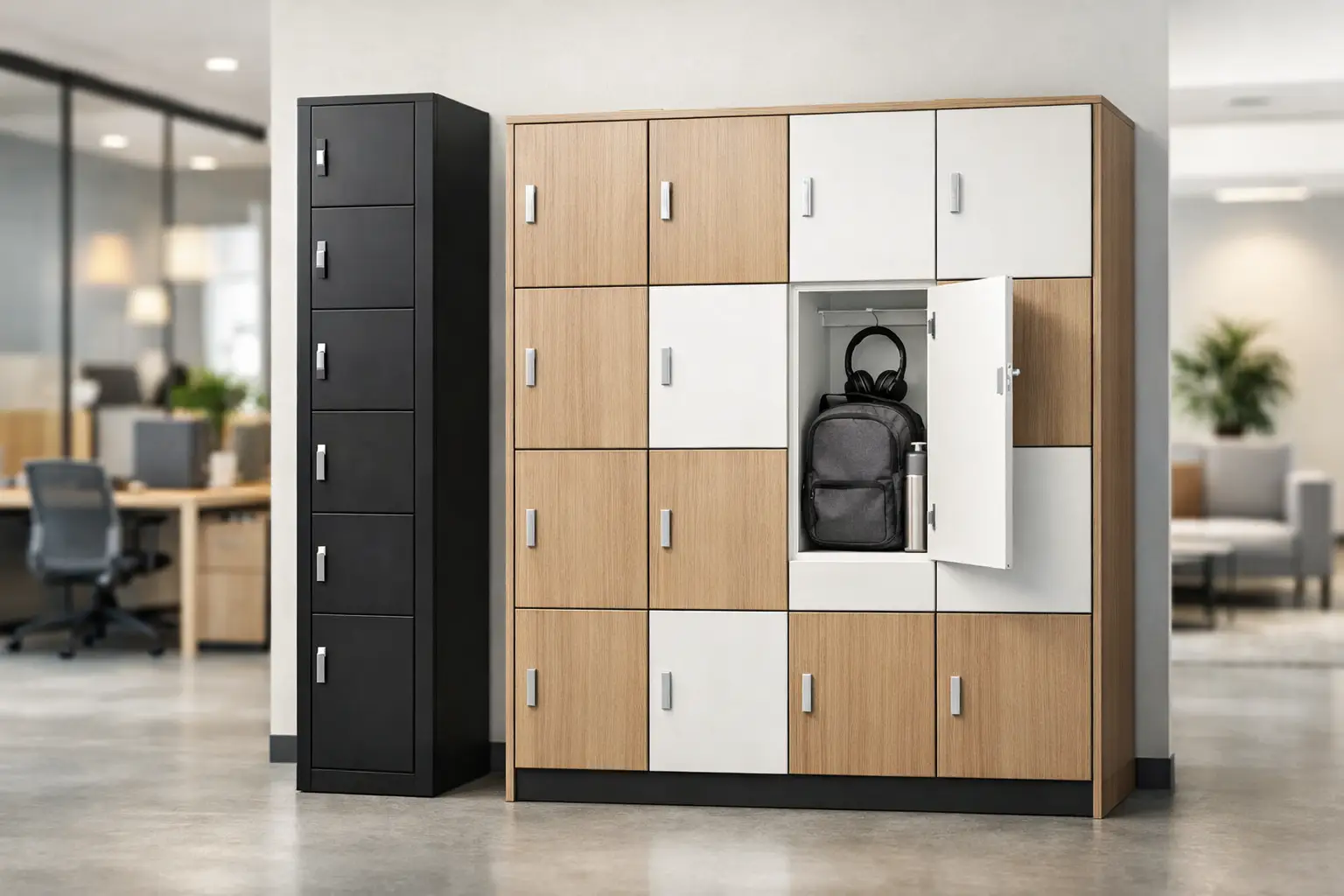
When floor space is tight, storage decisions affect more than appearance. Space saving lockers can improve traffic flow, support security, reduce clutter, and make a facility easier to manage day after day. For procurement teams, facility managers, and fit-out professionals, the real question is not whether lockers fit into the plan. It is how to get the right storage capacity without giving up valuable operational space.
Why space saving lockers matter in commercial settings
In most workplaces, storage competes with core business functions. A school needs room for movement between classes. A factory needs clear walkways and safe access around equipment. A gym needs changing areas that feel organized rather than overcrowded. An office may need personal storage without losing desk space or meeting room capacity.
That is where space saving lockers become a practical investment rather than a simple furniture choice. A well-designed locker system can increase storage density while keeping the area usable. It can also help standardize personal storage, reduce items left in circulation areas, and support a cleaner, more controlled environment.
The value is even clearer in projects where every square foot carries a cost. If a locker layout allows a site to store more users in the same footprint, the return is operational. Teams gain order, users gain security, and the facility avoids expanding storage into areas needed for work, circulation, or service delivery.
What makes a locker genuinely space saving
Not every compact locker is efficient. Some reduce width or depth so aggressively that they become inconvenient to use. Others look dense on paper but create access issues once doors are opened and people gather around them. The best space saving lockers balance capacity, usability, and layout discipline.
The first factor is compartment configuration. Multi-door lockers increase the number of users served within the same vertical frame. This works well for staff valuables, short-term personal storage, mobile phones, tablets, and small bags. It is less suitable when users need to store bulky uniforms, helmets, or long garments.
The second factor is footprint. Narrower units, reduced-depth bodies, and stacked compartments can all help, but only if they fit the actual use case. A shallow locker may be ideal in a corridor or office wall line. In a staff changing room, a little extra depth may be necessary to prevent overflow and misuse.
The third factor is how lockers are arranged. A well-planned bank of lockers often saves more space than a smaller locker model placed poorly. Wall runs, back-to-back islands, end-of-corridor placement, and integration with benches all affect total efficiency.
Common locker formats for compact layouts
Single-tier lockers remain useful where full-length storage is required, but they are rarely the most space-efficient option for high user counts. In tighter environments, buyers often move toward two-tier, three-tier, four-tier, or Z-locker formats depending on what users need to store.
Two-tier lockers are a common middle ground. They provide more user capacity than single-door units while still offering enough volume for clothing, bags, and day-use items. They work well in workplaces, schools, and staff rooms where users need personal storage but not full hanging height.
Four-tier and six-tier configurations increase density significantly. These are better suited to phones, wallets, small bags, and compact personal items. They are practical in gyms, offices, production areas, and visitor environments where short-duration or limited-volume storage is enough.
Z-lockers are often the strongest option when buyers need to maximize capacity without losing hanging space. Their interlocking shape allows each user to have a tall compartment section for garments while fitting more users into the same row length. This format is particularly effective in employee changing rooms, leisure facilities, and industrial sites where staff need both garment storage and efficient floor planning.
Charging lockers can also fall into the space-saving category when device management is part of the requirement. Instead of allocating separate furniture for storage and power access, one unit handles both. That reduces equipment spread and keeps devices secure and organized.
How to choose space saving lockers for the actual use case
The right specification starts with user behavior, not just room measurements. Buyers should first define what is being stored, how long it is stored, and how many users need access during the same period.
If storage is for employees changing before shifts, locker volume matters more than raw compartment count. If storage is for phones or personal effects in an office or school, higher-density compartments may be the better decision. If turnover is frequent, such as in gyms or shared-use facilities, lock type and ease of cleaning become major factors.
Traffic patterns also matter. A locker room that serves a shift change has peak congestion. In that setting, compact lockers still need enough aisle space for simultaneous use. Saving floor space by tightening rows too much can create bottlenecks and frustration. The result is a layout that looks efficient in drawings but performs poorly in daily operation.
Door swing, ventilation, labeling, and cleaning access should be reviewed at the planning stage. These details are often treated as secondary, yet they affect how well the locker bank works over time. Practical space efficiency includes maintenance efficiency.
Space saving lockers and material durability
Compact storage works harder than standard layouts. When more users are served in the same footprint, opening cycles increase, contact points multiply, and wear becomes more concentrated. That is why material quality should be part of the space-saving discussion.
Metal lockers are often the stronger long-term choice for commercial and institutional use because they handle repeated use, resist impact, and support secure locking systems. In high-density installations, door alignment, hinge strength, ventilation design, and coating quality all matter. A poorly built unit may save floor space at first but create service issues later.
For business buyers, durability affects total cost more than purchase price alone. If a locker bank is expected to perform across years of daily use, especially in schools, factories, gyms, healthcare settings, or public-sector buildings, construction quality should not be compromised for a slightly smaller footprint.
When customization makes better use of space
Standard sizes cover many projects, but some facilities need more precise planning. Alcoves, low walls, narrow corridors, changing rooms with columns, and mixed-use staff areas often benefit from custom dimensions or tailored internal layouts.
Customization can improve space use in several ways. Reduced-depth units may fit circulation edges without intruding into pathways. Mixed compartment banks can combine larger and smaller lockers in one run, matching actual user needs. Sloping tops, integrated benches, perforation patterns, and lock options can also be selected to support cleaning, ventilation, and daily workflow.
For distributors and project buyers, this matters because a custom approach can solve layout limits without forcing compromises across the whole facility. The goal is not custom work for its own sake. The goal is a locker system that uses available space efficiently and still performs in real operating conditions.
Planning mistakes that waste space instead of saving it
One common mistake is choosing the highest compartment count without checking storage volume. This often leads to overflow, with bags and clothing left outside the lockers. The room becomes less organized, not more.
Another mistake is ignoring access clearance. Even space saving lockers need enough room in front for doors to open and users to move comfortably. If the aisle is too narrow, the layout will feel crowded and slow during peak use.
A third issue is separating related storage functions across multiple product types. If a site needs personal storage, device charging, and PPE storage, planning these in isolation can waste wall space and create scattered layouts. Coordinated specification usually delivers a cleaner result.
Finally, buyers sometimes treat lockers as a late-stage add-on. In practice, locker planning should happen early, especially in projects where changing rooms, welfare spaces, offices, and secure storage zones are limited. Early planning gives more options for layout efficiency and product selection.
A practical standard for buyers
Good space saving lockers do not just help a room look neat. They increase storage capacity, improve user flow, and support daily operations without taking over the layout. The best choice depends on what users store, how often they access it, and how much pressure the installation will face over time.
For commercial buyers, the strongest results come from pairing compact design with durable metal construction, the right compartment format, and a layout planned around actual movement. That is the difference between fitting lockers into a space and making the space work better because the lockers are there.
If your facility is under pressure to store more without expanding the footprint, start with the operational need and build the locker specification from there. Space is limited in most projects. The right storage system should make that limitation easier to manage, not harder.