


Highlights
Phone Storage Locker Buying Guide

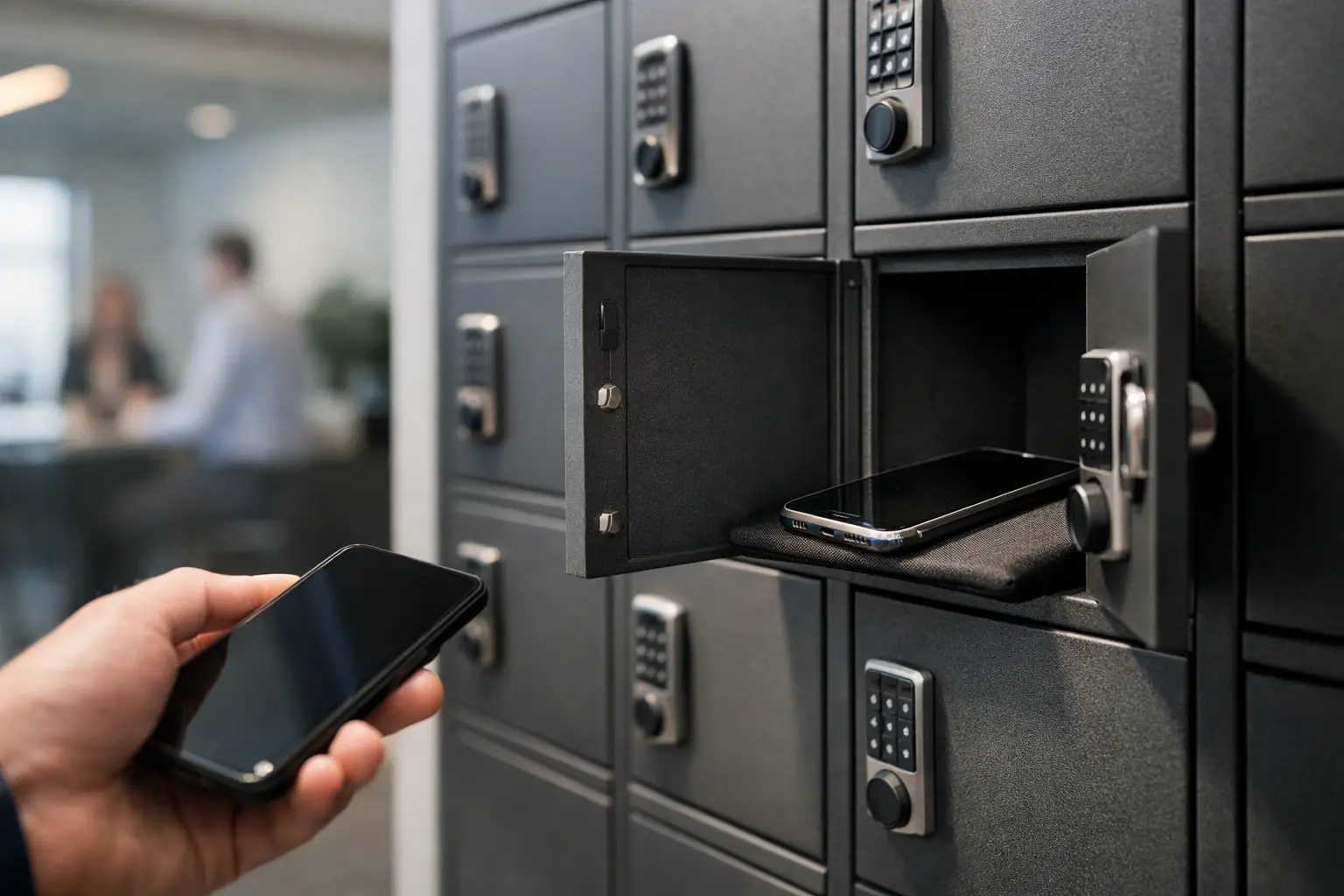
A phone storage locker solves a practical problem that keeps growing across workplaces, schools, fitness facilities, and controlled environments. Staff, visitors, students, and contractors all arrive with personal devices, and those devices need a secure place to go. The right locker does more than hold phones. It reduces distraction, improves security, supports policy compliance, and keeps daily operations organized.
For commercial buyers, the challenge is not whether storage is needed. The real question is what type of unit fits the site, user volume, and operating rules. A small office managing employee phone use has different requirements than a school collecting devices during class hours or an industrial facility restricting electronics in production zones. That is why buying a phone storage locker should start with use case, not just compartment count.
What a phone storage locker needs to do
At a minimum, a phone storage locker must provide secure, organized, individual storage for personal devices. In many settings, that sounds simple, but the details matter. Phones vary in size, many users carry a charger or small personal items, and access patterns can be intense at the beginning and end of shifts, classes, or events.
A locker used in a front office or staff room may only need compact compartments with keyed or digital access. A locker installed in a school corridor or locker room may need stronger doors, clear numbering, ventilation, and a layout that speeds up distribution and return. In a higher-control environment, the unit may also need to support device separation by team, department, or visitor category.
This is where buyers often make the wrong comparison. They evaluate a phone locker as if it were simple furniture. In practice, it functions more like operational equipment. It affects circulation, supervision, security, and maintenance.
Where a phone storage locker is commonly used
A phone storage locker works well in any environment where personal devices need to be stored safely for a set period. Schools use them to reduce classroom distraction and support device policies. Offices use them in staff areas, testing rooms, and secure departments. Gyms and wellness facilities use them for member convenience where full-size lockers are not necessary.
Industrial sites and production facilities often require stricter control. In those cases, phones may be restricted due to safety, confidentiality, or process discipline. Healthcare settings may also need phone storage in staff-only areas where hygiene, privacy, or workflow policies apply. Event venues, labs, call centers, and training centers are also common applications.
The shared requirement across these sectors is consistency. Storage only works if users can understand it quickly and if facility teams can manage it without constant intervention.
Key specifications to review before buying
When comparing models, material quality should be one of the first checks. A metal phone storage locker is generally the preferred choice for commercial and institutional use because it handles frequent access, resists impact better than lighter alternatives, and supports long service life. For buyers managing public or high-traffic environments, that durability matters.
Compartment size is equally important. Some lockers are sized for phones only, while others allow room for chargers, keys, wallets, or access cards. Smaller compartments improve density, but they can create user frustration if modern devices with cases do not fit easily. It is better to confirm actual internal dimensions than rely on broad product labels.
Lock type also changes the daily user experience. Key locks are familiar and cost-effective, but lost keys create an administrative burden. Mechanical combination locks reduce key management, while digital locks can improve access control in some environments. The right option depends on turnover, supervision level, and budget. There is no single best answer.
Ventilation may seem less critical for phone storage, but it can still be useful in dense installations, especially where users store devices with accessories or where units are placed in warm indoor areas. Numbering and labeling should also be considered part of the specification, not an afterthought. Clear identification reduces confusion and speeds up collection.
Charging or non-charging lockers?
This is one of the most important buying decisions. A standard phone storage locker is simpler, lower cost, and easier to maintain. It is a strong fit when the goal is secure temporary storage and users do not need active charging during the storage period.
A charging locker adds value in offices, universities, hospitality, and waiting areas where users expect their device to be powered when they return. It can also be useful in shift-based operations where employees rely on charged phones before and after work. However, charging introduces extra considerations including cable management, power distribution, ventilation, and electrical safety.
For many buyers, the right answer depends on how long devices stay inside. If phones are stored for short periods, charging may add cost without much operational benefit. If storage periods are long or user expectations are higher, a charging solution may be worth the investment.
Layout and capacity planning
Capacity should be based on real user volume, not ideal occupancy. If a site has 80 staff members but shift overlap regularly pushes peak use above that number, an 80-door unit may be too small. The same applies in schools where visitor, faculty, or shared-use needs may increase demand beyond student headcount in one room or zone.
The physical layout matters just as much as the total number of compartments. One large bank may maximize density, but several smaller units placed near points of use can improve traffic flow and reduce congestion. That is often the better option in schools, gyms, and industrial sites where a single collection point can create delay.
Wall placement, aisle width, supervision, and user reach should all be reviewed before finalizing dimensions. Tall units may save floor space, but not every compartment position is equally convenient. Wide units may improve visibility and speed, but they need more continuous wall area.
Security, compliance, and user behavior
A phone storage locker supports policy, but it does not replace policy. Buyers should think about how users will check devices in and out, who manages exceptions, and how lost access credentials are handled. The locker should fit the operating process already in place or the process should be updated to match the locker system.
For schools, that may mean assigning compartments by class or homeroom. For offices, it may mean integrating lockers into visitor management or restricted-area procedures. In industrial settings, enforcement may be tied to entry control and shift supervision.
This is also where build quality affects outcomes. Thin materials, weak hinges, and inconsistent locking mechanisms tend to create problems fast in shared environments. A well-built unit holds alignment, secures reliably, and stays serviceable under repeat use. That is more valuable over time than a low upfront price.
Standard products vs custom solutions
Standard models work well for many projects, especially when speed matters and the use case is straightforward. Buyers can select from proven sizes, locking options, and compartment counts with shorter lead times and simpler specification approval.
Custom production becomes more relevant when a project has unusual space constraints, branding requirements, mixed-use storage needs, or specific access control preferences. A business buyer may need a phone storage locker integrated into a broader locker room plan, a staff storage area, or a secure reception zone. In those cases, custom dimensions, door numbering, powder coat finish, and lock configuration can improve the result.
This is where manufacturing capability matters. A supplier that understands metal fabrication, volume consistency, and project-based adaptation can help buyers avoid compromise between operational need and available product format.
What commercial buyers should ask suppliers
Before placing an order, ask about steel thickness, coating quality, lock options, internal dimensions, ventilation details, and replacement part availability. Confirm lead times for both standard and custom models. If the installation will be in a high-use environment, ask how the product performs under repeated daily access and whether the design supports easy maintenance.
It is also worth asking whether the phone locker can be matched with other storage categories in the same project. Many buyers are not sourcing a single unit. They may need staff lockers, office cabinets, charging lockers, or shelving within the same facility. Working with one dependable manufacturer can simplify procurement and create a more consistent installation standard across the site.
A phone storage locker is a small product with a large operational impact. When the specification is right, it improves control without adding friction for users or facility teams. That is the standard worth buying for – durable construction, clear organization, and a layout that fits the way the site actually works.