


Highlights
Transparent Door Locker: Best Uses and Specs

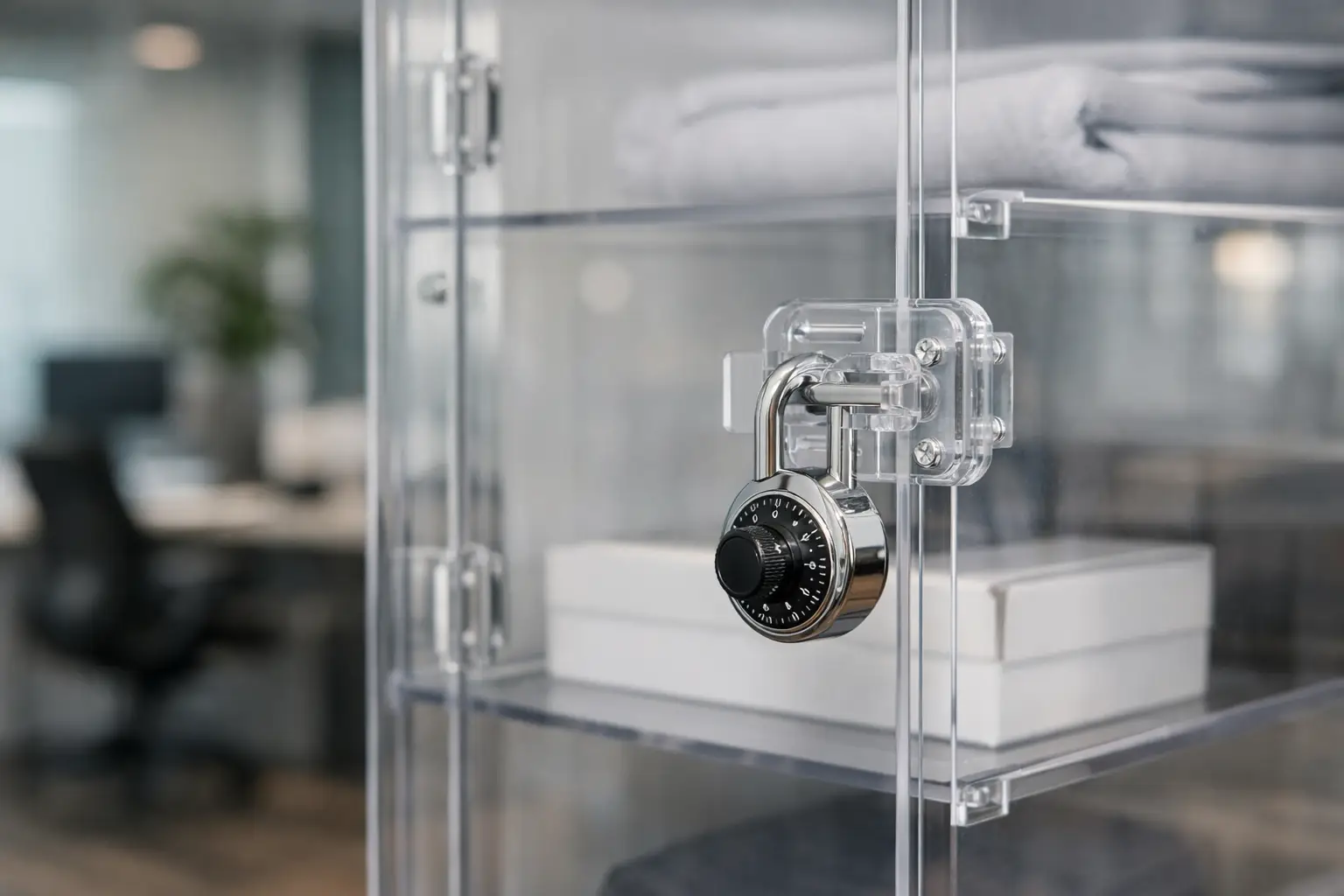
If staff keep opening locker doors just to check contents, the storage problem is not only about capacity. It is also about visibility. A transparent door locker solves that issue in a practical way by letting supervisors, users, and facility teams confirm contents quickly while keeping each compartment separated and secure.
For business buyers, this type of locker is less about appearance and more about control. It helps reduce unnecessary door opening, supports faster inspections, and makes shared environments easier to manage. In schools, gyms, production sites, offices, and package areas, that can save time every day.
What is a transparent door locker?
A transparent door locker is typically a metal locker body fitted with clear door panels or vision sections made from durable transparent material. The frame and carcass still provide the strength expected from industrial storage, while the door design allows visual access to the compartment interior.
This matters because most facilities need both order and oversight. Full solid-door lockers offer privacy, but they can slow down routine checks. Fully open shelving improves visibility, but it does not provide individual secured compartments. Transparent-door designs sit in the middle. They give users dedicated locker space while helping managers keep the area organized.
The exact door construction can vary. Some models use full transparent fronts. Others combine a steel frame with clear inserts. The right option depends on traffic level, required impact resistance, and how much visual exposure the site wants.
Where a transparent door locker makes the most sense
Not every project needs transparent doors. In some workplaces, privacy is the priority, and solid steel doors remain the better choice. But in many commercial settings, visibility creates a clear operational advantage.
Schools and training centers
In education environments, transparent lockers help staff monitor proper use without opening compartments one by one. That can support security policies and reduce the time needed for routine checks. They also encourage students to keep lockers organized because the contents are visible from the aisle.
That said, the level of transparency should match the institution. A full-clear door may work well for device storage or shared-use lockers, while a partial vision panel may be more appropriate where personal item discretion still matters.
Gyms and wellness facilities
Gym operators often balance user convenience with basic supervision. A transparent door locker can reduce abandoned items, help attendants identify occupancy quickly, and simplify end-of-day checks. It also adds a modern visual effect in reception-adjacent spaces where presentation matters.
The trade-off is that some members prefer more privacy for personal belongings. In those cases, transparent lockers are often better suited for temporary-use zones, staff-managed areas, or specific sections rather than the entire locker room.
Offices and shared workplaces
In flexible offices, lockers are often used for day-use storage, parcel drop-off, laptop holding, or personal item organization. Transparent doors work well when the aim is fast access management and less confusion over assigned or available compartments. Facility teams can see whether units are occupied, left full overnight, or being used incorrectly.
For personal staff storage, however, transparency may not suit every culture. Hybrid workplace projects often benefit from mixing locker types – transparent options for shared or temporary use, and solid-door lockers for dedicated employee storage.
Industrial and production environments
On factory floors and in logistics operations, speed and control matter more than decorative finish. Transparent lockers can support PPE issue points, tool visibility, and controlled storage for frequently checked items. Supervisors can verify whether compartments are stocked, empty, or misused without interrupting workflow.
In these settings, the construction quality of the locker body is critical. Transparent doors should not mean light-duty performance. Buyers should look for welded or well-engineered metal structures, durable hinges, and locking systems that stand up to repeated use.
Key specifications to review before buying
A transparent door locker should be specified like any other commercial storage product – based on use case, duty cycle, and expected lifespan. The transparent element is only one part of the decision.
Door material and impact resistance
This is the first technical point to verify. Clear panels need to resist cracking, scratching, and daily abuse. The right material will depend on whether the locker is installed in a calm office setting or a high-traffic school corridor.
For heavier-use environments, buyers should ask about impact performance and how the transparent section is mounted within the frame. A weak panel fixing can become the failure point long before the metal body wears out.
Locker body construction
The strength of the steel carcass still defines the product. Gauge, reinforcement, welding quality, and finish all affect durability. A transparent door does not replace the need for industrial-grade metal construction.
For B2B projects, powder-coated steel bodies are often preferred because they handle intensive use well and are easy to maintain. If lockers are going into humid spaces such as gyms or changing rooms, corrosion resistance should be part of the review.
Lock options
Most buyers focus on door appearance first, but lock choice usually has a bigger effect on daily performance. A transparent door locker can be fitted with key locks, padlock hasps, cam locks, coin return systems, or digital locks depending on the project.
The best option depends on how users are managed. Schools and staff lockers often require simple assigned locking. Gyms may need public-use locking. Offices may prefer keyless access for easier administration. The right lock should fit the user flow, not just the budget line.
Ventilation and interior layout
If the locker stores clothing, PPE, or frequently handled items, ventilation matters. If it stores devices or documents, internal layout may matter more. Shelves, hooks, sloping tops, label holders, and compartment sizing all change how usable the product is in practice.
This is where many standard lockers fall short. A buyer may choose the right door style but end up with the wrong internal configuration. For project orders, customization is often the better route when locker use is clearly defined.
Transparent door locker vs solid-door locker
The decision is not about which style is better overall. It is about which style fits the operating environment.
Transparent-door lockers are better when visibility improves control, speeds checks, and supports shared-use management. They are especially useful where staff need to confirm occupancy or contents at a glance. They can also reduce misuse because contents are not hidden from routine view.
Solid-door lockers are better when privacy, discretion, or visual shielding matters more. Staff changing rooms, executive offices, and some education settings may still be better served by closed steel doors.
Many facilities use both. That mixed approach is often the most efficient because it matches storage type to actual behavior. A project may use transparent compartments for devices, parcels, or temporary storage and solid compartments for long-term personal items.
Customization matters more than the door style
Commercial buyers rarely need an off-the-shelf answer for every site. Locker width, compartment count, base type, lock format, ventilation pattern, and color all affect how well the system performs after installation.
That is especially true with transparent-door projects. The buyer may need a specific level of visibility, a certain ratio of transparent and solid units, or dimensions that fit a narrow corridor or a wall recess. In those cases, manufacturing flexibility is more valuable than simply choosing from a fixed catalog.
A capable supplier should be able to discuss the full operating requirement, not just the door panel. If the locker will be used in a school entrance, an office parcel room, a factory PPE station, or a gym corridor, the design should reflect that environment from the start.
What buyers should ask before requesting a quote
Before moving to pricing, it helps to define the project clearly. Buyers should know who will use the lockers, what will be stored, how often compartments will be accessed, and whether visibility is needed for security, convenience, or both.
It also helps to identify any limits around privacy, cleaning, humidity, vandal resistance, and lock administration. A transparent door locker can be a strong fit, but only when these practical details are addressed early. That is where a manufacturing partner adds value – by matching construction, layout, and delivery capability to the actual site conditions.
For distributors, contractors, and institutional buyers, the best result usually comes from treating lockers as operational equipment rather than basic furniture. When visibility, security, and durability are balanced correctly, a transparent-door design becomes a practical asset rather than just a visual variation.
If your facility needs faster checks, better user compliance, and durable compartment storage, a transparent door locker is worth serious consideration – especially when it can be built around the way your site actually works.