


Highlights
Storage Lockers: Material Types Explained

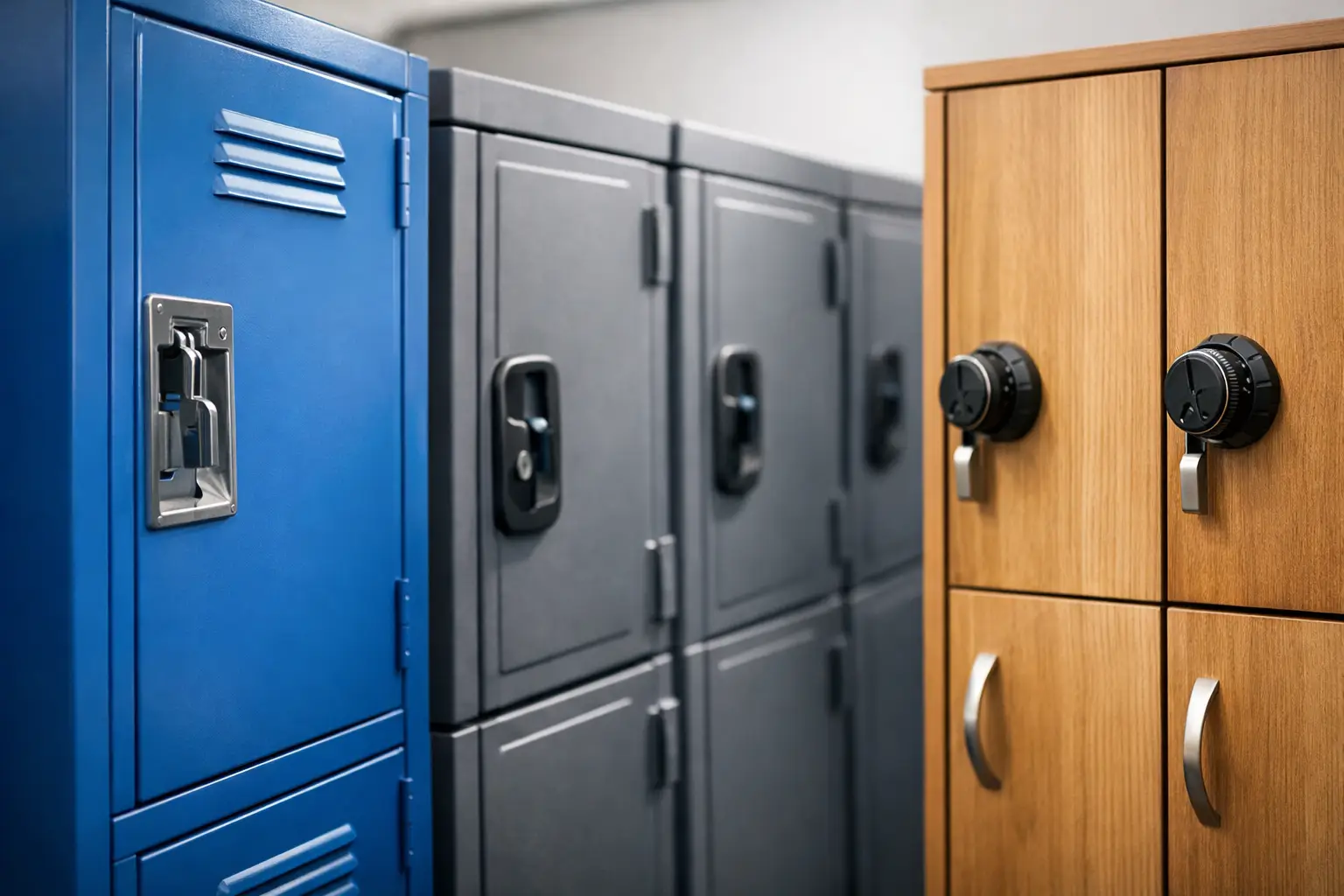
A locker installed in a dry office changing room faces a very different working life from one placed beside a wet pool deck, on a production floor, or in a food-processing facility. The right choice is not simply a matter of appearance. In storage lockers: material types explained, the key question is how the material will perform under daily use, moisture, cleaning routines, impact, security requirements, and expected service life.
For commercial buyers, material selection affects more than the initial purchase price. It influences maintenance workload, replacement cycles, user safety, and the consistency of a facility’s storage system over time. Steel remains the default for many projects, but laminate, plastic, phenolic, stainless steel, aluminum, and mesh each have a valid role when matched to the operating environment.
Storage Lockers: Material Types Explained for Buyers
Before comparing materials, distinguish between the locker body, doors, frame, and finish. A cabinet may have a steel carcass with laminate doors, for example. This hybrid approach can balance structural strength with a particular visual or moisture-resistance requirement.
Buyers should also assess the complete specification rather than relying on a material label alone. Steel thickness, door reinforcement, hinge design, ventilation, lock type, powder-coat quality, and base construction all affect performance. A well-built steel locker with reinforced doors will deliver a different result than a light-duty unit made from thinner sheet metal.
Powder-Coated Steel Lockers
Powder-coated steel is the most widely specified locker material for workplaces, schools, staff rooms, warehouses, offices, gyms, and industrial facilities. It offers a practical combination of strength, security, cost control, and design flexibility.
Cold-rolled steel provides a rigid structure that stands up to repeated opening, closing, and loading. It is suitable for multi-tier lockers, full-height employee lockers, charging lockers, PPE storage, and lockers integrated with benches or shelving. Steel can also be fabricated into custom dimensions, internal layouts, and compartment configurations without compromising the core structure.
The powder-coated finish is central to its performance. Applied correctly, it creates a durable surface that resists ordinary scratches, stains, and corrosion in dry indoor environments. It also gives buyers access to a wide color range for departmental zoning, brand alignment, or user identification.
Steel is not maintenance-free. Constant moisture, damaged coating, or exposure to corrosive chemicals can eventually lead to rust. For humid or wet areas, specify suitable ventilation and consider a higher-corrosion-resistant material or finish. For most commercial interiors and industrial workplaces, however, powder-coated steel offers the strongest long-term value.
Stainless Steel Lockers
Stainless steel is selected where hygiene, washdown routines, and corrosion resistance take priority. Healthcare environments, laboratories, food production areas, commercial kitchens, clean rooms, and high-humidity facilities are common applications.
Unlike coated carbon steel, stainless steel has inherent corrosion resistance. Its smooth, nonporous surface is easier to wipe down and better suited to facilities with frequent sanitation procedures. It also presents a clean, professional appearance that remains appropriate in highly visible or regulated areas.
The trade-off is cost. Stainless steel lockers generally require a higher initial investment than powder-coated steel units, and the material can show fingerprints or surface marks if cleaning standards are inconsistent. Grade selection matters as well. A stainless specification suitable for a dry clinical setting may not be adequate for more aggressive chemical or coastal exposure.
Choose stainless steel when the operating environment justifies it, not simply because it appears premium. In a standard staff changing room or office, a quality powder-coated steel locker is usually the more economical specification.
Plastic and HDPE Lockers
Plastic lockers, often manufactured from high-density polyethylene (HDPE), are designed for wet and high-moisture environments. They do not rust, tolerate water well, and are commonly used in gyms, aquatic centers, spas, wash areas, and outdoor-covered facilities.
HDPE lockers are also resistant to dents and are easy to clean. Their solid-color construction means minor surface scratches are less visually noticeable than damage to a painted metal surface. For facilities where users regularly carry wet clothing, towels, or sports equipment, this can reduce maintenance concerns.
However, plastic does not offer the same structural rigidity as heavy-gauge steel. Large locker banks may need careful support and anchoring, particularly in high-traffic locations. Plastic can also expand or contract with temperature changes, and its color selection may be more limited depending on the manufacturer.
Plastic is a practical specialist material. It is a strong choice for wet areas, but it is not automatically the best option for high-security industrial storage, heavy equipment, or projects requiring extensive custom metal integration.
Phenolic Lockers
Phenolic lockers are made from dense, solid composite panels. They are highly moisture-resistant, durable, and well suited to demanding wet environments such as pool facilities, leisure centers, shower rooms, and certain healthcare applications.
Their major advantage is resilience. Phenolic panels resist water, impact, graffiti, and many cleaning agents. They can maintain a refined appearance in public-facing areas while tolerating frequent use. Because the panels are solid and dense, they also provide a more substantial feel than many standard plastic locker systems.
The limitation is budget. Phenolic is typically one of the more expensive material choices, and custom fabrication options may be less flexible than with steel. It is best specified when wet-area performance, appearance, and lifespan outweigh the higher upfront cost.
Laminate-Faced Lockers
Laminate lockers are often chosen for offices, education spaces, hospitality settings, and premium changing rooms where the storage system must complement interior finishes. The visible surface can replicate woodgrain, solid colors, or contemporary decorative patterns, giving lockers a more furniture-like appearance.
In many cases, laminate panels or doors are combined with a steel structure. This is useful when buyers need the strength and security of metal construction but want a softer, more architectural finish in customer-facing or executive areas.
Laminate performs well in dry indoor conditions, but it should not be treated as a wet-area material unless the full construction is specifically designed for that use. Damaged edges, poor sealing, and prolonged moisture can affect panel integrity. It also requires thoughtful cleaning to avoid surface damage from unsuitable chemicals or abrasive tools.
Aluminum Lockers
Aluminum lockers are lightweight and naturally corrosion-resistant. They can be appropriate for humid areas, transportation facilities, and projects where moving or repositioning locker banks is a consideration.
Their lower weight can simplify handling and installation, particularly for upper-floor projects or modular layouts. Aluminum does not rust in the way untreated carbon steel can, although it may oxidize and can be vulnerable to dents depending on the gauge and design.
For heavy-duty applications, aluminum may not provide the same impact resistance or door rigidity as a properly specified steel locker. It is generally a niche choice rather than the standard answer for industrial staff storage.
Mesh Lockers
Mesh lockers use welded wire mesh or expanded metal panels rather than solid sheet doors and sides. Their defining advantage is visibility and airflow. Contents can be inspected without opening the locker, while damp workwear, uniforms, or equipment can ventilate more effectively.
They are useful in warehouses, sports facilities, equipment rooms, emergency service settings, and industrial sites where accountability matters. Mesh construction also reduces places for dust and moisture to accumulate.
Privacy is the clear compromise. Mesh lockers are not appropriate for employees storing personal items that require visual concealment. Smaller items may also need internal trays or containers. Where security and ventilation are both needed, a mesh locker can be specified with strong framing, secure hasps, and appropriate padlock or key-lock options.
How to Match Locker Material to the Environment
Start with the conditions the locker will face every day. Dry offices, schools, warehouses, and staff rooms usually benefit from powder-coated steel because it provides secure, scalable storage at a controlled cost. Heavy-duty steel construction is especially suitable where lockers will be used across multiple shifts or where users store tools, PPE, uniforms, and personal belongings.
For wet changing rooms, pool facilities, and shower areas, HDPE or phenolic can reduce corrosion concerns and simplify cleaning. Stainless steel is the stronger option where hygiene protocols, frequent washdown, or regulated environments drive the specification. Laminate-faced lockers work best where interior presentation matters and moisture exposure is limited, while mesh supports visible, ventilated storage in operational areas.
Security requirements should also guide the decision. Solid steel doors with reinforced sections, reliable hinges, and suitable locking systems provide a high level of protection for workplace and employee storage. Materials alone do not determine security, but a rigid metal construction gives a strong platform for key locks, combination locks, RFID access, or digital locking systems.
Consider Lifecycle Cost, Not Only Unit Price
A lower-priced locker can become expensive if it requires early replacement, constant touch-ups, or frequent repairs. Evaluate expected usage intensity, cleaning chemicals, replacement-part availability, and the cost of facility disruption when units fail.
For projects requiring standard and custom configurations, Loxmet manufactures heavy-duty metal storage solutions with options suited to different workplace layouts and operational requirements. The right specification should allow the locker system to remain useful as staffing levels, security needs, or storage demands change.
Material choice is most effective when it follows the real conditions of the site. Specify steel for dependable daily performance, select specialist materials where water or hygiene demands require them, and invest in construction details that protect the locker long after installation.