


Highlights
Buyer’s Guide to Durable Industrial Metal Lockers

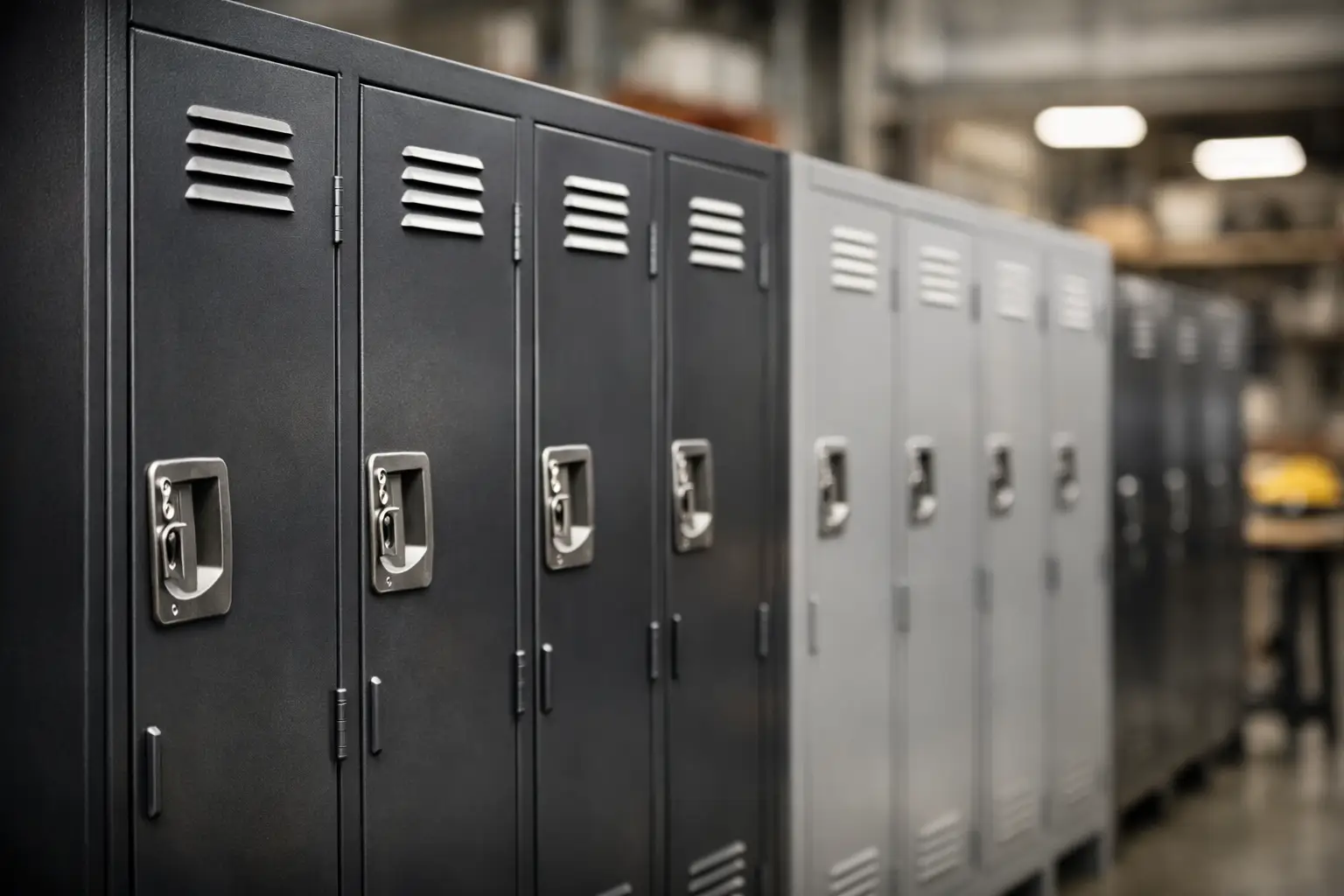
A locker that bends at the door, develops rust around the base, or repeatedly needs lock repairs becomes an operating cost rather than a storage solution. This buyer’s guide to durable industrial metal lockers focuses on the specifications that matter after installation: material strength, door construction, security, finish quality, capacity, and supplier support.
For procurement teams, the right choice is rarely the lowest-priced cabinet on a specification sheet. A durable locker must suit the people using it, the items being stored, and the conditions of the facility. A staff changing room, manufacturing floor, school corridor, fitness center, and healthcare environment may all require metal lockers, but their operational demands are different.
Start With the Environment, Not the Product Photo
Industrial metal lockers should be selected around the installation environment. Begin by defining who will use them, how often they will be opened, what will be stored, and whether moisture, dust, chemicals, or impact are likely to be present.
High-traffic employee areas need doors, hinges, and frames that can withstand repeated daily use. Production sites may require raised legs or a sloping top to make cleaning easier and prevent debris buildup. Wet areas need corrosion-resistant finishing and adequate ventilation. Where uniforms, PPE, electronics, tools, or controlled materials are involved, internal layout and lock type become equally important.
Space planning also affects the specification. A bank of narrow compartments can serve a high number of users in limited floor space, while full-height lockers provide better capacity for workwear and personal items. Do not assume that more compartments always deliver better value. Overly narrow openings can reduce usability and lead employees to store belongings outside the locker system.
Define the Storage Requirement
A clear storage brief avoids costly changes later. Identify whether each user needs space for a coat, helmet, bag, work boots, documents, a laptop, or charging equipment. If clean and used PPE must be separated, consider a divided locker configuration or dedicated PPE storage cabinets rather than a standard personal locker.
For shared-use locations, numbered doors and a master-key or managed-lock system can simplify administration. For assigned lockers, individual key, padlock-hasp, combination, RFID, or electronic locking options may be more appropriate. The best choice depends on how the facility manages access, replacements, and user turnover.
Material and Construction: What Makes a Locker Durable?
Steel thickness matters, but it should not be reviewed in isolation. A strong sheet of steel can still perform poorly if the door edges, hinge points, frame joints, or lock reinforcements are weak. Ask for a complete construction description, not only a gauge reference.
Look closely at the door and body design. Reinforced or boxed doors resist flexing and help maintain alignment after frequent use. Full-length or multiple-point door engagement improves resistance to forced entry and reduces the rattling associated with lightly built units. Stiffened body panels and a stable base help a locker bank remain square when loaded, moved, or installed across an uneven floor.
Welded construction generally offers greater rigidity for demanding applications. Knock-down lockers can be practical where access is restricted or shipping efficiency is the priority, but assembly quality becomes a critical factor. For high-use industrial sites, a welded or factory-assembled structure often reduces installation time and provides stronger long-term performance.
Pay attention to the following construction details during comparison:
- Steel thickness for the body, doors, and internal shelves
- Door reinforcement, edge returns, and anti-pry design
- Hinge type, hinge protection, and opening angle
- Lock housing reinforcement and compatibility with the chosen lock
- Base, legs, leveling requirements, and wall or floor fixing points
These features affect service life more than cosmetic details. They also influence how well the locker holds its alignment after years of use.
Finish Quality Is a Performance Issue
Powder coating is not simply a color decision. A properly prepared and coated surface improves resistance to scratches, humidity, routine cleaning, and corrosion. This is especially relevant in changing rooms, workshops, warehouses, schools, and facilities where lockers are cleaned frequently.
Ask how the metal is pretreated before coating and whether the finish is suitable for the intended environment. For humid or corrosive conditions, standard indoor finishing may not be enough. The appropriate solution may involve enhanced pretreatment, a specialized coating system, or a different cabinet design with better ventilation and drainage.
Color can support operations as well. Different door colors can separate departments, shifts, visitor lockers, clean and used equipment, or storage zones. For larger projects, color consistency across lockers, benches, cabinets, shelving, and other metal furniture creates a more organized facility without adding complexity for users.
Select Doors, Ventilation, and Layout for Daily Use
Door configuration determines capacity, access, and user experience. Full-length doors are suited to staff who store uniforms, coats, bags, or larger PPE. Two-tier and multi-tier lockers increase user density, making them useful for offices, education, gyms, and shared workspaces. Small compartments may work well for valuables and devices, but they are not a substitute for personal storage where workwear is required.
Ventilation should match what users store. Perforated or louvered doors allow airflow for clothing, footwear, and PPE, helping reduce odors and retained moisture. However, a highly ventilated door may not be right for every use. Document storage, electronics, or materials requiring greater dust protection may benefit from a more enclosed design.
Internal fittings should be specified early. Hanging rails, coat hooks, shelves, name card holders, mail slots, shoe compartments, and charging provisions all change how effectively users can organize the available space. Retrofitting these features later is often more difficult and more expensive than selecting the right configuration at the project stage.
Locking Should Fit Your Management Model
The lock is one of the most frequently handled components, so it should be selected for operational practicality as well as security. A simple padlock provision gives users flexibility and keeps initial cost low. Key locks are straightforward for assigned storage but require a process for lost keys and master access. Combination locks reduce key administration, while electronic and RFID locks can support larger facilities with changing users or access-control requirements.
There is no single best lock for every project. A warehouse locker room with permanent employees may need a different system than a school, gym, hospital, or contractor check-in area. Consider who issues access, how lockers are reassigned, whether auditability is needed, and what happens when a user forgets credentials.
For charging lockers, electrical safety and compartment design require additional attention. Each compartment should be sized for the device type, cable routing should be protected, and ventilation and power arrangements should be appropriate for the equipment being charged. Treat charging as a dedicated storage application, not an accessory added to a standard locker without planning.
Check Installation, Cleaning, and Scalability
A durable locker can still underperform if installation is overlooked. Confirm floor conditions, wall clearances, door swing, aisle widths, and access routes before ordering. Locker banks may need fixing points to improve stability and safety, particularly in high-traffic areas or where tall units are installed.
Cleaning access is another practical issue. Raised legs allow access beneath the locker, while closed plinths can create a cleaner visual line but may complicate floor cleaning. Sloping tops reduce dust accumulation, whereas flat tops may be acceptable in lower-maintenance office environments. The right option depends on housekeeping standards and the facility’s cleaning process.
Plan for expansion when possible. Modular dimensions, consistent finishes, and compatible locking systems make it easier to add locker runs as staffing levels change. This matters for growing production sites, education campuses, gyms, and multi-phase commercial fit-outs. A supplier with both standard products and custom fabrication capability can help maintain consistency across later orders.
Evaluate the Supplier Beyond Unit Price
The purchase decision should include delivery reliability, production capacity, documentation, warranty coverage, replacement parts, and the supplier’s ability to accommodate project-specific requirements. A low initial price has limited value if replacement doors, locks, or matching units are unavailable later.
For distributors and project buyers, product range is also relevant. Sourcing lockers, office cabinets, shelving, benches, PPE cabinets, and specialist storage from one manufacturing partner can simplify specifications, freight planning, color coordination, and after-sales support. It can also reduce the risk of mismatched quality levels across a facility.
Ask direct questions before issuing a purchase order. Can the supplier produce the required dimensions and door configuration? Are standard products available with practical lead times? What customization is possible? Is there a clear warranty? Can locks, doors, shelves, or accessories be supplied if maintenance is needed? These answers reveal more about long-term value than a catalog image ever will.
Loxmet supports commercial buyers with standard and custom heavy-duty metal storage solutions designed around real workplace requirements. The best locker specification is the one that remains secure, aligned, cleanable, and useful long after the facility opens – so build the brief around daily use, not only the initial purchase price.