


Highlights
File Cabinet on Wheels for Flexible Workspaces

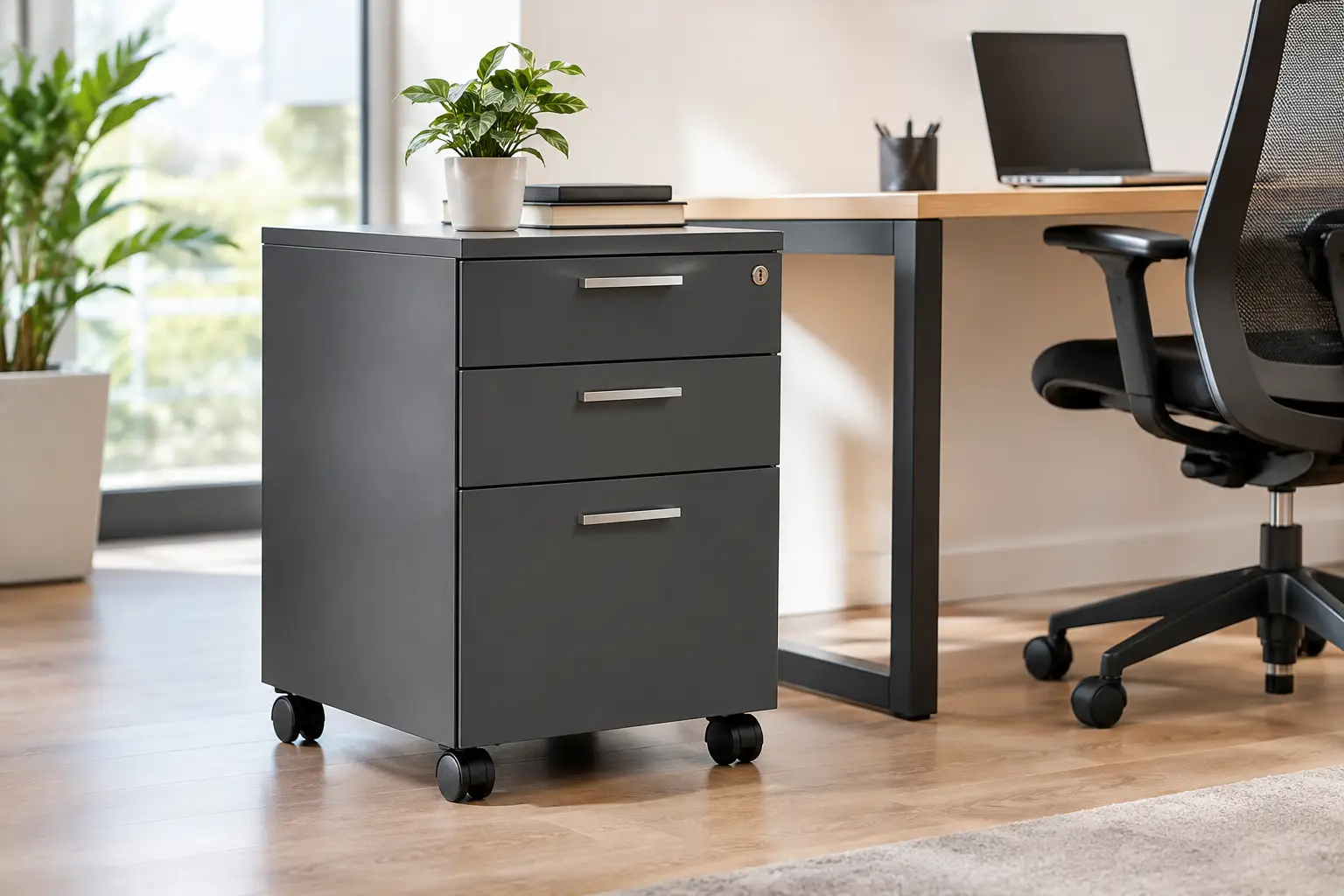
A file cabinet on wheels solves a common facility problem: documents need to stay secure, but they do not always need to stay in one place. In active offices, healthcare settings, schools, project rooms, and commercial workspaces, mobile filing can keep records close to the people who use them without committing valuable floor space to fixed storage.
The right unit is not simply a stationary cabinet with casters added underneath. Its frame, drawer runners, wheel design, locking method, and load capacity must work together. For procurement teams, choosing well means balancing mobility with security, capacity, and long-term durability.
When Mobile Filing Makes Operational Sense
A wheeled filing cabinet is most useful when teams work across shared spaces. Administrative staff may need personnel records at a temporary workstation. Project teams may move between meeting rooms. Medical and education facilities may require controlled access to paperwork at different service points. In these cases, a cabinet that moves with the workflow can reduce repeated handling and wasted time.
It also supports flexible office layouts. As departments grow, seating plans change, or temporary work zones are created, mobile storage can be repositioned without disassembly. This is particularly valuable in leased offices and multi-purpose facilities where a fixed storage layout can become a restriction.
Mobility is not the answer for every archive. Large volumes of long-term records are generally better housed in fixed, high-capacity systems. A file cabinet on wheels is best for active files, frequently accessed documents, and users who need secure storage within reach during the workday.
Start With the Filing Format and Capacity
Cabinet dimensions should follow the documents being stored, not the available corner of the room. Letter-size and legal-size folders require different drawer depth and internal rail arrangements. Some operations use hanging files, while others store folders, binders, forms, or boxed records. Confirm the intended filing method before specifying the cabinet.
Drawer count is equally important. A compact two-drawer cabinet may fit under a desk and support one employee or a small team. Three- and four-drawer models offer more capacity but require careful attention to loaded weight, stability, and clear floor space for opening drawers.
Consider the daily filing volume as well as the archive volume. A cabinet that is filled to capacity on delivery leaves no room for new records and may encourage documents to be stored outside the secure system. Allow practical expansion capacity where workflows are expected to change.
Check drawer load ratings, not just external size
Two cabinets with similar outside dimensions can perform very differently. Heavy-duty drawer slides maintain smooth operation when drawers are fully loaded. Weak runners can sag, bind, or wear quickly, especially when staff open and close drawers many times each day.
For commercial use, look for steel drawer construction, reinforced suspension components, and full-extension access where staff need to see the entire file run. Full extension is useful for records management because files at the back remain accessible rather than becoming forgotten storage.
Wheels Must Support Safe Movement
Casters determine whether a mobile cabinet is practical or frustrating. Small, low-grade wheels may work on a smooth floor with a lightly loaded cabinet, but they are not designed for regular movement over thresholds, carpet edges, uneven surfaces, or busy work areas.
Select casters based on the combined weight of the cabinet and its maximum contents. The wheels should roll smoothly under load and be fitted securely to a stable base. Swivel casters improve maneuverability in tight spaces, while larger wheel diameters generally handle transitions and imperfect flooring more effectively.
Braked casters are essential. Once parked, the cabinet should remain stable while users open drawers, sort files, or write on the top surface. In shared offices and public-facing areas, locking wheels also help prevent unintended movement caused by cleaning equipment, foot traffic, or a drawer being opened abruptly.
Stability is a design requirement
A tall cabinet with several loaded drawers has a high center of gravity. If it is moved too quickly or a heavy upper drawer is opened without protection, it can become unstable. Anti-tip features are therefore critical for larger mobile filing units.
Depending on the cabinet design, this may include an interlock system that permits only one drawer to open at a time, a weighted base, or a configuration designed to keep heavy files lower in the cabinet. For safety-sensitive environments, request clear information on load limits and anti-tip performance before placing an order.
Security Should Match the Records Inside
Mobile does not mean less secure. In many workplaces, a cabinet on wheels stores confidential employee information, patient documents, financial files, contracts, or controlled operational records. The locking system must reflect the sensitivity of that material.
A central lock that secures all drawers is often the most practical option for general office use. It allows staff to secure the cabinet quickly at the end of a shift or before moving it to another room. For departments with controlled access requirements, keyed-alike systems, master-key arrangements, or higher-security locking options may be appropriate.
Think beyond the lock itself. A cabinet that can be rolled through unsecured corridors needs a clear ownership and access process. In some facilities, the correct approach is to store the mobile unit in a locked room when not in use. In others, the cabinet may need to be tethered or positioned within a controlled work area.
Why Metal Construction Is Better for Commercial Use
Plastic and light-duty furniture may be suitable for limited personal use, but commercial filing benefits from metal construction. Steel cabinets withstand daily contact, loaded drawers, repeated relocation, and the incidental impacts that occur in active facilities.
A powder-coated finish adds protection against scratches and routine wear while supporting a clean, professional appearance. For locations where cleaning is frequent, smooth metal surfaces are also easier to maintain than damaged laminate or exposed board edges.
Material thickness, welded joints, drawer runners, and base construction all affect service life. Procurement decisions should focus on the entire cabinet assembly rather than the visible shell alone. A strong frame is of little value if drawer slides or caster mounts are underbuilt.
Specify the File Cabinet on Wheels for Its Location
The same product specification will not suit every department. Before requesting a quote, document the use case, expected load, filing format, floor type, and security requirements. This reduces the risk of receiving a cabinet that fits physically but performs poorly in daily use.
For a practical specification, confirm these points:
- Overall width, depth, and height, including clearance for drawers to open fully.
- Internal filing dimensions and whether the cabinet supports letter-size, legal-size, or mixed formats.
- Maximum drawer load and total cabinet load when files are fully stored.
- Caster type, wheel diameter, brake configuration, and suitability for the installed floor.
- Locking method, key management requirements, and anti-tip protection.
- Finish color, labeling needs, and any custom dimensions required for the workspace.
Custom fabrication can be valuable when standard sizes do not fit the available space or operational process. A cabinet may need a specific drawer arrangement, a reinforced top, a distinct finish, or a configuration compatible with existing desks and storage systems. For project buyers, coordinating these details early prevents expensive changes after delivery.
Plan for Daily Use, Not Just Delivery Day
A file cabinet is often evaluated when empty, clean, and parked in a showroom or newly fitted office. Its real test comes months later, when drawers are full, teams are busy, keys are shared, and the unit has been moved repeatedly across the facility.
Specify a product that can tolerate that routine. Loxmet manufactures heavy-duty metal storage for workplaces that need dependable construction, practical customization, and consistent performance across larger projects. The right mobile filing cabinet should remain easy to operate after thousands of drawer cycles, not only look suitable at installation.
Place the cabinet where users can access it without blocking walkways, keep heavier records in lower drawers, and make responsibility for keys and file handling clear. With those basics in place, mobile filing becomes a useful working asset rather than another piece of furniture that must be managed.