


Highlights
Are Traditional Lockers Dead? Why Smart Lockers Are Taking Over Employee Locker Rooms in 2026

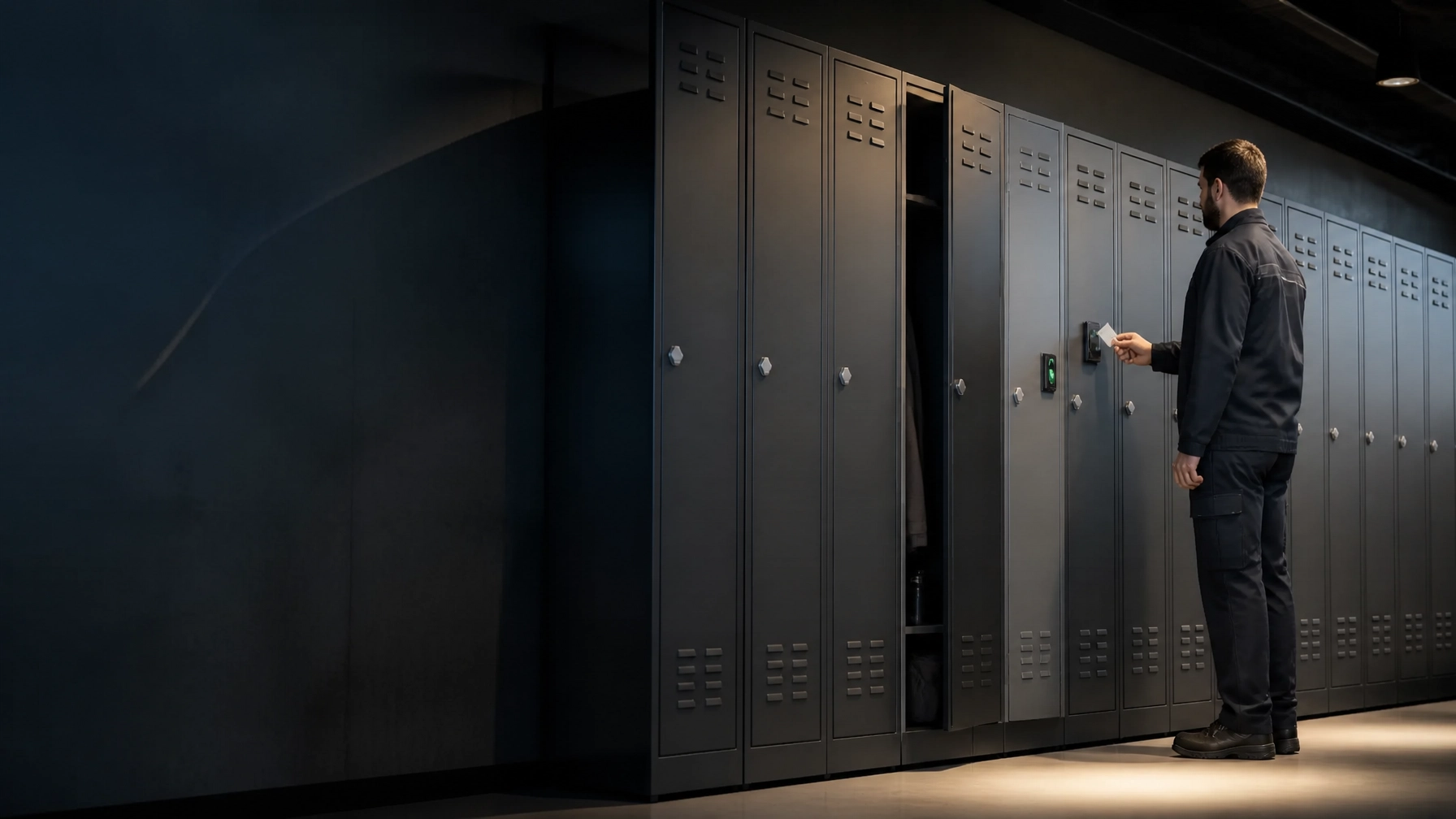
Traditional lockers are not dead.
But employee locker rooms are changing. More companies now compare mechanical locks with RFID access, mobile apps, PIN codes, shared assignments, and digital administration before placing a workplace locker order.
The practical answer is not always “replace every locker with a smart locker.” In many facilities, the best solution combines:
- Durable metal lockers for daily employee storage
- Smart-locker access where flexible assignment is important
- Space-efficient locker layouts for multiple shifts
- Secure, easy-to-maintain construction for demanding workplaces
This guide explains how smart lockers for employee locker rooms work, where they deliver real value, and how traditional metal lockers remain an important part of a reliable workplace storage plan.
What Is A Smart Locker?
A smart locker uses electronic access and software instead of, or in addition to, a mechanical key or standard cam lock.
Depending on the system, employees may access a compartment with:
- RFID employee badges
- Access cards or key fobs
- Mobile applications
- Bluetooth credentials
- PIN codes
- QR codes
- Touchscreen kiosks
The locker system checks the user’s permission and opens the assigned compartment. Administrators can manage locker assignments, revoke access, release compartments, and review usage information from a central platform.
Companies such as HID and Gantner describe smart locker systems as part of a wider workplace access and employee-management environment.
However, a smart lock does not automatically make a locker better. The cabinet still needs strong construction, stable doors, reliable hinges, suitable ventilation, and an efficient layout.
Why Smart Lockers Are Growing In Employee Locker Rooms
The biggest change is not the lock. It is the way organizations use space.
Many workplaces now have:
- Multiple shifts
- Hybrid employees
- Temporary staff
- Contractors and visitors
- Shared workstations
- Changing employee numbers
- Different storage needs by department
A traditional assigned locker works well when each employee has a permanent compartment. A smart locker adds flexibility when the same locker bank must serve more than one user during different time periods.
Shared Locker Assignment
A smart locker platform can assign an available compartment when an employee arrives. At the end of the shift, the locker can be released for another authorized user.
This supports:
- Shift-based locker allocation
- First-come, first-served storage
- Department-based access
- Temporary employee storage
- Hot-desking environments
- Visitor and contractor access
This does not mean every company should use shared lockers. Permanent assigned storage remains more suitable for factories, hospitals, schools, and workplaces where employees carry equipment or workwear every day.
The correct choice depends on your staffing model, hygiene policy, personal storage requirements, and locker-room capacity.

RFID Or Mobile App Access: Which Is Better?
RFID Access
RFID access allows employees to use an existing access badge, card, or fob.
This is useful when the same credential already opens:
- Main building doors
- Production areas
- Staff entrances
- Restricted departments
- Parking or turnstiles
The employee presents the badge to the locker reader. The system checks the permission and unlocks the correct compartment.
RFID is fast and practical for industrial workplaces where employees may not be permitted to carry a smartphone on the production floor.
Mobile App Access
Mobile access uses a smartphone application, Bluetooth, QR code, or digital wallet credential.
It can support:
- Locker booking before arrival
- Temporary access
- Remote assignment
- Shared workplace storage
- Digital notifications
- App-based release and reassignment
Mobile access is attractive for offices, flexible workplaces, and facilities with frequent visitors. Still, it requires dependable connectivity and a clear alternative for employees who do not use smartphones.
Best Buyer Choice
For many organizations, the most flexible solution supports more than one access method.
Ask your system supplier:
- Can we use existing RFID cards?
- Is mobile access available?
- Is PIN access supported as a backup?
- What happens if the network is unavailable?
- Can access be revoked immediately?
- Can the system work for employees, contractors, and visitors?
Can Smart Lockers Integrate With Building Security?
They can, but integration must be confirmed before purchase.
A smart locker project may connect with:
- Building access-control systems
- Employee identity platforms
- HR databases
- Workplace applications
- Visitor-management systems
- Central security dashboards
Integration can reduce duplicate administration. When an employee joins or leaves the company, locker access can follow the organization’s existing permission process.
But integration also adds project requirements. Your IT and facilities teams should confirm:
- Credential compatibility
- Software licensing
- API or system connection requirements
- Data ownership
- Installation responsibility
- Support response time
- Offline operation
- Cybersecurity controls
Do not select a smart locker only because it has a touchscreen or mobile app. Select a system that fits your building-security process.
Privacy And Employee Locker Access
Smart lockers can record access events. Depending on the system, this may include:
- Employee ID
- Locker number
- Date and time of access
- Failed access attempts
- Assignment and release history
This information can improve security and help investigate lost property or unauthorized access. It also requires responsible administration.
Before installation, define:
- Which data is collected
- Why the data is collected
- Who can see access records
- How long records are stored
- How employees are informed
- Which data is connected to HR systems
Use the minimum data required for secure operation. Restrict management access to authorized facilities, security, or HR personnel.
Smart storage should improve workplace security without creating unnecessary employee monitoring.
Hygiene, Ventilation, And Locker-Room Design
A digital lock does not solve hygiene problems. The physical locker design still matters.
For employee locker rooms, evaluate:
- Air ventilation
- Easy-clean surfaces
- Separation of clean and used clothing
- Personal space per employee
- Footwear and workwear storage
- Locker depth
- Door opening direction
- Cleaning access
- Bench and changing-room circulation
For industrial and healthcare environments, clean and dirty lockers can help separate clean workwear from used or contaminated clothing.
For PPE storage, multi-compartment lockers keep helmets, gloves, safety shoes, and other equipment organized. For offices and modern workplaces, compact configurations can support personal items without occupying unnecessary floor area.

Traditional Metal Lockers Still Deliver Important Value
Traditional metal lockers remain a strong choice when you need simple, reliable, and cost-controlled storage.
They offer:
- Lower initial technology cost
- No software subscription
- No network dependency
- Simple maintenance
- Easy user understanding
- Strong long-term physical performance
- Flexible lock selection
A traditional locker is often the right solution for:
- Factories
- Warehouses
- Schools
- Gyms
- Construction sites
- Dormitories
- Hospitals
- Public facilities
- Staff changing rooms
A mechanical locker can also become part of a future smart-locker project if the cabinet dimensions, door construction, lock area, and installation requirements are planned correctly.
The important point is to specify the physical storage properly before selecting the access technology.
What Is The Total Cost Of Smart Lockers?
Smart lockers usually cost more at the beginning because the project may include:
- Electronic locks
- Readers or kiosks
- Power supply
- Network infrastructure
- Software licensing
- Installation
- System integration
- Ongoing technical support
Traditional lockers generally have a lower purchase price and simpler operation. Their ongoing costs may include lost-key replacement, lock changes, manual assignment, and administration time.
Compare both options over several years.
Your total cost calculation should include:
- Locker and lock hardware
- Installation and electrical work
- Software and subscription fees
- Integration and configuration
- Maintenance and replacement parts
- Administration time
- Number of lockers required
- Space saved through shared allocation
A smart system can reduce locker quantities in a multi-shift workplace. A traditional system can offer better value where employees need permanent personal storage.
How Loxmet Supports Your Workplace Locker Project
Loxmet manufactures heavy-duty metal lockers and workplace storage solutions in Istanbul, Turkey.
Our catalogue includes more than 100 standard products for:
- Employee locker rooms
- Industrial workplaces
- Offices
- Factories
- Warehouses
- Schools
- Gyms
- Healthcare facilities
- Dormitories
- Public institutions
You can compare standard-size metal lockers, space-saving slim lockers, and other configurations through the Loxmet product catalogue.
Our metal lockers can serve as dependable traditional storage or as the physical foundation for a smart-locker-ready workplace layout. Electronic access hardware and system compatibility should be confirmed according to your selected smart-locker technology.
We also offer:
- Heavy-duty construction
- Premium-quality materials
- Flexible production
- Custom dimensions and layouts
- Catalogue colours
- Single-piece ordering
- Competitive project pricing
- International supply from Turkey
- 10-year warranty for production faults
Standard catalogue products in catalogue colours generally have approximately 10 working days delivery time. Custom colours and made-to-order products normally require approximately 10 additional working days.
For special layouts, contact our design team about custom metal storage. We can review your employee numbers, locker-room dimensions, door arrangement, compartment requirements, and project quantities.

Smart Or Traditional: Which Locker Should You Choose?
Choose smart lockers when you need:
- Shared or shift-based assignments
- RFID or mobile access
- Central administration
- Fast access revocation
- Usage records
- Integration with building security
- Flexible locker allocation
Choose traditional metal lockers when you need:
- Permanent employee storage
- Simple operation
- Low technology dependency
- Competitive initial cost
- Easy maintenance
- Reliable industrial construction
In many projects, the best answer is a combination. Use smart access where flexibility creates measurable value. Use durable traditional lockers where permanent, secure storage is the priority.
Request your locker-room layout and product recommendation from Loxmet today. Send your dimensions, quantities, preferred configuration, and delivery destination to sales@loxmet.com or use the Loxmet contact page.
Frequently Asked Questions
How do smart lockers work for employee locker rooms?
Employees use an RFID badge, mobile app, PIN, or another approved credential. The system verifies access and opens an assigned or available compartment.
Can smart lockers be reassigned between shifts?
Yes. Shared locker systems can assign an available locker at the beginning of a shift and release it after use, subject to the software rules and workplace policy.
Can smart lockers use our existing building-access cards?
Many systems support existing RFID cards and badges, but compatibility must be checked with the access-control supplier before ordering.
Are smart lockers private?
They can provide secure personal storage, but access logs may record who opened a locker and when. Configure data access, retention, and employee communication clearly.
Do smart lockers require more maintenance?
They require electronic hardware, software, power, and sometimes network maintenance. Battery-free or centrally powered systems can reduce some routine maintenance requirements.
Are smart lockers more expensive than traditional lockers?
Smart lockers normally have higher initial costs. They can reduce administration and locker quantities in shared or multi-shift workplaces. Compare total cost of ownership rather than purchase price only.