


Highlights
Military Lockers for High-Demand Facilities

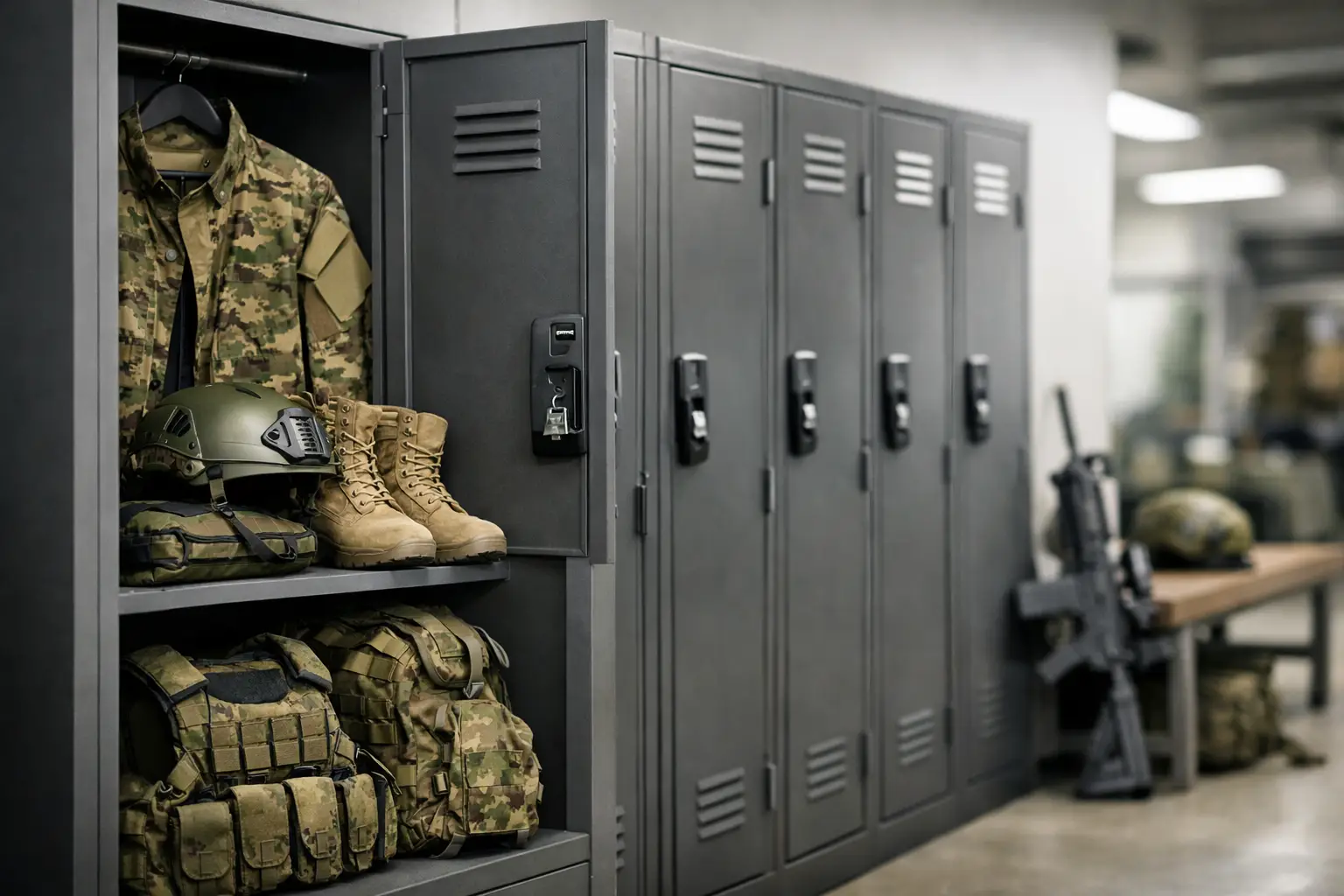
A locker failure is rarely a minor inconvenience in a high-demand facility. A bent door can delay a shift change. A weak lock can compromise issued equipment. Poor ventilation can leave uniforms and protective gear damp, unpleasant, and unready for the next user. Military lockers are designed for environments where storage must perform consistently under frequent use, heavy loads, and strict accountability requirements.
For procurement teams, the right specification is not simply the strongest-looking cabinet. It is a storage system that fits the users, the equipment, the available space, and the facility’s security procedures. The best result comes from matching construction, compartment design, locking method, ventilation, and installation details before production begins.
What Defines a Military Locker?
Military-style lockers are heavy-duty metal storage units built for disciplined, high-use settings. They are commonly specified for defense facilities, emergency services, industrial sites, training centers, security operations, and large staff locker rooms. Their purpose is straightforward: give each user a secure, durable place for uniforms, personal belongings, work gear, and assigned equipment.
The term does not describe one fixed product. A full-height single-door unit may suit users storing hanging uniforms and bags. Multi-compartment models can increase capacity where users only need storage for smaller personal items. Wardrobe lockers with internal shelves, hanging rails, and separate upper compartments work well when a facility needs one unit to handle several storage tasks.
The common requirement is durability. Doors must remain aligned after repeated opening and closing. Frames must resist twisting. Ventilation must support daily use. Surfaces must withstand cleaning, impacts, and the wear associated with boots, bags, belts, and equipment.
Start With the Operational Requirement
A good locker specification starts with the contents, not the cabinet dimensions. Ask what users need to store during a normal shift and what they may need to secure during extended deployments, training periods, or overtime. Uniforms, helmets, body armor, radios, laptops, protective footwear, and personal effects all place different demands on internal space.
Full-height compartments are usually the practical choice when hanging garments or bulky equipment must be accommodated. Internal shelves help separate footwear, folded uniforms, and smaller items. A hanging rail can prevent uniforms from being compressed at the bottom of the compartment. For shared facilities, an upper lockable compartment may provide a dedicated place for valuables while the main section remains available for larger gear.
Space planning matters just as much. A high-density layout can reduce the footprint, but it may make access difficult if each user carries bulky gear. Wider locker banks improve usability, yet reduce the number of units that fit along a wall. There is no universal best configuration. The right balance depends on occupancy levels, aisle width, cleaning access, and the actual volume of equipment issued to each person.
Decide Whether One Locker Must Serve Multiple Roles
In many facilities, the locker room is expected to store everything from personal clothing to regulated PPE. That can work when compartment sizing and interiors are planned carefully. It can also create avoidable problems when contaminated gear, clean garments, and personal items must remain separated.
Where hygiene or safety policy requires segregation, separate PPE lockers or dedicated storage zones are often the better option. This approach can increase the number of cabinets required, but it makes cleaning routines, access control, and compliance easier to manage. For facilities with chemical exposure risks, ordinary personnel lockers should not be treated as a replacement for purpose-built chemical storage cabinets.
Construction Details That Affect Service Life
Steel thickness is an important consideration, but it is only one part of locker strength. A well-designed locker combines suitable sheet metal with reinforced doors, rigid body construction, dependable hinges, and clean welding or forming quality. Weak points typically appear at door edges, hinge areas, lock cutouts, and the connection between the cabinet body and base.
Doors deserve close attention because they receive the most direct use. Reinforced door returns improve resistance to bending and forced impact. Concealed or protected hinge arrangements can reduce tampering risk and limit damage in crowded changing areas. A door that closes cleanly and stays aligned also protects the lock from unnecessary stress.
The finish should be selected for the operating environment. Powder-coated steel provides a durable, professional surface for many indoor facilities and supports consistent color matching across large projects. In humid, coastal, or heavily washed-down environments, buyers may need additional corrosion protection or a material and finish combination suited to the exposure level. A standard indoor finish can be cost-effective, but it is not the right choice for every site.
The cabinet base also affects longevity. Raised legs can improve floor cleaning and help keep the locker body away from standing water. A closed plinth base can create a cleaner visual line and reduce the space beneath the unit, but it requires careful floor conditions and cleaning procedures. For large locker runs, leveling and secure anchoring should be planned during installation rather than treated as an afterthought.
Security Must Match the Access Model
The lock choice should reflect how the facility assigns lockers. A permanently assigned locker has different needs than a unit used by rotating shifts, trainees, visitors, or temporary contractors.
Traditional key locks remain practical where administration is simple and replacement keys can be controlled. Padlock fittings give users flexibility, though they place responsibility for the lock on the individual and can create inconsistency across a locker room. Combination locks remove key management but require users to remember codes and staff to manage resets. Digital or RFID locking systems can support centralized administration, audit trails, and temporary access, although they introduce power, battery, and system-management considerations.
Security is more than the lock itself. The door-to-frame fit, lock mounting area, hinge protection, and cabinet anchoring all influence how well the unit resists misuse. For sensitive equipment or documents, a standard personal locker may not provide the level of controlled access required. Procurement teams should define the security level before selecting a locking option, rather than adding a more expensive lock to an unsuitable cabinet design.
Ventilation Is a Daily Performance Feature
Ventilation is sometimes treated as a cosmetic detail, yet it directly affects user comfort and locker-room conditions. Uniforms, wet outerwear, boots, and PPE can retain moisture and odor after long shifts. Ventilation openings support air movement and help reduce the buildup of stale air inside the compartment.
The required ventilation level depends on what is stored and how quickly users return to the facility. For ordinary personal belongings, standard louvered openings may be sufficient. For wet or heavily used protective equipment, facilities may need a dedicated drying area, mechanical airflow, or a storage layout that separates clean and used items. A ventilated locker is helpful, but it cannot replace a full drying strategy where moisture control is critical.
Standard Products or Custom Production?
Standard military lockers are often the fastest route for projects with straightforward dimensions, common locking requirements, and predictable quantities. They simplify procurement, support faster delivery, and make it easier to add matching units later.
Custom production becomes valuable when a project has fixed architectural openings, unusual equipment dimensions, specific ventilation patterns, branded colors, specialized lock preparation, or a nonstandard internal layout. It can also help distributors and fit-out contractors provide a coordinated storage solution rather than forcing a facility to adapt its operations around a catalog size.
Customization should solve a real operational need. Every nonstandard change can affect manufacturing time, cost, replacement planning, and future expansion. The most effective specification keeps proven construction features standard while adapting the dimensions, interiors, and access features that truly matter to the site.
A Practical Procurement Checklist
Before approving a locker order, confirm these points with stakeholders:
- What must each user store, including bulky equipment and hanging garments?
- Is the locker permanently assigned, shared between shifts, or used temporarily?
- What security level, key control process, or digital access system is required?
- Will moisture, cleaning chemicals, humidity, or corrosive conditions affect the finish?
- Does the floor plan allow safe aisles, door clearance, cleaning access, and future expansion?
- Are lockers required to integrate with benches, shelving, PPE storage, office cabinets, or charging lockers?
These questions reduce expensive changes after delivery. They also help buyers compare quotations on the details that affect long-term performance, not just unit price and external dimensions.
For project buyers, a dependable manufacturer should be able to discuss construction, configuration, finish, locking, and delivery requirements in practical terms. Loxmet supports this approach with standard heavy-duty storage products and custom metal fabrication for workplace requirements that do not fit a standard layout.
A well-specified locker installation gives users a consistent place to secure what they need for work. When the cabinet design reflects the real demands of the facility, it becomes part of a more organized, accountable, and ready operation.