


Highlights
How to Choose a Clothes Locker for Your Facility

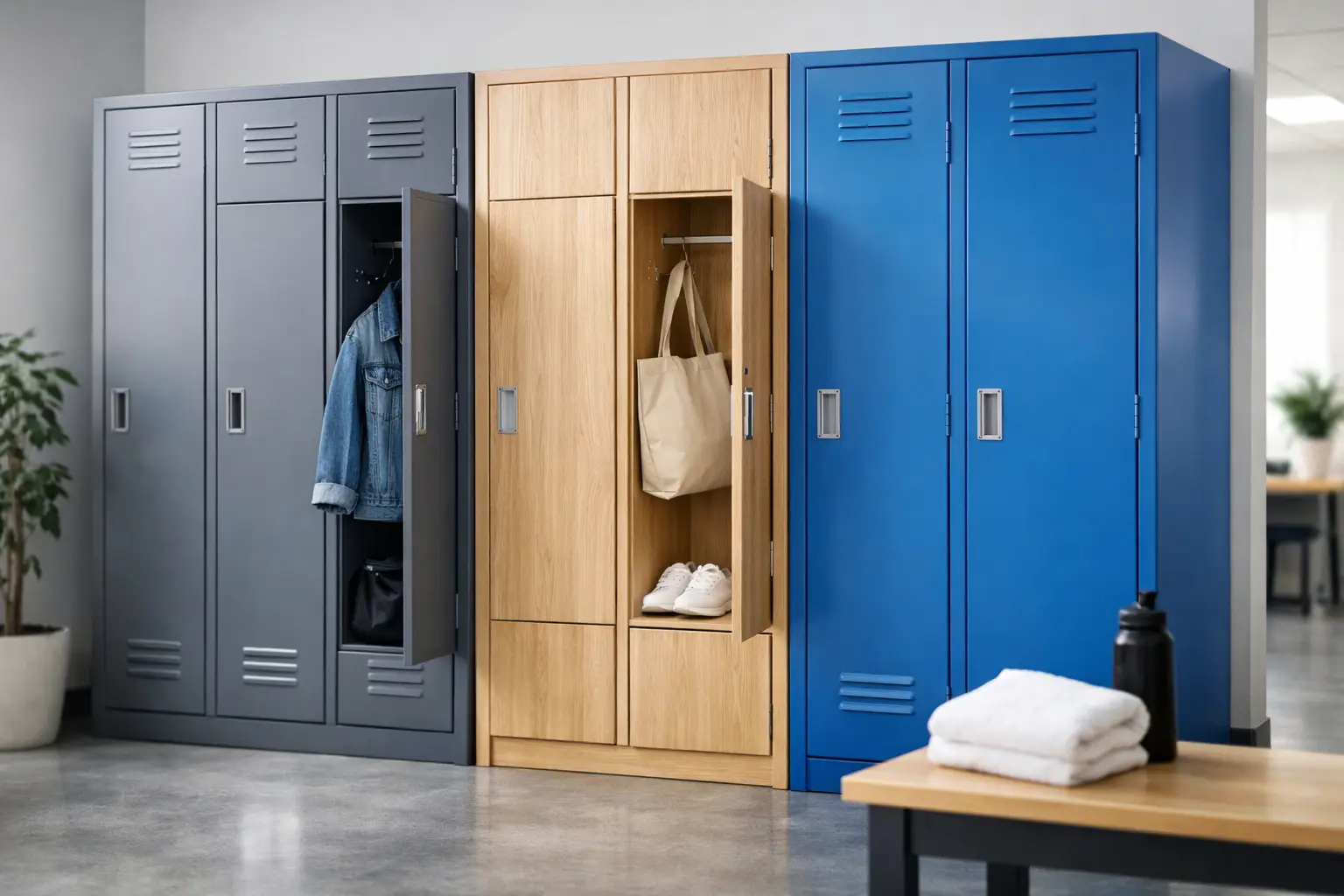
A clothes locker is not a minor furnishing decision when employees, students, members, or contractors rely on it every day. The wrong specification creates cluttered changing areas, damaged garments, security complaints, and costly replacement cycles. The right locker gives each user a defined, secure place for workwear and personal belongings while keeping the facility organized.
For commercial buyers, the decision should start with the operating environment rather than appearance alone. A locker room at a manufacturing plant has different demands than a school corridor, a gym changing room, or a healthcare staff area. Expected occupancy, shift patterns, cleaning routines, humidity, clothing volume, and security policy all affect the best configuration.
Start With How the Clothes Locker Will Be Used
Before comparing door styles or lock options, define whether lockers are assigned permanently or shared between users. Permanently assigned lockers suit offices, schools, staff changing rooms, and workplaces where people keep clothing and personal items on site. Shared lockers can work well for shift-based operations, visitor areas, and facilities with rotating staff.
The amount and type of clothing matter too. A compact compartment may be sufficient for folded uniforms and a small bag. Employees who need to hang coats, coveralls, high-visibility garments, or clean uniforms need full-height storage with a hanging rail or hook. Where clean and used workwear must remain separate, consider divided compartments or a two-section locker layout.
Ask practical questions early: Will users store bulky winter coats? Are work boots kept in the same compartment? Is there a requirement for clean and dirty garment separation? Does each employee need a dedicated space, or can lockers be allocated per shift? These answers determine the internal volume needed and prevent a space-saving layout from becoming an operational problem.
Choose the Right Locker Size and Door Layout
Locker capacity is often discussed as the number of doors in a unit. That is useful for planning, but it does not tell the full story. More doors increase user capacity within a given footprint, while reducing the width and height available to each person. High-density designs are efficient for small personal items, but they are usually unsuitable for hanging clothing.
Single-door clothes locker units provide the most internal height and are a practical choice for changing rooms, industrial sites, and staff facilities. They can accommodate garments on hooks or rails, footwear, and personal bags. Two-door lockers offer a balance between capacity and usable storage volume, particularly where users need to store folded clothing and light outerwear.
Multi-door configurations are appropriate where each user only needs a compact compartment. Schools, fitness facilities, and short-stay areas may benefit from this format. However, procurement teams should avoid selecting a high-door-count unit solely to achieve the lowest cost per compartment. If users cannot store the items they bring to work, the apparent saving is quickly lost through overcrowding and poor facility use.
Door opening clearance also deserves attention. A layout that looks efficient on a floor plan may create congestion if opposing doors cannot be opened comfortably at the same time. In narrow changing rooms, aisle width, bench placement, and door swing must be planned together.
Internal fittings should match daily routines
A basic locker body is only part of the specification. Hanging rails, coat hooks, shelves, shoe compartments, name card holders, and internal dividers can make the same footprint more useful. For industrial applications, a top shelf can separate a hard hat or folded garments from footwear below. For offices, a simple hook and clear personal storage area may be enough.
Custom internal arrangements are valuable when standard dimensions do not fit the clothing or equipment used at a site. This is common in logistics, food production, healthcare, construction, and technical service environments, where garments may be larger than standard business clothing or need separation from PPE.
Select Materials for Durability and Cleaning
For workplaces and shared facilities, metal lockers offer clear advantages over lighter-duty storage materials. A properly manufactured steel body withstands repeated opening, closing, cleaning, and daily use. It is also suited to environments where impact resistance, fire performance, and long service life influence purchasing decisions.
Construction details have a direct effect on durability. Look beyond the external finish and evaluate the steel thickness, door reinforcement, hinge design, frame rigidity, and weld quality. Doors are the most frequently used part of the unit, so they should resist bending and misalignment under regular use. Recessed or reinforced door profiles can improve stiffness while reducing exposed edges.
Powder-coated finishes are widely used for metal lockers because they provide a durable, consistent surface that is easier to maintain. The selected color should support the facility’s visual standards, but practical factors come first. Darker colors may hide marks in industrial settings, while lighter finishes can support a clean appearance in healthcare, education, and office environments.
Cleaning requirements should also guide the finish and construction choice. In areas that receive frequent washdown or have elevated humidity, ventilation and corrosion protection become more important. A locker should be specified for the actual environment, not only for the initial installation budget.
Match Security to the Level of Risk
Every clothes locker needs a locking method, but not every site needs the same level of control. Padlock hasps are a flexible option when users bring their own locks or when the organization wants simple, low-maintenance security. Cam locks with keys work well for assigned lockers, although key management should be considered for larger facilities.
Combination locks reduce the need for physical key distribution and can suit gyms, schools, and shared staff spaces. Digital locks offer more advanced user management, including temporary access, audit functions, and easier reassignment in some configurations. They are especially useful where locker allocation changes often, but they add cost and require a plan for battery replacement, administration, and emergency access.
The best option depends on who uses the lockers and how access is managed. A manufacturing site with permanent staff may prioritize simple, reliable assigned locks. A visitor facility may need temporary codes or centrally managed access. Security should be proportionate: overspecifying technology can create unnecessary maintenance, while underspecifying it can create avoidable losses and disputes.
Do Not Treat Ventilation as an Extra
Ventilation is essential when lockers hold worn clothing, uniforms, boots, towels, or PPE. Airflow helps reduce odor buildup and supports a more hygienic changing environment. Perforated doors, louvered panels, or ventilation openings can improve circulation without compromising the basic function of the locker.
The level of ventilation depends on the items stored. A corporate office locker used for a coat and bag may need only modest airflow. A locker room serving production staff, athletes, or field teams has a greater need for ventilation because clothing may be damp, heavily used, or stored for extended periods.
Ventilation does not replace cleaning and clothing management procedures. It works alongside them. Where garments must be dried or where contamination control applies, the facility may need separate drying equipment, laundry processes, or dedicated clean-and-dirty storage rather than relying on one general locker compartment.
Plan the Installation as a Complete Area
A locker unit performs best when the surrounding space supports it. Measure wall lengths, ceiling height, columns, doors, electrical points, drains, and ventilation equipment before confirming quantities. Consider whether units will be wall-mounted, placed on plinths, or installed on legs. Raised lockers can make floor cleaning easier, while plinth-mounted units may provide a more enclosed appearance.
Benches should be positioned where users can change without blocking locker access. In high-traffic environments, provide enough circulation space for several people to use the area at once. Anchor points and anti-tip requirements should be reviewed, particularly for tall units, public facilities, and locations with intensive use.
For multi-site projects, standardizing dimensions, lock types, colors, and spare parts can simplify future maintenance. At the same time, one standard locker is not always right for every department. A project may need full-height clothes lockers for operational staff, compact lockers for office employees, and specialized PPE storage in controlled areas. Working with a manufacturer that can supply standard products and adapt designs helps maintain consistency without forcing every user into the same setup.
Build for Replacement Cycles, Not Just Purchase Price
A locker is a long-term facility asset. The lowest initial price can become expensive if doors deform, locks fail, coatings deteriorate, or spare parts are unavailable. Buyers should evaluate expected service life, warranty support, repairability, and the supplier’s ability to provide matching units as the workforce changes.
Loxmet manufactures heavy-duty metal storage solutions for projects that require reliable construction, flexible configurations, and scalable supply. For buyers managing several storage categories, coordinating lockers, office cabinets, benches, and specialized storage through one manufacturing partner can also reduce specification and procurement complexity.
The most useful clothes locker is the one employees can use without thinking about it: enough room for their clothing, dependable security, easy cleaning, and a layout that keeps the changing area moving. Start with the daily routine, specify for the real environment, and the storage system will continue to support the facility long after installation.