


Highlights
Why Do Lockers Have Plastic Caps Under Their Feet?

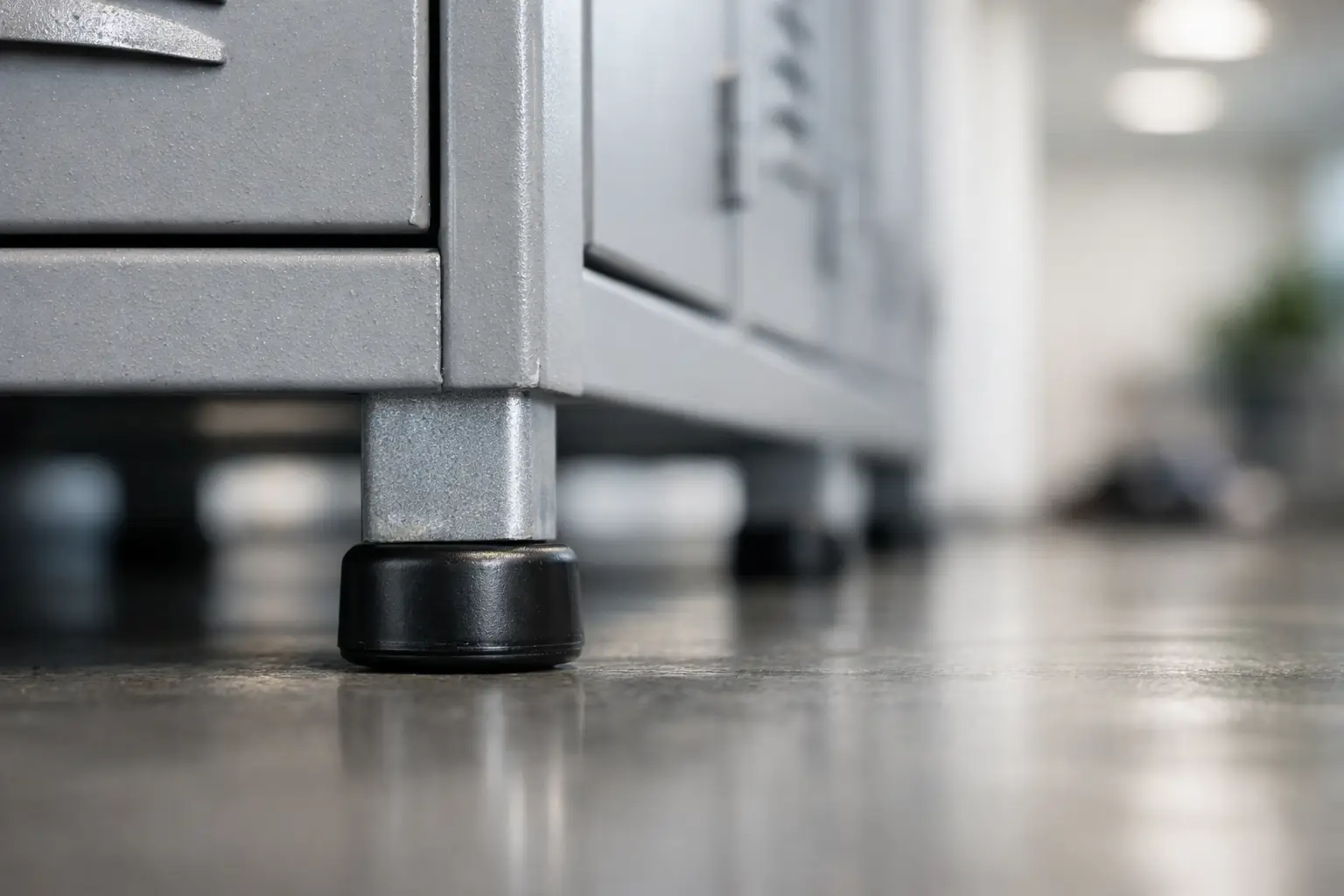
A row of metal lockers can look simple, but its contact point with the floor affects cleaning, corrosion resistance, stability, and the condition of the facility itself. The question, “why do lockers have plastic caps under feet?”, is therefore more than a cosmetic detail. These small components help a locker system perform reliably in busy workplaces, schools, gyms, changing rooms, and industrial facilities.
Plastic caps, also called foot caps, leg plugs, or floor glides, are fitted to the bottom of locker legs or base supports. Their design, material, and fit should match the locker construction and the floor environment. For procurement teams, they are a small specification with a measurable effect on maintenance costs and product service life.
Why Do Lockers Have Plastic Caps Under Feet?
The primary purpose is to create a protective barrier between the metal locker and the floor. Without that barrier, a painted or powder-coated steel leg sits directly on concrete, tile, vinyl, epoxy, or another finished surface. Daily loading, opening and closing doors, cleaning equipment, and occasional repositioning can create friction at that point.
A properly fitted plastic cap reduces direct metal-to-floor contact. This helps protect both surfaces. It limits scuffing and scratches on finished flooring while reducing damage to the coating at the bottom of the locker leg. Once a coating is worn away, exposed steel is more vulnerable to corrosion, especially in humid changing rooms, washdown areas, and entrances where water is tracked inside.
The cap also gives the foot a cleaner, more finished appearance. That matters in customer-facing workplaces and office locker areas, but the operational benefit is more significant than the visual one.
Floor Protection Is a Practical Requirement
Floors are expensive to install and disruptive to repair. Locker banks are often installed after the final floor finish is complete, so avoiding damage during installation and everyday use should be part of the product specification.
Plastic foot caps spread contact more gently than a raw, narrow metal edge. On vinyl, laminate, painted concrete, and ceramic tile, this reduces the risk of visible marks. On softer resilient flooring, it can also reduce localized indentation, although very heavy locker runs may still require a load-distribution base or additional floor protection.
The benefit depends on the cap material and the surface below it. A hard plastic cap is generally suitable for durable commercial floors. A softer glide may be a better choice where scratch prevention is the highest priority. For a heavy-duty industrial locker on rough concrete, the focus may shift toward impact resistance and secure retention rather than a soft contact surface.
They Help Manage Moisture at the Base
The bottom of a locker is one of the most exposed locations in a facility. Mopping water, spills, condensation, wet shoes, and cleaning chemicals can collect around the feet. If bare steel rests directly against a damp floor, moisture can remain trapped at the contact point for long periods.
Plastic caps provide separation. Even a small gap between the metal leg and the floor can reduce prolonged wet contact and allow better drainage and drying around the base. This does not make a standard steel locker waterproof, and it does not replace proper cleaning procedures or corrosion-resistant finishes. It does, however, remove one common cause of premature damage at the point where lockers meet the floor.
This is particularly relevant for gym changing rooms, staff wash areas, food-processing support spaces, healthcare facilities, and industrial sites with frequent floor cleaning. In these environments, buyers should consider the entire base design, including raised legs, welded plinths, drainage conditions, coating quality, and the resistance of the cap material to cleaning agents.
A Cap Is Not a Substitute for Proper Clearance
Plastic caps do not create enough clearance for every environment. Where intensive washdown is required, lockers may need taller legs or a raised base that gives cleaning tools access underneath. Where dust and debris control is more important, a fully enclosed plinth can be the better option because it removes the hard-to-clean space below the locker.
The right solution depends on the facility. Raised legs support access and drying. Closed bases simplify the visual line and can reduce debris buildup. Both designs still benefit from protected contact points and durable materials.
Plastic Caps Reduce Noise and Minor Movement
Metal furniture can transmit vibration through a hard floor. Plastic caps soften that contact and can reduce rattling, scraping, and small impact noises when lockers are loaded or doors are used heavily. The improvement is modest, but it becomes noticeable in offices, schools, fitness facilities, and employee changing areas with long locker rows.
They can also help reduce minor sliding. This should not be confused with a structural anchoring method. A locker bank that could tip, shift under use, or be affected by seismic or site-specific safety requirements must be fixed according to the installation plan. Plastic feet improve everyday contact with the floor, but they do not replace wall anchors, floor anchors, leveling hardware, or connection brackets.
For free-standing units, stability comes first from the locker’s construction, leg geometry, overall height, loading pattern, and correct installation. Foot caps are a supporting component, not the main structural solution.
Better Fit and Finish Supports Long-Term Maintenance
Facilities teams often focus on doors, locks, hinges, and ventilation because these are visible moving parts. The feet are easier to overlook until a missing cap creates a problem. An uncovered leg can scratch a floor, catch moisture, leave rust-colored marks, or make a unit sit unevenly.
For this reason, foot caps should be inspected during delivery and installation. They need to fit tightly, sit squarely, and remain in place when the locker is moved into final position. Loose caps can fall out during transport or cleaning. Caps that are too thin may crack under repeated loading, while poor-quality plastic can become brittle over time in demanding environments.
For commercial projects, replacement availability matters. A manufacturer should be able to provide matching components when a cap is damaged or lost, especially where lockers are installed across multiple sites. Standardized parts make repairs faster and help maintain a consistent finish throughout the facility.
Choosing the Right Locker Foot Design
Buyers should specify the foot design as part of the overall locker requirement rather than treating it as an afterthought. The best option depends on floor type, cleaning routines, load capacity, installation method, and visual requirements.
For example, a locker room with ceramic tile and routine wet cleaning benefits from corrosion-conscious construction and a base that allows moisture to dry. A corporate office with finished vinyl flooring may prioritize non-marking caps and a clean visual appearance. A manufacturing facility with uneven concrete may require adjustable leveling feet, potentially combined with plastic contact pads, to ensure doors align correctly and the locker remains stable.
Adjustable feet are especially useful where floors have slope or variation. They allow installers to level the cabinet or locker bank without shimming each leg. However, they add components and should be selected for the required load. Fixed plastic caps are simpler, economical, and effective when the floor is flat and the installation is straightforward.
Material Quality Matters
Not all plastics perform the same way. The cap should resist cracking, compression, and common cleaning chemicals used in the intended facility. It should also retain its shape under the static load of a fully loaded locker.
The steelwork around the cap is equally important. A durable powder-coated finish, well-formed legs, and accurate cap fit create a base that remains reliable under regular use. At Loxmet, this type of detail is considered within the wider storage specification, alongside steel thickness, ventilation, lock options, dimensions, and installation conditions.
What Buyers Should Check Before Ordering
Before placing an order, confirm whether the locker will stand on fixed caps, adjustable feet, a plinth, or a raised bench-supported structure. Ask how much clearance exists beneath the locker, whether the caps are included as standard, and whether replacement parts can be supplied later.
Also review the flooring and cleaning process with the facility team. A locker specified for a dry office may not be the right build for a humid employee changing area. If the site has uneven floors, high washdown exposure, or unusually heavy loads, state those conditions early so the manufacturer can recommend the appropriate base arrangement.
Plastic caps under locker feet are small parts with a clear operational purpose: they protect finished floors, reduce direct moisture contact, improve day-to-day stability, and support a more maintainable installation. When specifying metal lockers for long-term use, the right base detail helps protect the investment above it.